
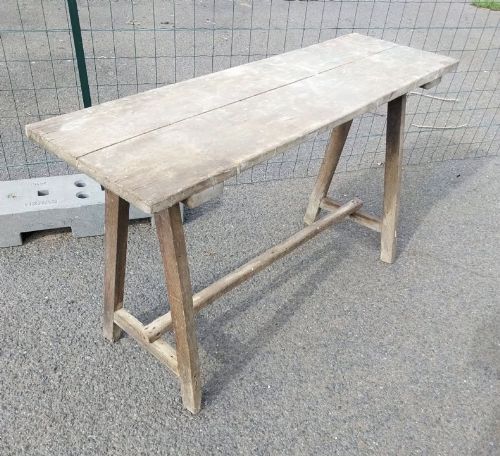
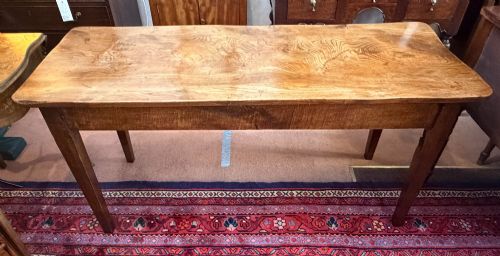
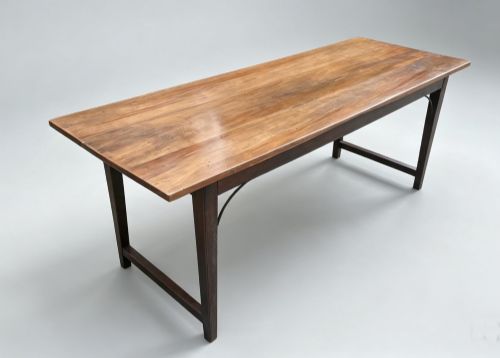
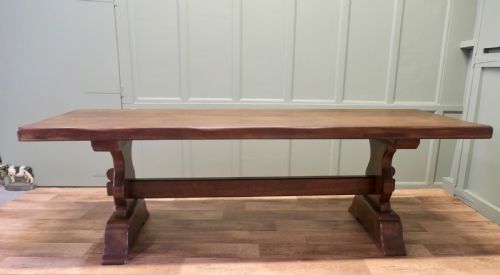


Rustic French Farm Table
A rustic french farm table brings the honest, hard-wearing utility of provincial kitchens directly into modern dining spaces.
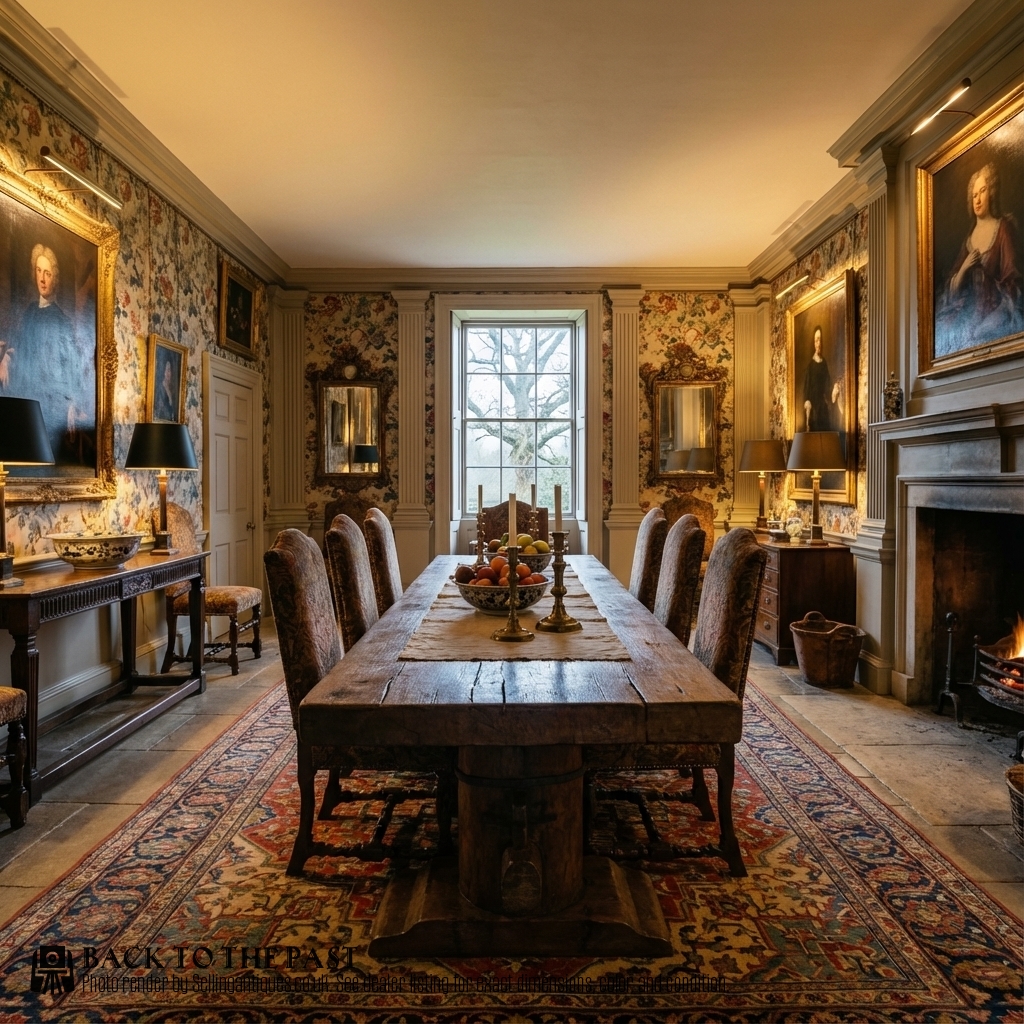
Rustic French Farm Table
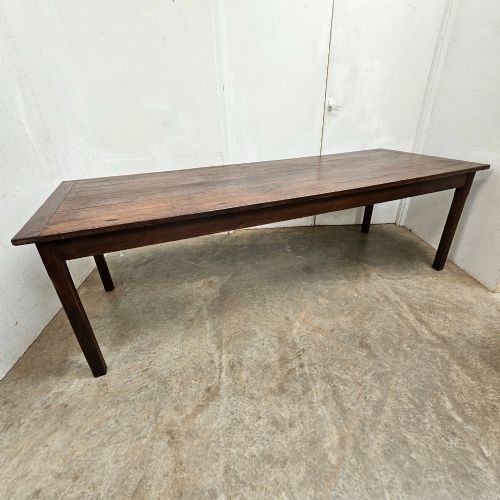
When searching for a rustic french farm table, buyers encounter heavy timber furniture built for daily domestic life in provincial regions. The pieces on this page span several centuries, with nineteenth-century examples appearing most frequently alongside eighteenth-century and early twentieth-century variants.
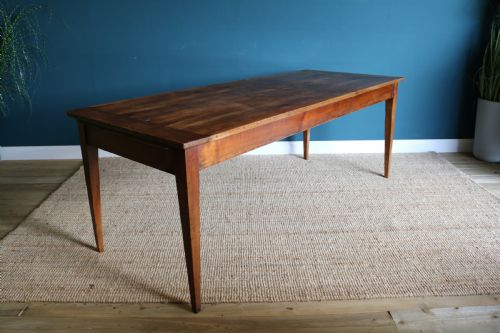
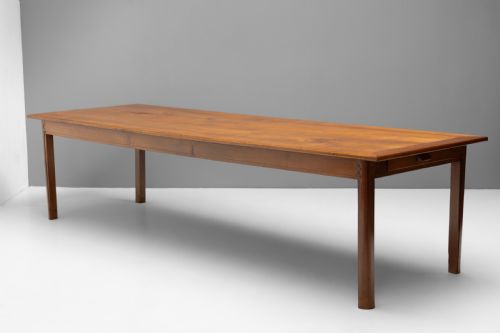
Forms include large refectory tables, extending variants with bread slides, and trestle constructions designed to seat many people comfortably. Walnut, cherry, oak, elm, and fruitwood frequently form the primary structure of these dining, kitchen, and occasional tables.
How they were made
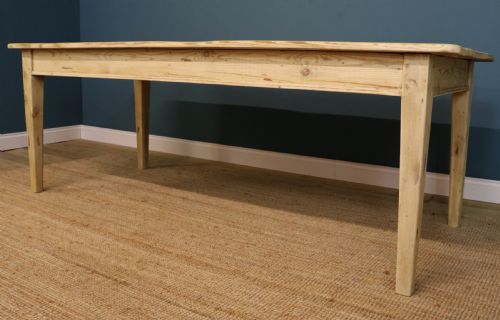
Joiners constructed these tables using solid native hardwoods like oak, cherry, and elm, often pairing scrubbed sycamore or pine tops with sturdy timber frames. Planks were selected for durability and joined to withstand heavy daily use in farmhouses and kitchens.
Surfaces frequently show the natural grain of the wood, sometimes enhanced by bleaching or washing to achieve a lighter appearance. Practical elements such as bread slides and single drawers integrated smoothly into the structural woodwork.
Selected nineteenth-century tables include integrated bread slides originally built for morning baking routines.
What varies in quality
The distinction between average utility tables and finer examples lies in the selection of timber and the integrity of the original construction. Superior pieces retain their structural balance across extended lengths and feature well-figured boards of cherry, walnut, or oak.
Proportion and execution define the hierarchy among these tables, where simpler provincial pieces contrast with refined refectory formats or sophisticated extending mechanisms. The harmony between base supports and top planks determines the visual weight of the piece.
The Rustic French Farm Table Glossary
- Refectory table
- A long, narrow dining table traditionally used in communal halls and large kitchens. These sturdy surfaces provide substantial seating capacity along their length.
- Bread slide
- A pull-out wooden shelf located beneath the main table top. Historically, this feature provided an extra surface for kneading dough or cooling loaves.
- Parquetry
- A geometric mosaic of wood pieces used for decorative effect on table tops. This technique displays the varied tones of different timber species.
- Trestle table
- A table supported by two or more upright frames connected by a horizontal beam. This design offers stable support without restricting legroom.
- Fruitwood
- Timber sourced from fruit-bearing trees such as cherry, pear, or apple. Makers valued these dense woods for their warm tone and fine grain.
Rustic French Farm Table: Frequently Asked Questions
How do I clean a wooden farm table?
Wipe surfaces using a damp cloth with mild soap, avoiding harsh chemical cleaners that strip the finish.
Dry the wood thoroughly afterwards to prevent moisture damage to the grain.
Can these tables be used outdoors?
These tables are designed for interior domestic environments and lack weather-resistant treatments.
Exposure to rain and direct sunlight causes warping and splits in antique timber.
What chairs match a provincial table?
Simple ladder-back chairs or mismatched wooden seats complement the vernacular aesthetic of these tables.
Consistency in wood tone matters less than matching the overall scale and age of the seating.
How are different wood types identified?
Oak displays distinct medullary rays and an open grain, while cherry exhibits a warm reddish-brown hue.
Elm shows a characteristic interlocking grain pattern that resists splitting under heavy pressure.