
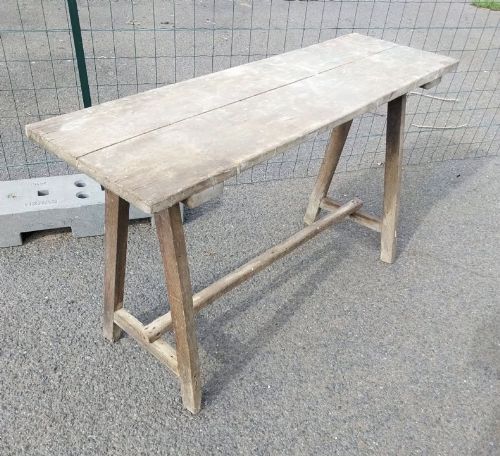
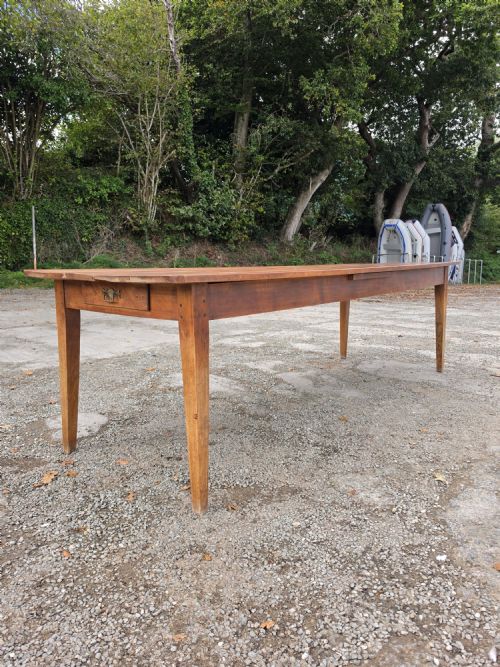
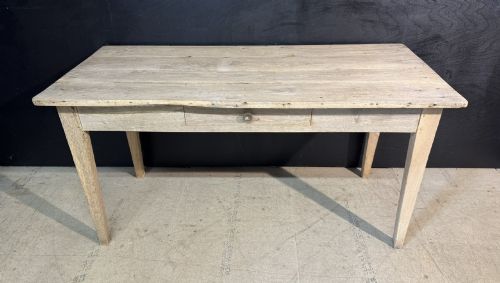
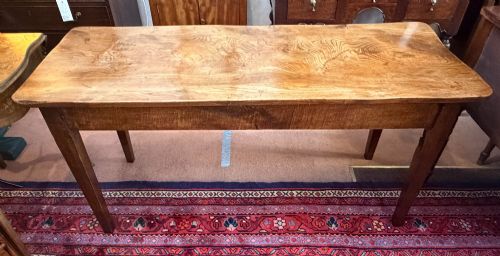


French Provincial Work Table
A french provincial work table brings robust utility and regional character into a modern interior through honest materials and practical design.
French Provincial Work Table
A french provincial work table represents the utilitarian side of domestic and trade furnishings, spanning specific forms like drapers tables, butchers blocks, artisans workbenches, and laundry tables. These practical surfaces emerged from regional workshops and rural environments to serve daily labour rather than formal parlour display.
The pieces appearing on this page stretch from the eighteenth century through the nineteenth century and into early twentieth century examples, embracing Louis XV and Louis XVI revival styles alongside rustic country and primitive aesthetics. Buyers encounter diverse regional formats, from scrubbed sycamore trestles to oak two-tier work tables and wrought iron consoles.
While many serve as generous dining or serving surfaces today, their original identities remain tied to specific trades such as watchmaking, floristry, butchery, and weaving. Selecting the right piece involves appreciating how these functional origins translate into everyday utility within contemporary rooms.
Assessing quality and character
Quality in these utilitarian pieces rests in the integrity of the timber, the honesty of the wear, and the balance of the proportions rather than delicate cabinetmaking. Pieces bearing exhibition quality status or specific trade associations display superior joinery and more refined timber selection compared to purely utilitarian workshop benches.
The depth of the accumulated patina and the survival of original painted finishes or scrubbed surfaces dictate the visual impact of each table. Structural soundness remains paramount, ensuring that heavy timber tops and iron bases remain stable for modern domestic use.
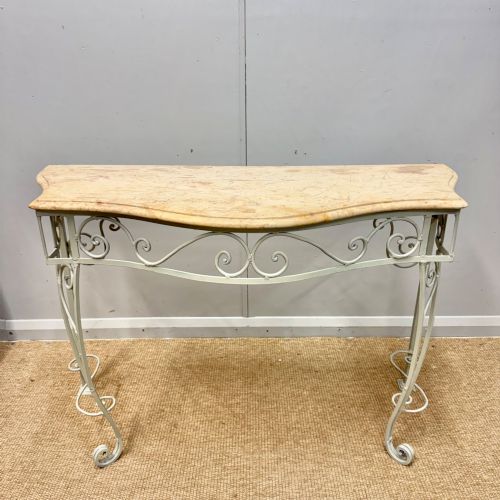
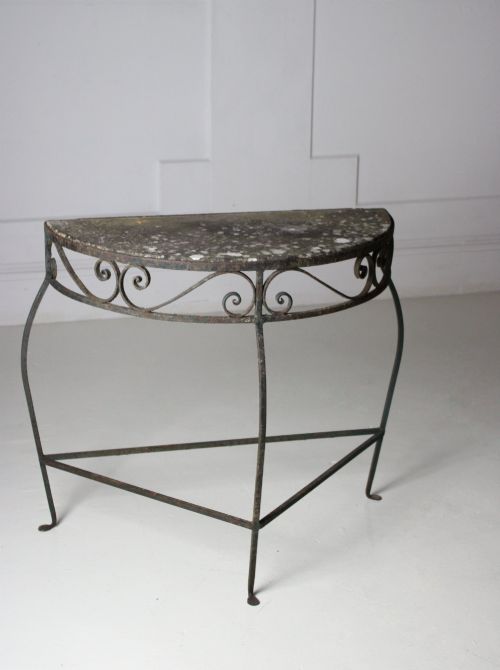
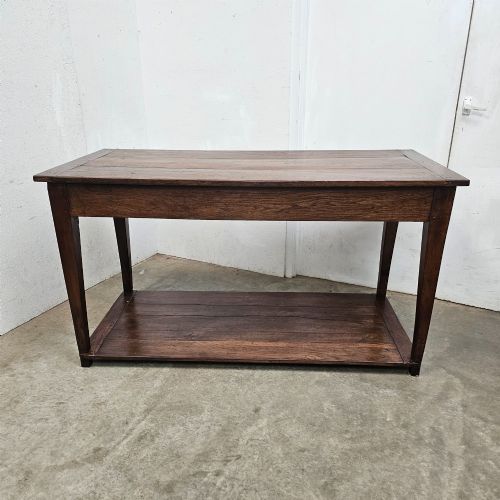
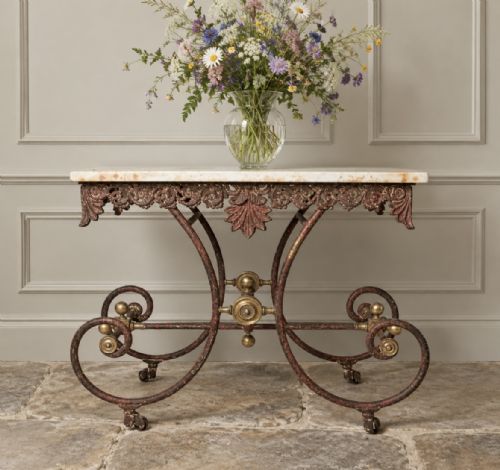
Listings feature structural variations including two-tier designs, trestle bases, and marble-topped wrought iron consoles spanning the eighteenth to early twentieth centuries.
Trussant & Cie
The French Provincial Work Table Glossary
- Trestle table
- A table design featuring a horizontal beam supported by two trestled feet, allowing maximum legroom and sturdy support. This form frequently appears in nineteenth-century workshops and dining spaces.
- Drapers table
- An elongated, narrow table historically used for measuring and cutting fabric, characterised by multiple tiers or drawers. These pieces provide exceptional surface area for modern kitchens or hallways.
- Scrubbed finish
- A timber surface that has been repeatedly scrubbed clean with water and soap over generations, creating a pale, tactile texture. This treatment highlights the natural grain of pine, sycamore, or elm.
- Louis XV Revival
- A nineteenth-century decorative style reinterpreting the curving lines, cabriole legs, and asymmetry of the mid-eighteenth-century French court. It introduces softer ornamentation to utilitarian forms.
French Provincial Work Table: Frequently Asked Questions
What is a french provincial work table?
A french provincial work table is a sturdy, utilitarian surface originally used for trades, domestic labour, or food preparation in regional France. These pieces range from drapers and laundry tables to butchers blocks and artisans benches.
Today, they are repurposed as kitchen islands, console tables, or dining surfaces, valued for their robust timber construction and authentic period patinas.
How do I style a work table at home?
These tables naturally anchor a kitchen, hallway, or living space due to their generous proportions and honest materials. Pairing a scrubbed pine or fruitwood table with modern seating creates a balanced, lived-in aesthetic.
Utilise lower tiers or shelves on two-tier models for storing ceramics, books, or baskets to keep the main surface clear and functional.
Are these tables suitable for kitchen islands?
Many nineteenth-century work tables, particularly butchers blocks, drapers tables, and farmhouse designs, function exceptionally well as kitchen islands. Their original purpose involved heavy daily labour, making them naturally durable.
Consider the height and depth of the table to ensure it matches your kitchen layout and standing workspace requirements.
How do I date an antique work table?
Dating relies on examining the timber species, tool marks, joinery methods, and the overall style of the piece. Eighteenth-century examples often feature hand-sawn boards and pegged joints, while nineteenth-century versions may show industrial influences or revival detailing.
Wear patterns, such as scrubbed surfaces and historic paint layers, also provide clues to the age and working history of the table.