


Rustic French Console Table
A rustic french console table brings practical surface space and provincial character to a hallway or living room, offering sturdy wood construction and authentic regional charm.
Rustic French Console Table
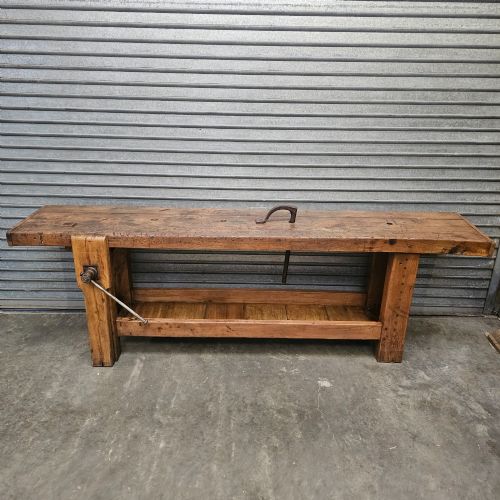
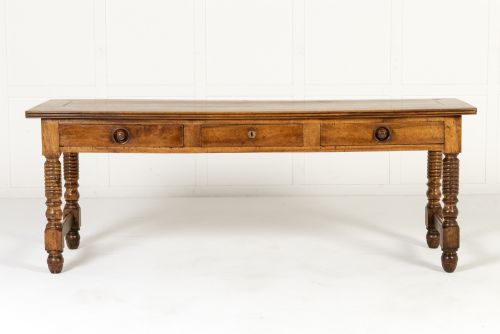
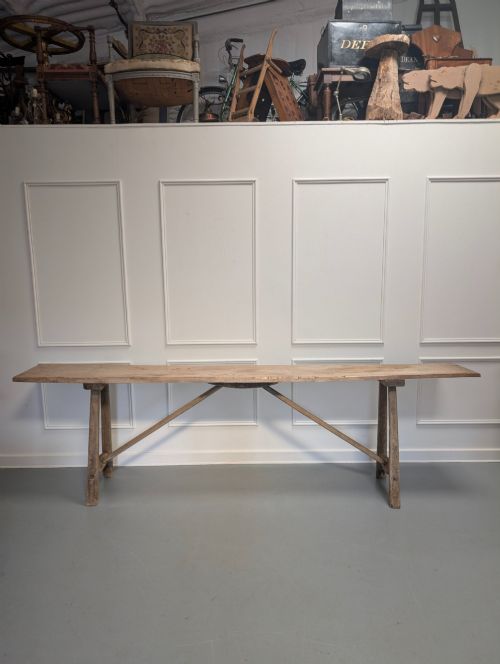
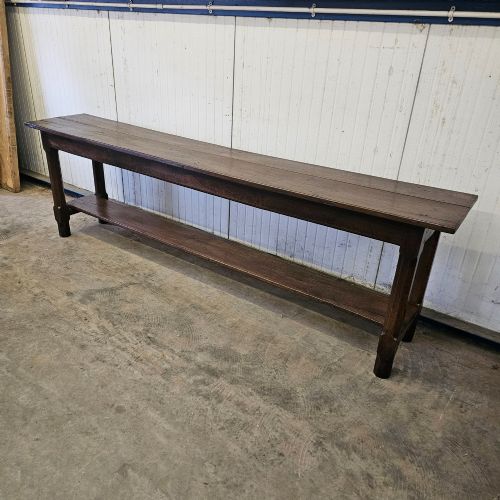
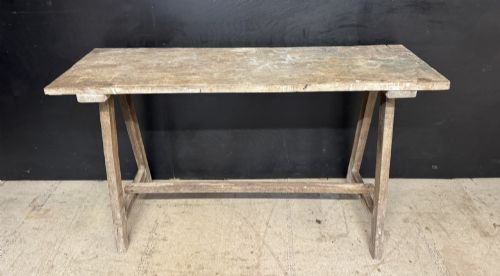
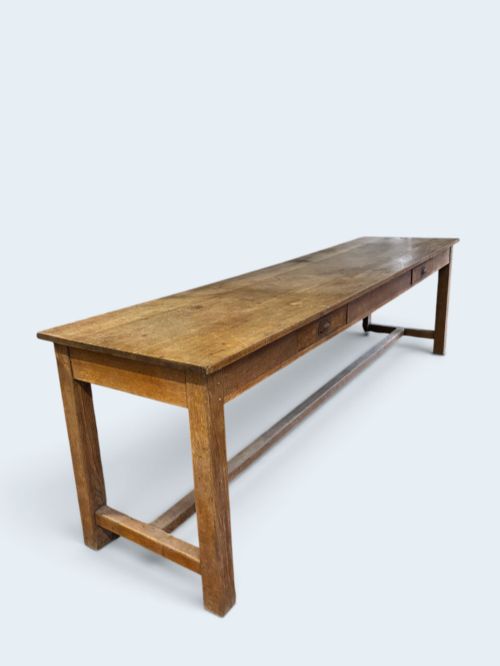
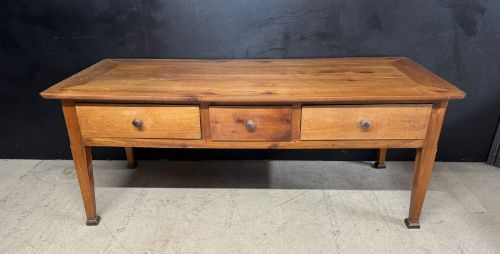
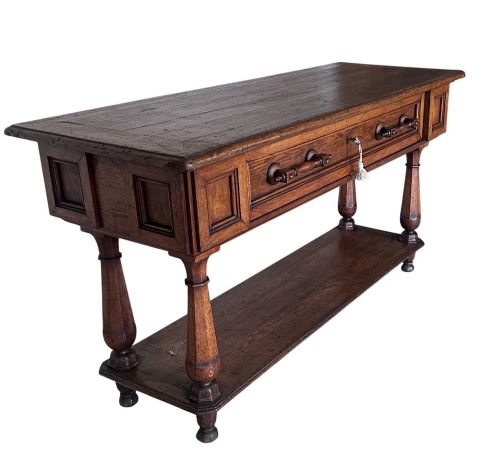
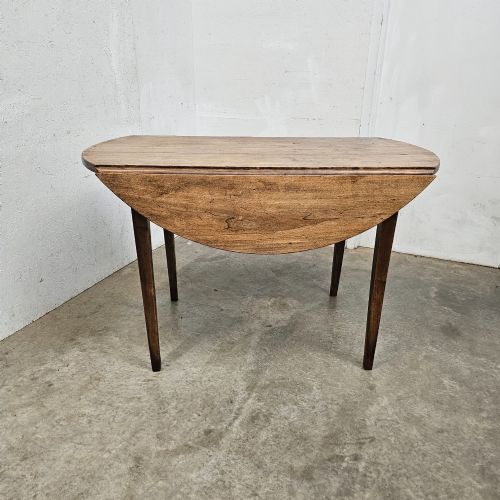
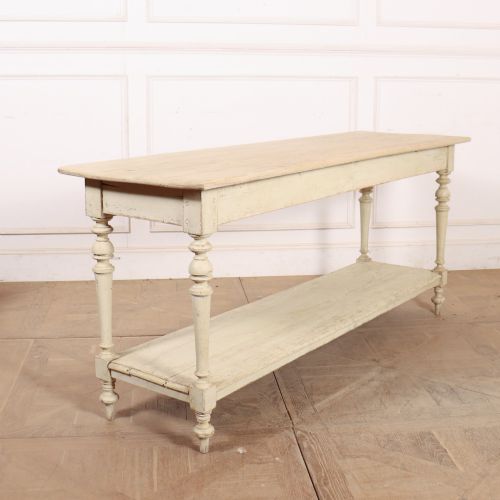
A rustic french console table encompasses a variety of provincial forms, from narrow serving tables to repurposed workbenches and drapers tables. Buyers looking for this phrase frequently encounter pieces originating from the nineteenth century alongside earlier examples in oak, pine, and cherrywood.
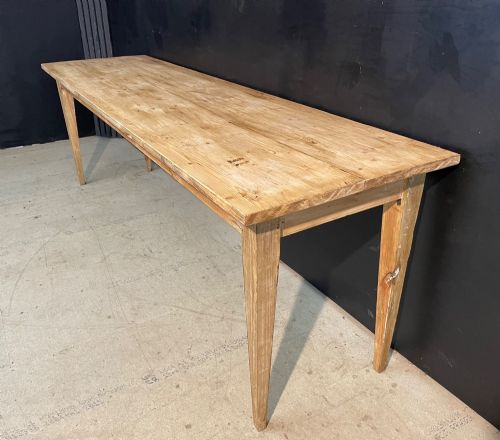
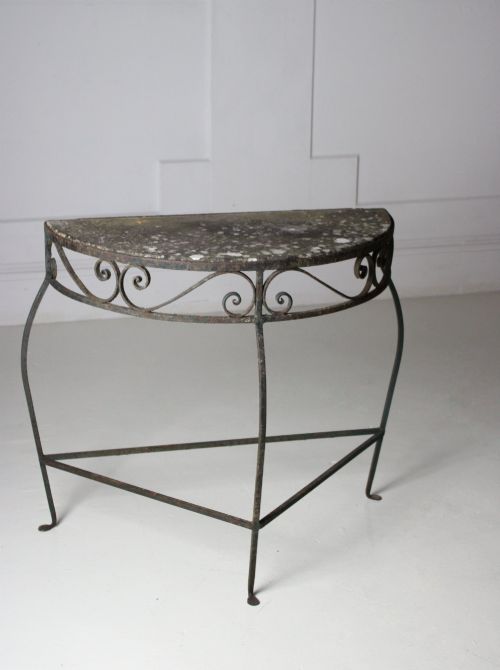
The selection ranges from simple scrubbed pine laundry tables to substantial oak serving tables and marble top patisserie display tables. These versatile pieces often overlap with side tables, hall tables, and work tables, reflecting their utilitarian origins in French homes and shops.
Materials and Construction
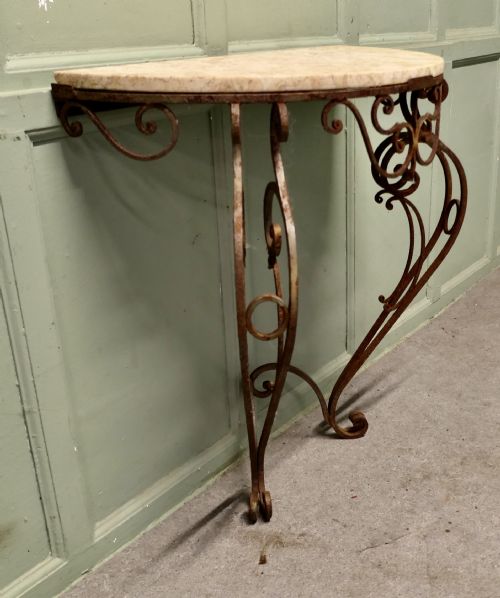
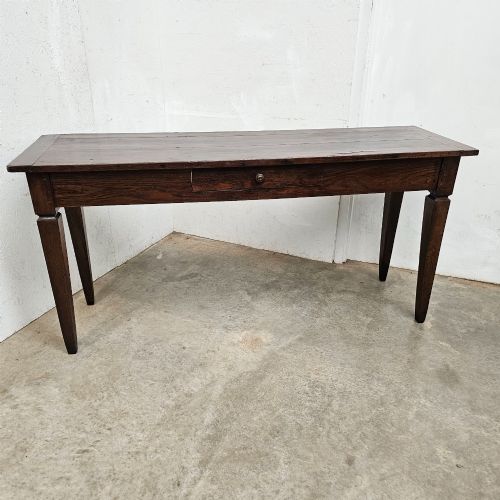
Construction relies heavily on solid timbers such as oak, pine, elm, and cherrywood, often showing the marks of heavy daily use. Surfaces range from scrubbed natural wood to painted finishes, sometimes paired with contrasting materials like wrought iron bases or cool marble tops.
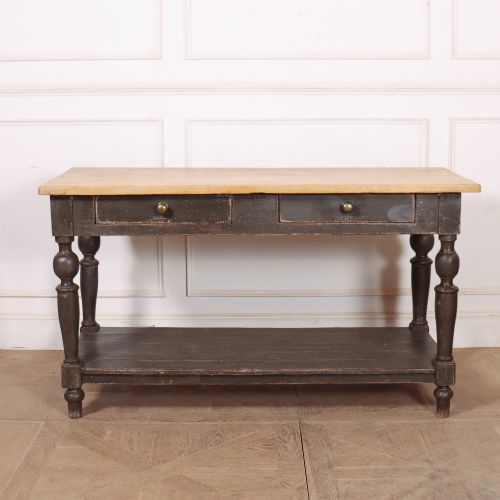
Joining techniques and structural elements like clamping bars, drawers, and pot-shelves demonstrate practical craftsmanship intended for rigorous work environments. These tables utilise straightforward joinery suited to regional artisans working with locally sourced timber.
Rustic French Console Table Retail Price Guide 2026
Typical asking prices for rustic french console table among the pieces listed under this phrase on Sellingantiques today, from the lower quarter to the upper quarter. They describe what is for sale here now, not the wider market.
Period origins span from the eighteenth century through the Edwardian era and early twentieth century.
Evaluating Quality and Character
Quality in these pieces is dictated by the integrity of the timber, the depth of patination on the surface, and the balance of proportions. Tables retaining original paint finishes or untouched scrubbed tops demonstrate superior preservation compared to heavily restored examples.
The Rustic French Console Table Glossary
- Console Table
- A narrow table designed to sit flat against a wall, frequently used in halls and entryways. These surfaces often double as serving or display tables in provincial interiors.
- Drapers Table
- A long, deep table historically used for measuring and cutting textiles, characterised by generous proportions and clean lines. They are often found utilised as large console or serving surfaces.
- Patination
- The natural sheen and surface alteration developed on wood through decades of handling, cleaning, and exposure. This gradual ageing process provides visual depth that cannot be artificially replicated.
- Scrub-Top
- A wooden table top designed to be aggressively scrubbed clean with water and sand, resulting in a pale, weathered grain. This finish is typical on hard-working kitchen and prep tables.
- Work Bench
- A heavy workbench featuring functional elements like vises and clamping bars, repurposed for domestic living spaces. These pieces showcase utilitarian French craftsmanship from workshop and artisan settings.
Rustic French Console Table: Frequently Asked Questions
What rooms suit a rustic french console table best?
These narrow tables sit comfortably in entrance halls, living rooms, and dining areas where floor space is limited. Their linear profiles allow them to hug walls while providing a convenient surface for lamps and decorative objects.
Larger variations function effectively as serving tables or sideboards in dining spaces, offering generous top space and occasional drawer storage for table linen.
How were these tables used originally?
Many examples originated as practical work surfaces in French shops, laundries, and kitchens, including drapers tables, charcuterie prep tables, and artisans workbenches. Others served domestic purposes as side tables, wash tables, or serving tables in provincial country houses.
Their robust construction was intended to withstand daily labour rather than simply decorative display in formal parlours.
How do I care for a scrubbed pine top?
Scrubbed pine surfaces respond best to dry dusting and immediate wiping of liquid spills to prevent staining the untreated grain. Periodic gentle cleaning with mild soap and water maintains the pale, weathered appearance without stripping the character.
Avoid heavy modern varnishes or synthetic polishes that alter the tactile, natural quality of the aged timber.
How can I tell nineteenth century pieces apart?
Nineteenth century examples display distinct regional characteristics in their joinery and choice of local timber, such as regional oak, cherrywood, or pine. Tool marks left by hand saws and adzes indicate period manufacturing techniques before mass production standardisation.
Hardware details like hand-forged iron elements and simple wooden drawer construction also assist in identifying the manufacturing era.