



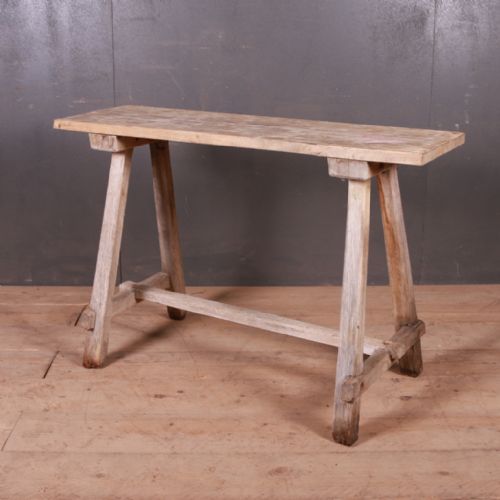


French Country Workbench
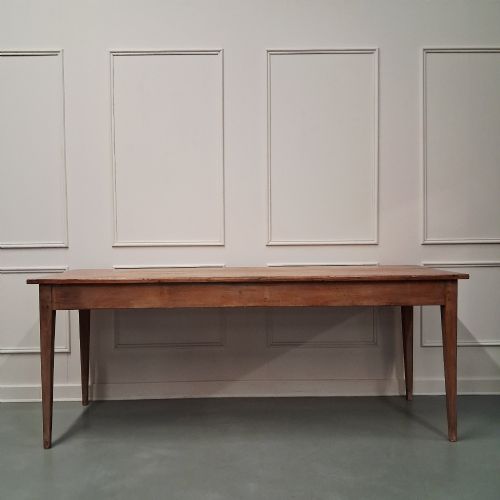
These heavy french country workbench examples are practical working tables built from solid timber to withstand daily graft.

French Country Workbench
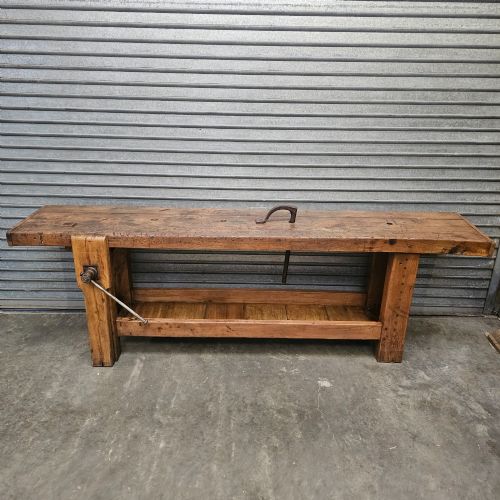
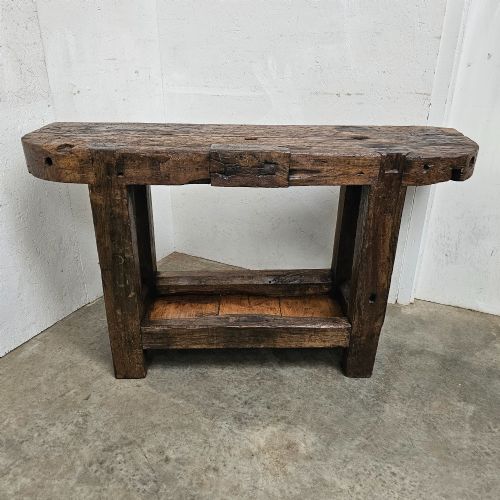
A french country workbench is a robust utility table designed for manual trades, constructed in formats ranging from substantial house workbenches fitted with vises to simpler trestle tables and cobblers benches. These pieces originate across the nineteenth century, including specific dates such as eighteen sixty, eighteen eighty, eighteen ninety, and nineteen hundred.
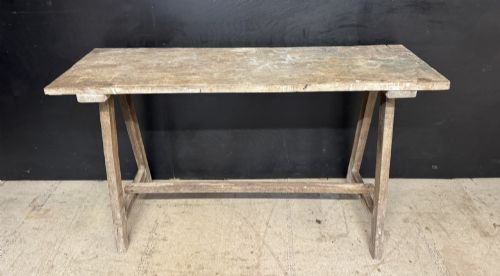
The version most commonly met on this page is the nineteenth century French trestle table or artisans workbench. These forms utilise traditional carpentry joints and heavy timber tops suited for long-term domestic or workshop use.
How They Were Made
Construction relies heavily on durable hardwoods and softwoods such as oak, elm, sycamore, poplar, pine, and general timber. Many surfaces feature a scrubbed finish that highlights the grain of the wood after decades of use and cleaning.
Metal hardware such as iron and cast iron appears in functional elements like vises, providing mechanical strength to the wooden structures. Joinery techniques are straightforward and utilitarian, intended to hold firm under heavy downward pressure.
French Country Workbench Retail Price Guide 2026
Typical asking prices for french country workbench among the pieces listed under this phrase on Sellingantiques today, from the lower quarter to the upper quarter. They describe what is for sale here now, not the wider market.
Cobblers benches bring miniature storage compartments designed for nails and wax straight into the modern hallway.
What Varies in Quality
The timber selection dictates much of the character, where dense combinations of sycamore and elm or thick oak planks command greater presence than simpler pine or poplar boards. The presence of original working mechanisms like wooden or iron vises alters the utilitarian integrity of the piece.
Proportion and scale distinguish the domestic items from purely industrial ones, particularly in longer formats like substantial house workbenches or trestles. Surface patination achieved through genuine age and scrubbing rather than artificial distress marks the superior examples.
The French Country Workbench Glossary
- Trestle Table
- A table consisting of two or more trestles supporting a flat top. This form allows for maximum legroom along the length of the table.
- Cobblers Bench
- A low work seat traditionally used by shoemakers with built-in compartments for tools and leather. These pieces display a compact and highly specialised layout.
- Scrubbed Finish
- A surface treatment where the timber is deeply washed and scrubbed to remove old grime and reveal the raw grain. This finish is typical of scrubbed poplar, sycamore, and elm furniture.
- Vice
- A mechanical screw device attached to a workbench to hold an object firmly in place. Artisans benches often incorporate these for woodworking tasks.
French Country Workbench: Frequently Asked Questions
What is a french country workbench used for today?
These tables function well as kitchen islands, dining tables, or large console surfaces in rustic interiors. Their deep timber tops handle heavy daily activities with ease.
They also provide a strong focal point in open-plan rooms where functional antique furniture suits modern living spaces.
How do I clean a scrubbed timber top?
Maintenance requires gentle brushing and occasional wiping with a damp cloth to remove dust from the grain. Avoid harsh chemical sealants that alter the historic surface.
Applying natural wax can help protect the wood while preserving the matte appearance characteristic of nineteenth century workbenches.
Are these tables suitable for dining?
Many trestle tables and long workbenches offer ample knee clearance and surface area for seating several people. Their sturdy construction handles regular use around the dining room.
Checking the height and width dimensions ensures comfortable seating with standard chairs.
How do I identify a nineteenth century piece?
Dating relies on construction methods, tool marks, and the natural wear accumulated across the timber over generations. Pieces from this era often display hand-cut joinery and heavy oak, elm, or pine boards.
Specific dates or broader nineteenth century attributions reflect the period when these utility items were actively built and used in French workshops.