


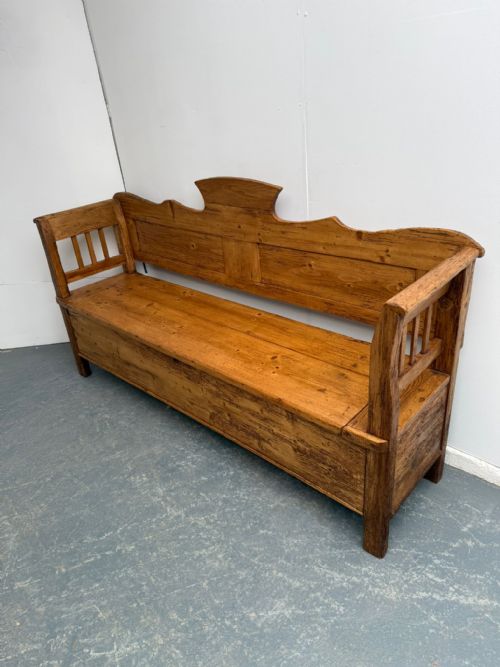


Rustic Folk Art Coffer
A rustic folk art coffer brings regional character into a room through hand-painted surfaces and robust timber construction.
Rustic Folk Art Coffer
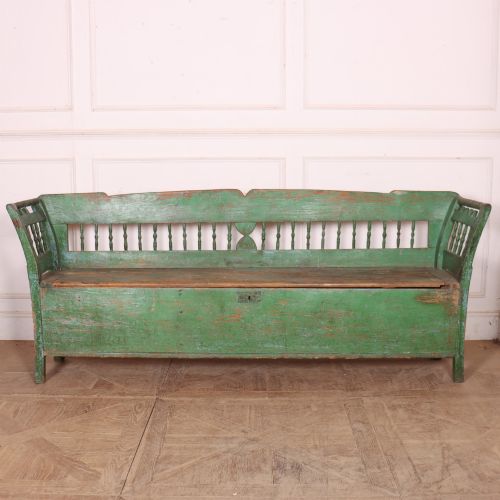
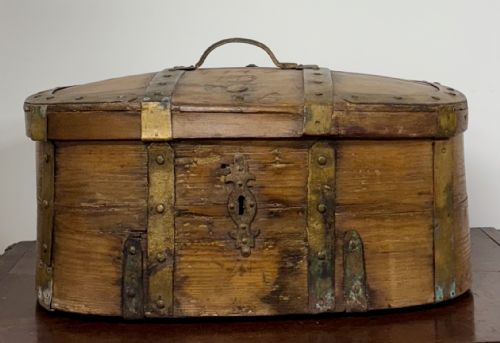
A rustic folk art coffer is a solid storage box or chest originating from rural European traditions, spanning the eighteenth and nineteenth centuries. These pieces encompass domestic storage vessels including marriage chests, dome-top strong boxes, and primitive settle boxes from Alpine, Scandinavian, and Hungarian regions.
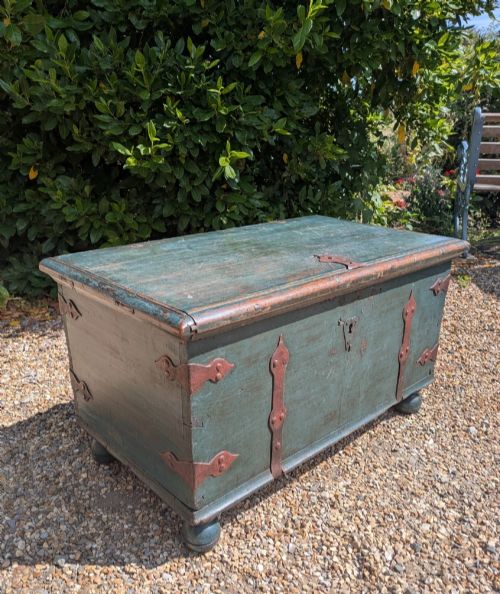
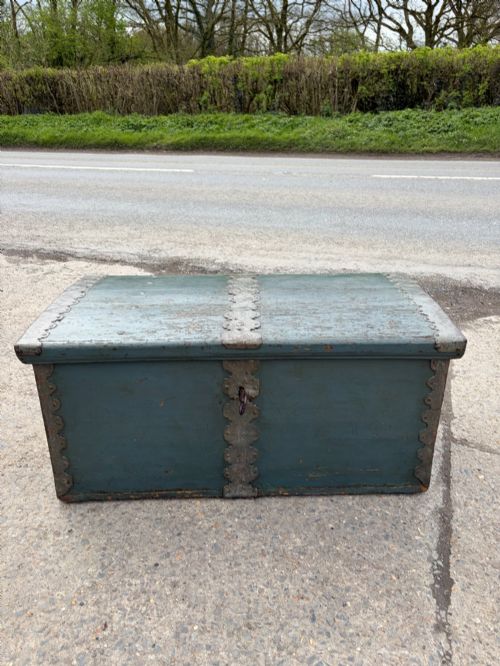
The version most commonly encountered on this page is the painted pine box or chest from nineteenth-century Scandinavia, often bearing traditional folk motifs or original pigment. Oak and waxed variants also appear alongside specialised forms like the mule chest and the shepherds coffer.
Materials and Construction
Makers built these pieces primarily from sturdy pine and oak, utilising local timber suited to domestic utility and heavy everyday use. Hand-forged iron strapwork and wrought iron hardware reinforced lids, corners, and joints for added security.
Surfaces frequently received applications of original paint, pigment, and dark wax finishes to seal the wood and display regional decorative styles. Hand-carved details and woven pine construction further distinguish specific regional workshops and maker techniques.
The listings span the eighteenth and nineteenth centuries, utilising pine, oak, and wrought iron across Scandinavian and European folk art styles.
Distinctions in Quality
The survival of original surface decoration determines much of the distinction among these pieces, separating examples with intact historical paintwork from those stripped down to bare timber. The clarity of hand-painted folk motifs and the integrity of original pigment layers carry substantial weight.
Structural honesty and the retention of primary hardware, such as hand-forged iron straps and hinges, set finer examples apart. The sophistication of regional joinery, from simple board construction to complex dovetailed pine and carved oak, reflects the maker's local tradition.
The Rustic Folk Art Coffer Glossary
- Coffer
- A large wooden chest used historically for storing valuables, linens, or documents. These sturdy boxes often feature hinged lids and iron reinforcement.
- Marriage chest
- A commissioned storage box created to hold a bride's dowry, frequently inscribed with dates, initials, or symbolic folk art decoration.
- Dome top
- A rounded lid construction designed to shed water and increase internal storage capacity. This profile appears frequently on nineteenth-century strong boxes.
- Folk art
- Utilitarian objects decorated or shaped by rural artisans outside formal academic traditions. These pieces rely on regional motifs and locally available materials.
- Strapwork
- Ornamental bands of wrought iron applied to the exterior of a chest to reinforce joints and protect corners.
Rustic Folk Art Coffer: Frequently Asked Questions
What is a rustic folk art coffer?
A rustic folk art coffer is a traditional storage chest made by rural craftspeople, usually featuring hand-painted decoration or iron reinforcement.
These pieces served practical domestic purposes in homes across Scandinavia, Britain, and continental Europe during the eighteenth and nineteenth centuries.
How were these chests used historically?
Families utilised these robust wooden boxes to store household textiles, winter clothing, valuables, and marriage dowries.
Strong boxes with heavy iron hardware specifically protected important documents and currency in domestic or commercial settings.
How do I date a painted pine chest?
Dating relies on construction methods, timber preparation, and the chemical composition of the remaining paint layers. Clues emerge from forged ironwork styles, dovetail joints, and inscribed dates left by the original makers.
Regional painting techniques and specific folk motifs also help narrow the period of origin within the eighteenth and nineteenth centuries.
Where did these painted coffers originate?
The available selection demonstrates origins primarily across Scandinavia, Alpine regions, Hungary, and Wales. Local rural communities developed distinct painting styles, colour palettes, and woodworking traditions that identify each geographic source.
Country workshops adapted these techniques to pine, oak, and other regional timbers available to local carpenters.