

Rustic Elm Side Chairs
Rustic elm side chairs are sturdy vernacular seating pieces shaped by provincial makers for everyday domestic use.
Rustic Elm Side Chairs
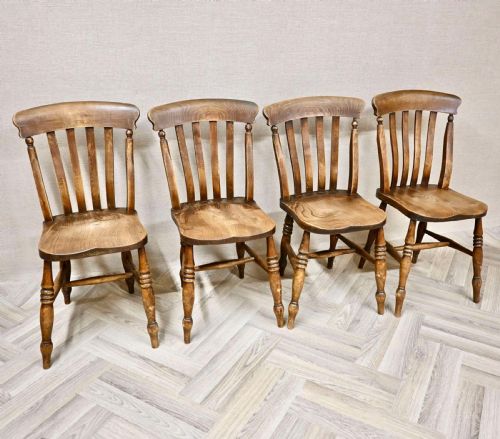
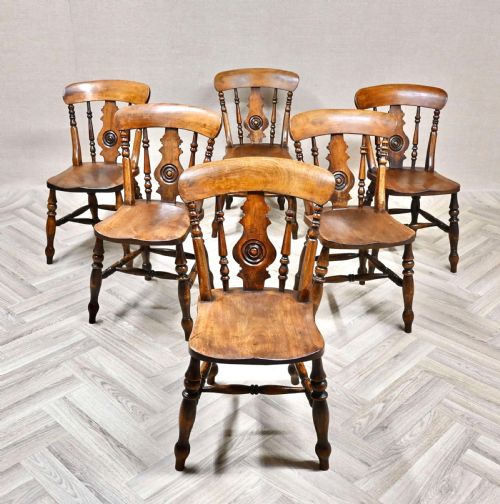
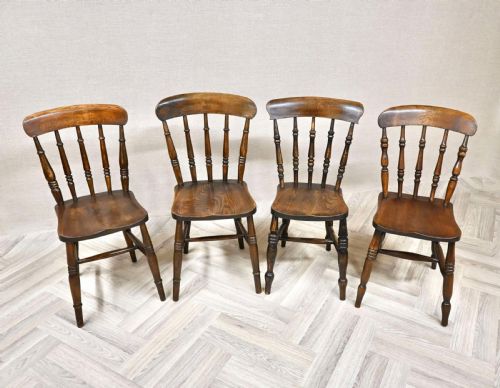
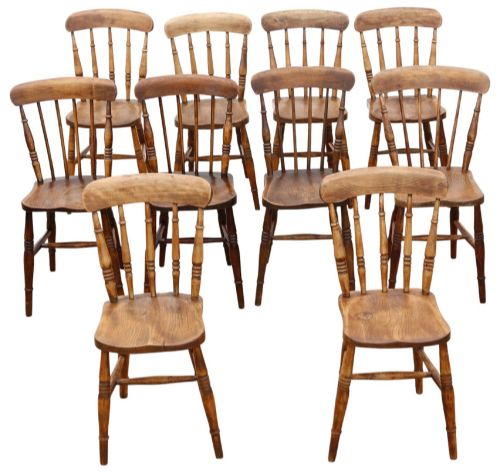
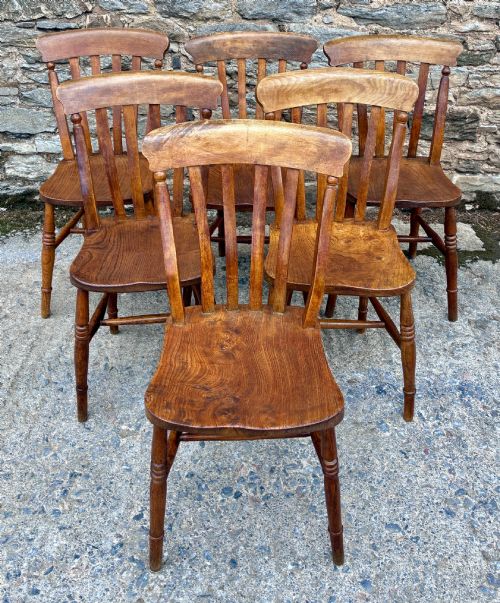
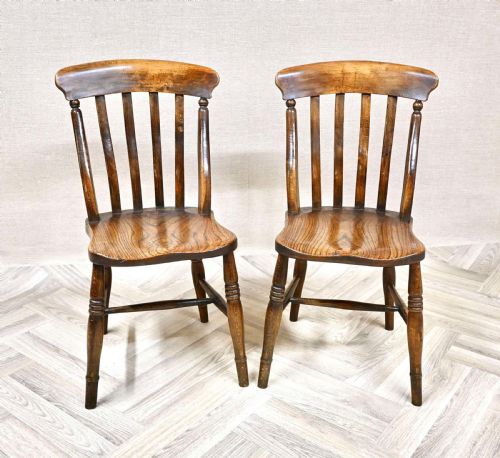
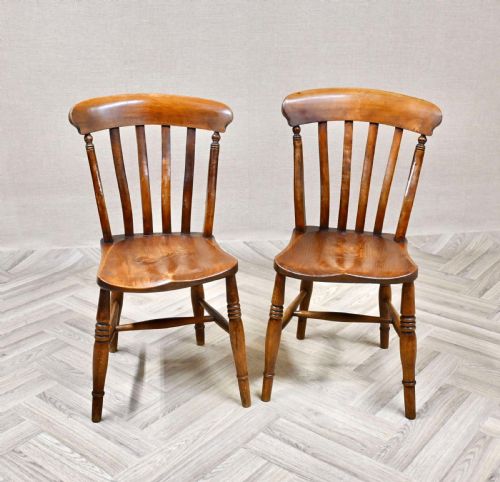
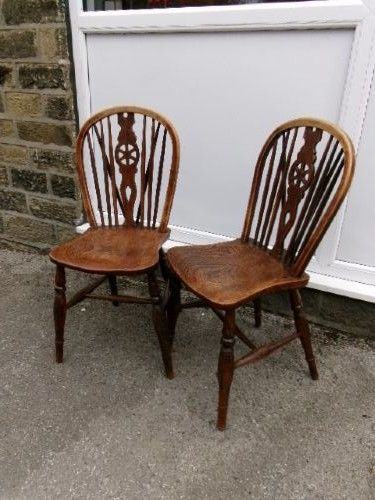
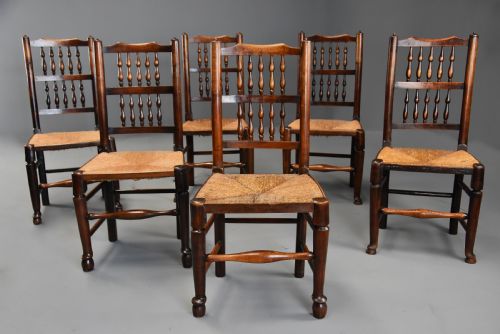
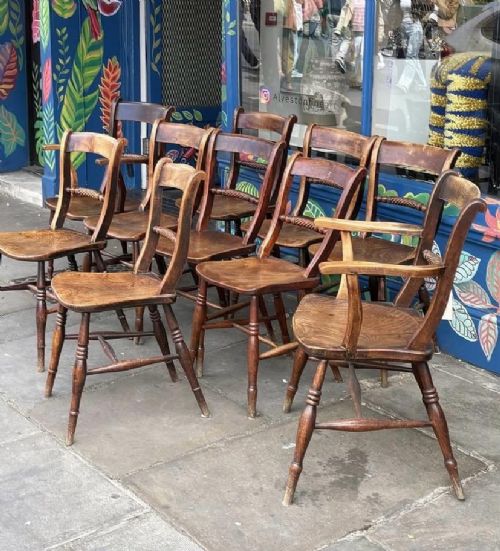
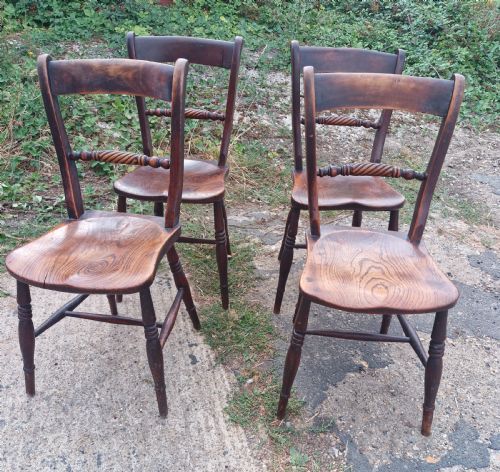
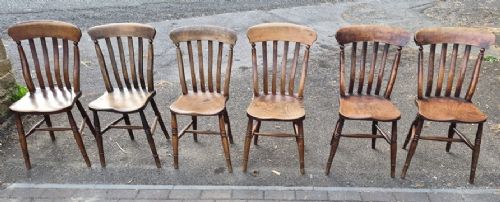
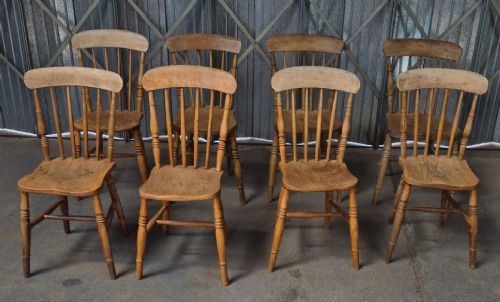
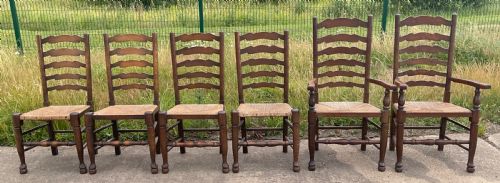
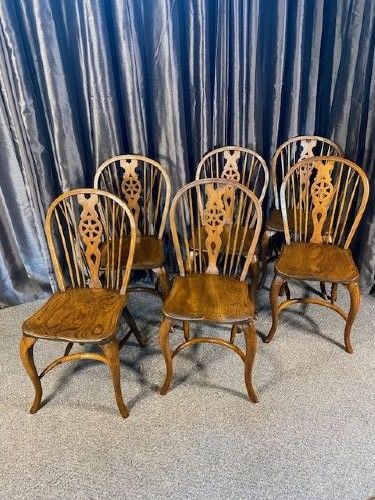
Rustic elm side chairs encompass a wide variety of provincial dining and kitchen seating originating from the eighteenth, nineteenth, and early twentieth centuries. These pieces typically display regional vernacular characteristics, ranging from Windsor forms to ladderbacks and spindlebacks, reflecting the practical needs of country households.
Buyers browsing this selection will frequently encounter sets and pairs dating from the Victorian era and the broader nineteenth century. These configurations often combine elm seats with supporting timbers such as beech, ash, or oak, forming robust dining chairs suited for traditional kitchen and farmhouse environments.
How they were made
Maker construction relies heavily on native British timbers, pairing resilient elm for shaped plank seats with turned beech, ash, or oak for spindles, legs, and stretchers. This combination utilised the natural toughness of elm against splitting while employing straight-grained woods for turned structural components.
Joinery methods in these provincial pieces typically involve pegged mortise and tenon joints alongside wedged leg tenons driven straight through the thick wooden seat. Rush is also utilised on specific seated variants, adding a woven texture to frames supported by double stretchers.
Materials recorded across the inventory include elm, beech, rush, oak, ash, yew, fabric, and leather.
What varies in quality
Quality differences in these chairs emerge through the depth of patina developed across the timber surfaces over centuries of handling and use. Examples displaying rich, untouched grain tones and smooth wear on the wooden seats command greater appreciation than those with heavily refinished surfaces.
Structural integrity and the harmony of matched sets dictate the standing of individual pieces within the wider range. Sets that retain their original turned components, balanced proportions, and tight joints demonstrate superior provincial craftsmanship compared to heavily altered equivalents.
The Rustic Elm Side Chairs Glossary
- Windsor
- A traditional wooden chair featuring a solid sculpted seat into which the legs and back spindles are directly inserted. These forms often incorporate bow backs, wheelbacks, or lathbacks.
- Vernacular
- Everyday objects made by local craftsmen following regional traditions rather than formal architectural styles. These pieces prioritise functional utility and local material availability.
- Patina
- The surface sheen and mellow colour developed by wood over long periods through handling, wax, and ageing. A deep patina indicates authentic age and continuous domestic use.
- Stretcher
- A horizontal wooden rod connecting the legs of a chair to provide structural rigidity and stability. Double stretchers offer additional reinforcement to the undercarriage.
- Spindleback
- A chair back constructed from multiple slender turned wooden rods arranged vertically between a top rail and the seat. This design offers lightweight strength.
- Rush
- Woven marsh plant material utilised to create traditional plaited seating pads. Rush seats appear on specific provincial chair types alongside solid wood boards.
Rustic Elm Side Chairs: Frequently Asked Questions
Are these chairs suitable for daily dining use?
Most variants were originally constructed for robust domestic tasks in kitchens and farmhouses, making them naturally durable for contemporary dining environments.
Buyers should examine the joinery stability and seat thickness to ensure individual pieces can comfortably handle regular everyday seating.
What periods do these chairs typically represent?
The selection spans from the eighteenth century through the Victorian era and into the early twentieth century. Nineteenth-century examples form the largest portion of available dining sets.
Earlier eighteenth-century pieces often display simpler country lines or regional variations like Lancashire styles.
How do I care for antique elm furniture?
Preserving the timber involves maintaining stable indoor humidity levels away from direct heat sources that can dry out old wood. Regular application of suitable furniture wax helps maintain the surface sheen.
Avoiding harsh chemical cleaners ensures the historic patina on the elm and beech components remains undisturbed.