
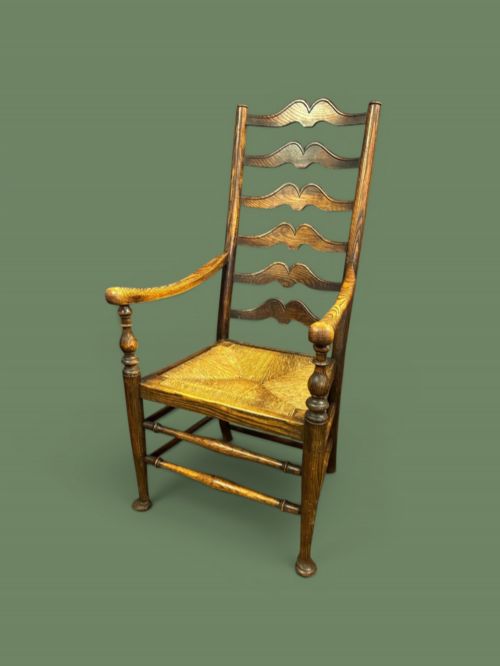
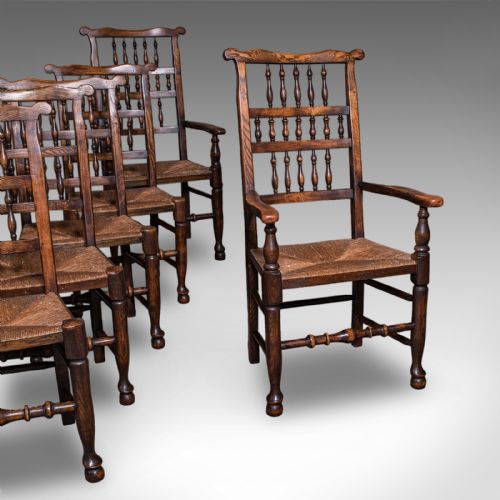


Antique Lancashire Country Chairs
These antique lancashire country chairs are robust vernacular seats built for everyday farmhouse life, prized for their honest construction and rush seats.
Antique Lancashire Country Chairs
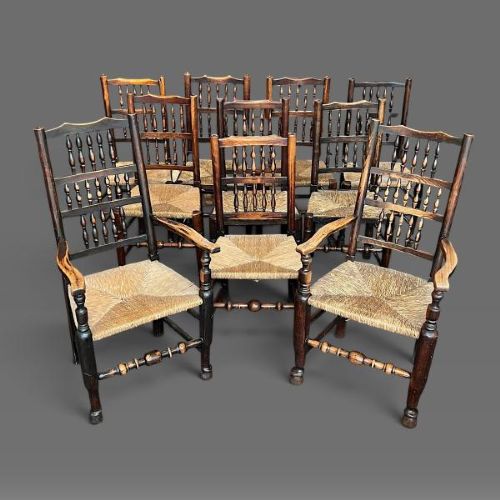
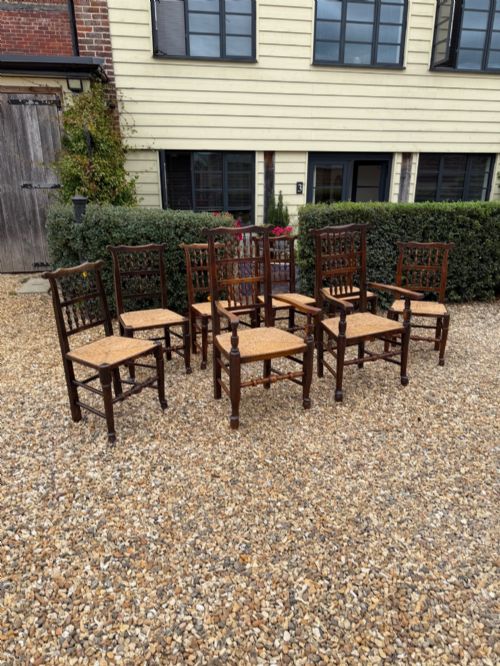
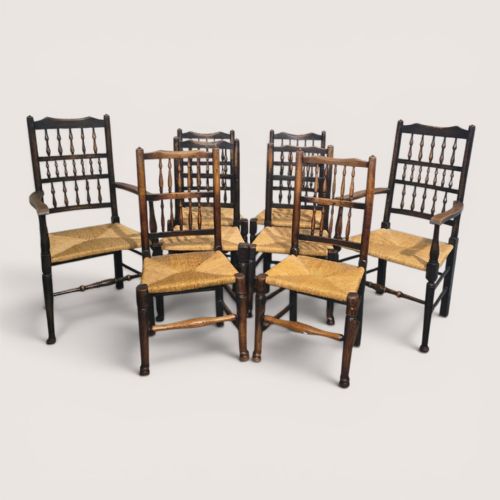
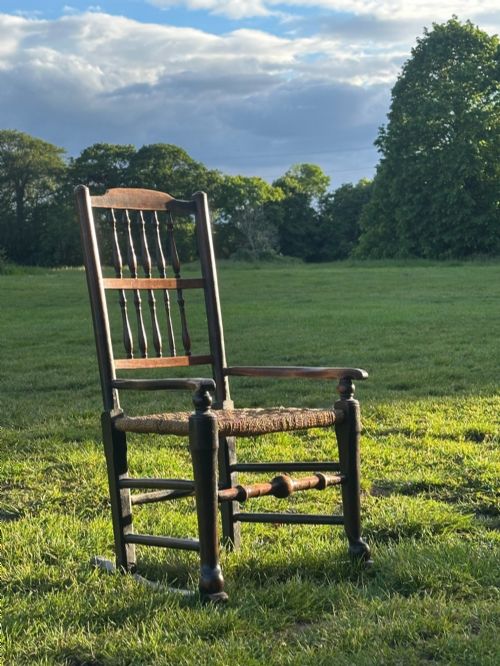
When you search for antique lancashire country chairs, you encounter sturdy vernacular seating spanning the eighteenth century through the Edwardian era. The most common forms on this page include dining chairs, armchairs, and rocking chairs configured with characteristic spindle backs or ladder backs.
The regional character stems from workshops in the northwest, often utilising native hardwoods combined with woven rush. You find single chairs alongside sets ranging from pairs up to harlequin collections gathered across decades.
How they were made
Cabinet makers and bodgers constructed these chairs using turned frames of ash, elm, beech, oak, and alder. Seat frames commonly support woven rush seating materials that provide durable support for daily kitchen use.
Turned spindles and structural members fit together through traditional joinery methods suited to the stresses of farmhouse dining and sitting.
Listings span the eighteenth century, Victorian era, and Edwardian period, utilising elm, ash, beech, oak, alder, and rush.
What varies in quality
The distinction between ordinary and superior examples lies in the integrity of the turned frame and the crispness of the spindle turnings. Well-balanced proportions and the original survival of rush seating elevate an individual piece.
Sets that maintain matching timbers and consistent patination across multiple chairs command greater interest than assembled groups that show disparate wear.
The Antique Lancashire Country Chairs Glossary
- Spindleback
- A chair back constructed with vertical turned wooden bars fitted between the top rail and the seat. This form offers lightweight strength.
- Rush seat
- A seating surface woven from dried marsh grasses or rushes. It creates a springy, textured pad common in vernacular country seating.
- Carver
- An armchair, traditionally placed at the head of a dining table. These pieces often match the side chairs in a larger set.
- Harlequin set
- A collection of chairs assembled to match in style and period rather than originating from a single workshop. They share common traits like spindle backs and rush seats.
- Vernacular
- Objects designed by local craftsmen for practical use rather than following strict high-style architectural rules. These regional pieces reflect domestic traditions.
Antique Lancashire Country Chairs: Frequently Asked Questions
Are rush seats durable?
Rush seating withstands regular daily use when kept in stable indoor environments away from excessive moisture. The dried material maintains flexibility and strength over generations.
Repairs remain straightforward for skilled artisans who re-weave damaged sections using traditional natural fibres to match the original tension.
How do I date a spindle back chair?
Dating relies upon observing the turning profiles of the spindles, the species of timber used in the frame, and the wear patterns on the feet. Eighteenth-century examples often display chunkier ash turnings and deeper patination.
Later Victorian and Edwardian iterations tend to feature lighter beech or elm framing while retaining the traditional regional vernacular silhouette.
Can I mix these chairs with modern tables?
These country chairs bring warmth and tactile contrast when paired with contemporary wooden or glass dining tables. Their neutral timber tones and woven rush textures complement minimal modern interiors.
Armchairs work well as standalone reading seats in bedrooms or studies when not in use around a dining table.
What is an elm and ash combination?
Country makers frequently paired elm for seats with ash for turned spindles and legs because each wood offered distinct mechanical properties. Elm resists splitting under the weight of the sitter, while ash bends well for turned structural components.
This functional pairing typifies regional northwest English chairmaking traditions found across this selection.