
Rustic Elm Kitchen Chairs
Rustic elm kitchen chairs are honest country seating built for heavy daily use, offering robust construction and deep patinated timber that anchors a farmhouse interior.
Rustic Elm Kitchen Chairs
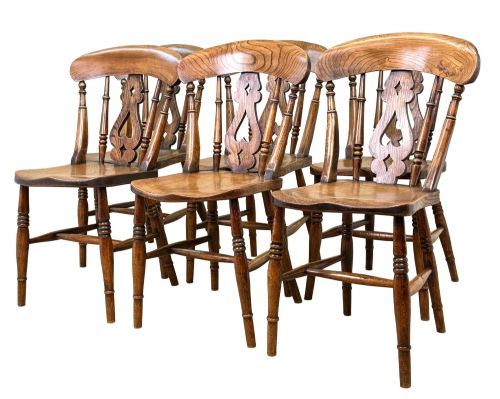
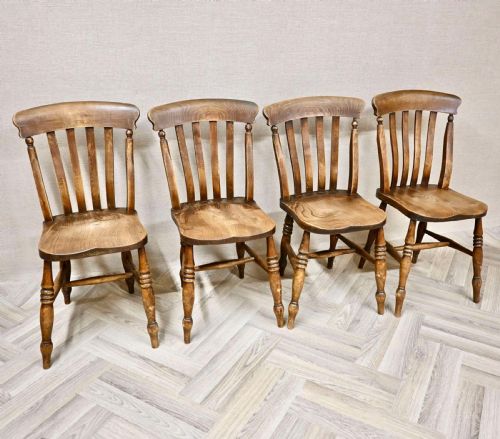
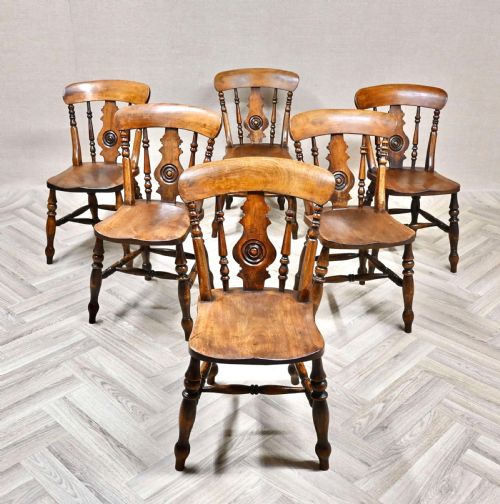
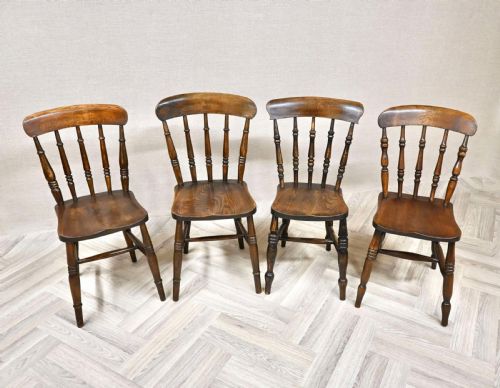
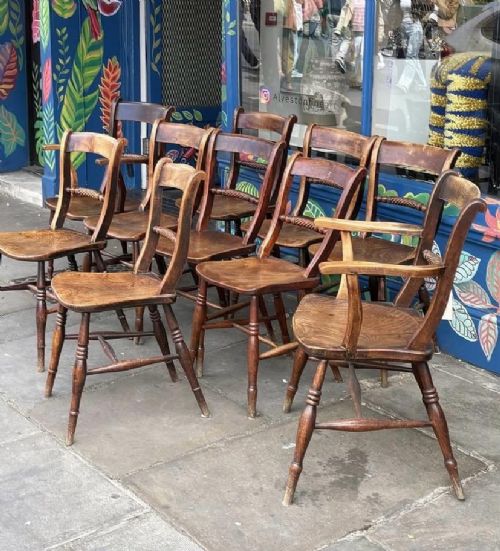
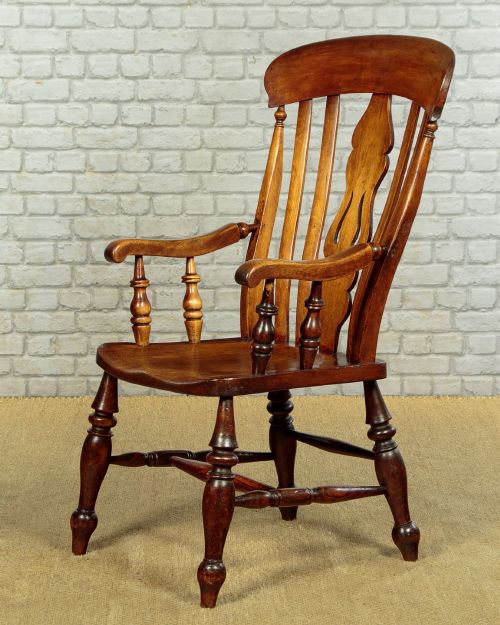
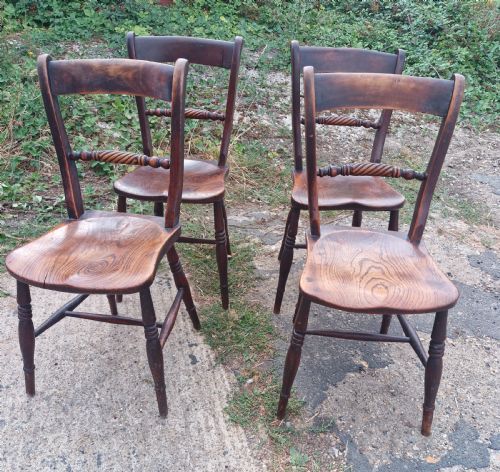
Rustic elm kitchen chairs comprise sturdy dining chairs and armchairs originating primarily from the nineteenth century, including Victorian and Edwardian periods. Buyers searching for rustic elm kitchen chairs encounter traditional English country forms designed for practicality around the farmhouse table.
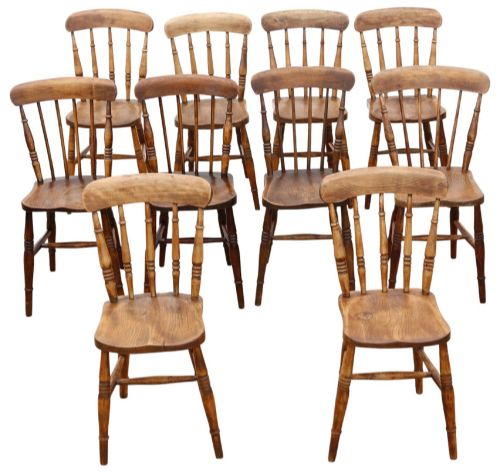
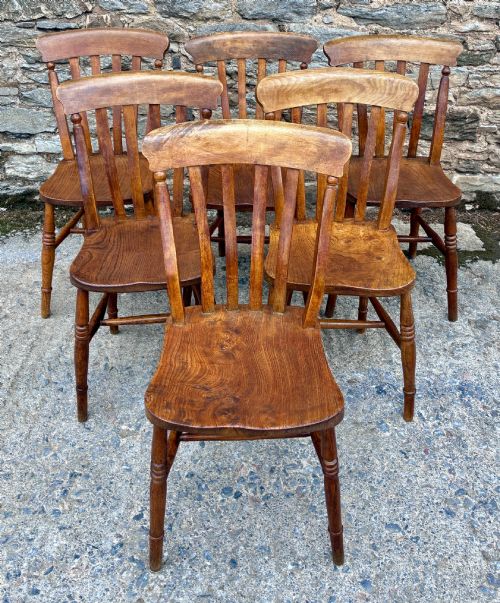
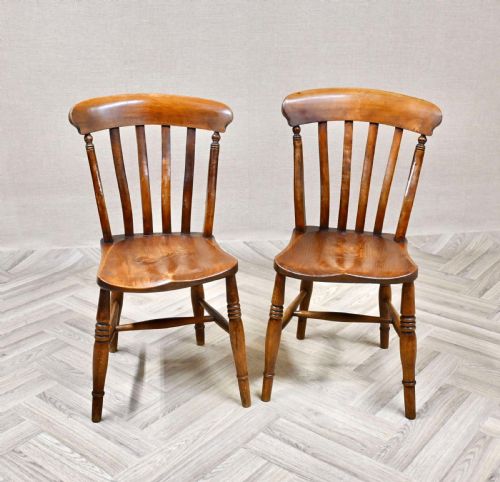
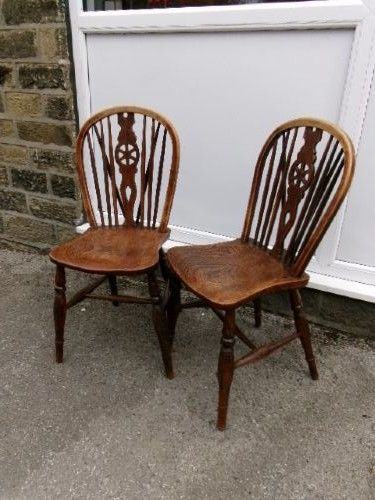
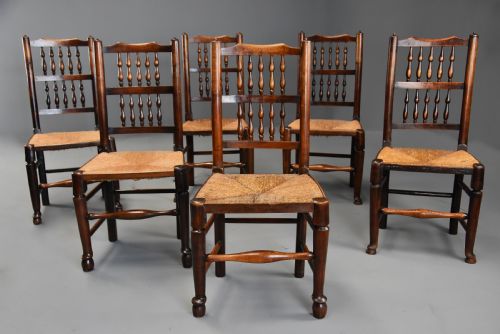
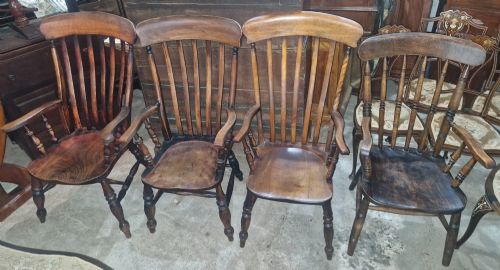
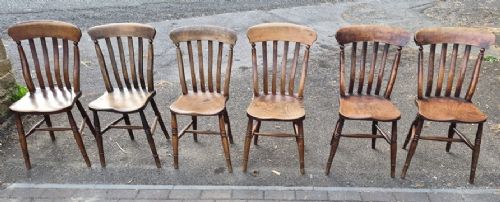
The selection ranges from individual armchairs to large harlequin sets of ten, featuring distinctive regional variations such as Thames Valley vernacular designs. Common formats include wheelbacks, lath backs, spindle backs, and Windsor configurations intended for enduring household service.
Materials and Construction
Makers constructed these seats using solid elm for the shaped saddle seats, paired with turned ash, beech, or oak for the spindles, legs, and bentwood hoops. This combination exploited the interlocking grain of elm to prevent splitting under heavy loads while utilising straight-grained timbers for structural support.
Joinery relied on traditional methods such as wedged through-tenons and double stretchers to ensure rigidity. Craftspeople shaped the components manually, employing steam bending for the crest rails and arm bows.
Some nineteenth-century makers signed their work by carving secret initials underneath the solid elm saddle seats, leaving a hidden signature for future discoverers.
Assessing Quality and Character
Quality rests in the depth of the timber surface and the integrity of the original construction rather than uniform perfection. Examples displaying a rich, deep patinated skin on the elm seat indicate decades of honest use and proper maintenance.
The balance of the proportions and the crispness of the turned spindles separate standard examples from finer vernacular pieces. Sets that retain their matching grain patterns and original structural components command greater regard among collectors.
The Rustic Elm Kitchen Chairs Glossary
- Windsor
- A chair built with a solid wooden saddle seat into which the legs and back spindles are directly tenoned. This construction method provides exceptional strength and structural stability.
- Saddle seat
- A wooden seat base scooped or carved into a hollow shape for comfort. Makers traditionally shaped elm for this component to resist splitting.
- Harlequin set
- A collection of dining chairs that match in general style, period, or material but vary in minor details. These groups formed organically over time rather than issuing from a single workshop set.
- Stretcher
- A horizontal wooden rod connecting the legs of a chair to increase rigidity. Double stretchers provide additional reinforcement for heavy daily use.
- Patina
- The surface sheen and coloration developed on timber through age, handling, and waxing. A deep patina indicates long-term exposure and natural wear.
Rustic Elm Kitchen Chairs: Frequently Asked Questions
How do I care for antique elm seats?
Maintain the timber by applying a traditional beeswax polish sparingly to nourish the wood and preserve the surface sheen. Avoid placing the chairs near direct heat sources or in fluctuating humidity to prevent timber movement.
Regular dusting with a soft cloth prevents dirt accumulation in the carved grain and joints. Handle the chairs by the seat or undercarriage rather than the delicate upper spindles.
Can I mix these chairs around a modern table?
These country chairs bring warmth and textural contrast to contemporary dining spaces through their organic timber tones and varied back designs. Harlequin sets work particularly well in casual settings by introducing visual variety.
Check the seat heights against your table clearance before purchasing to ensure comfortable seating. Armchairs require additional lateral space at the table ends compared to standard side chairs.
What defines a Thames Valley chair?
Thames Valley pieces typically exhibit refined turning, distinctive bentwood arm bows, and careful timber selection characteristic of workshops operating along the river valley. These examples often display superior carving on the seat saddles and more slender, elegant spindles.
Makers in this region utilised local ash and elm supplies to produce distinctive regional variations of the Windsor form. Such pieces are frequently identified by their balanced proportions and high standard of vernacular craftsmanship.
How are different back styles identified?
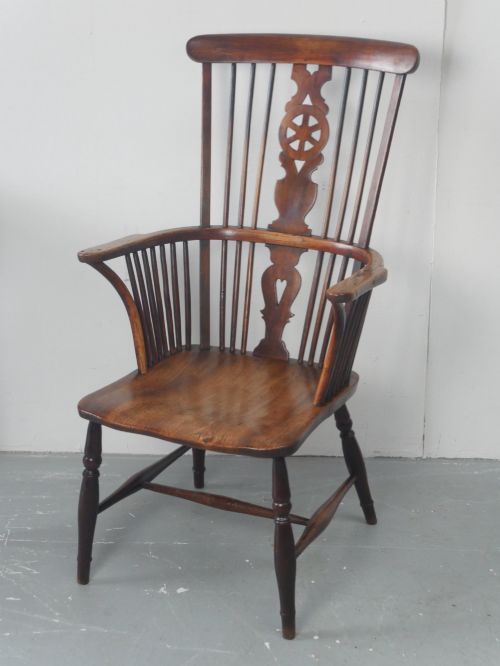
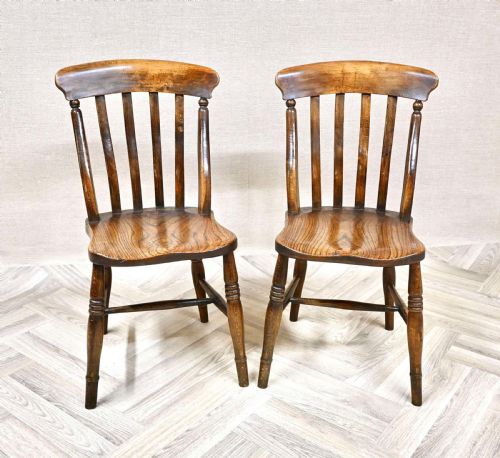
Wheelback chairs feature a pierced splat carved with a central wheel motif, whereas lath back variants utilise horizontal wooden slats across the upper section. Spindle and stick back designs incorporate vertical wooden rods supporting the top rail.
Hoop backs feature a continuous bentwood bow forming both the backrest and the armrests on larger armchair formats. Bullseye and lyre back patterns incorporate specific pierced splat designs into the central back panel.