

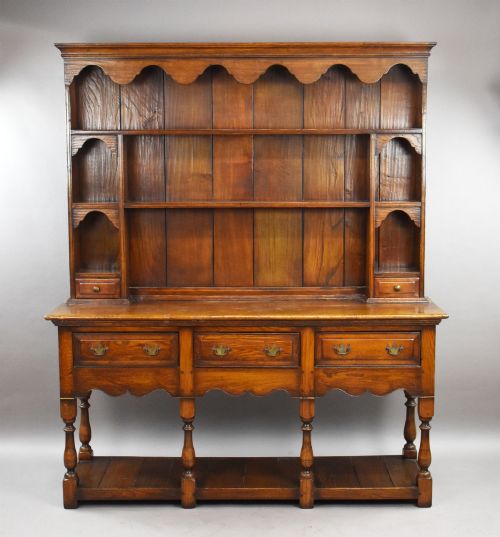
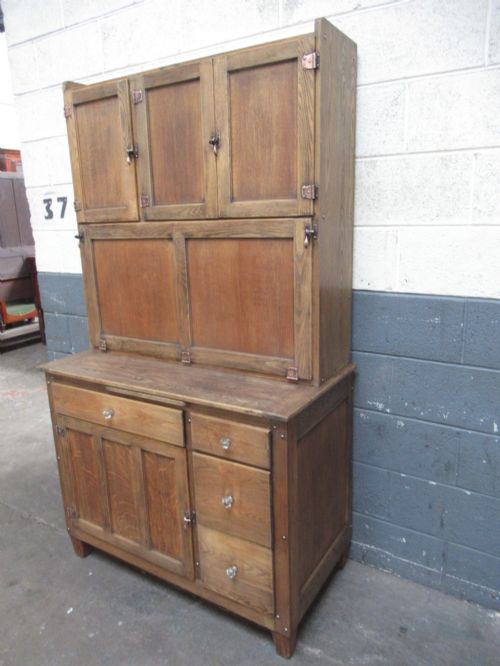
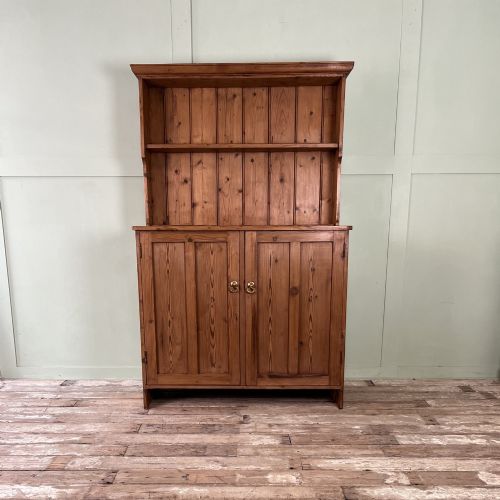
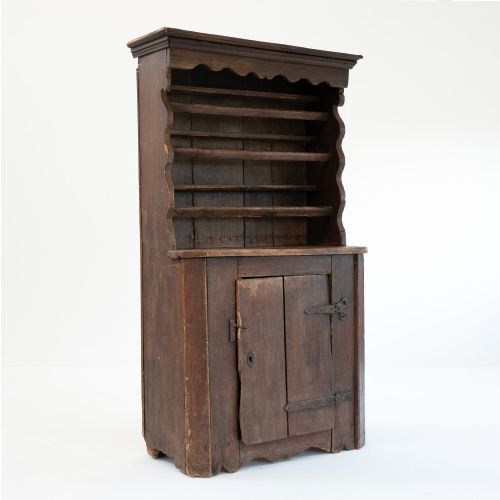
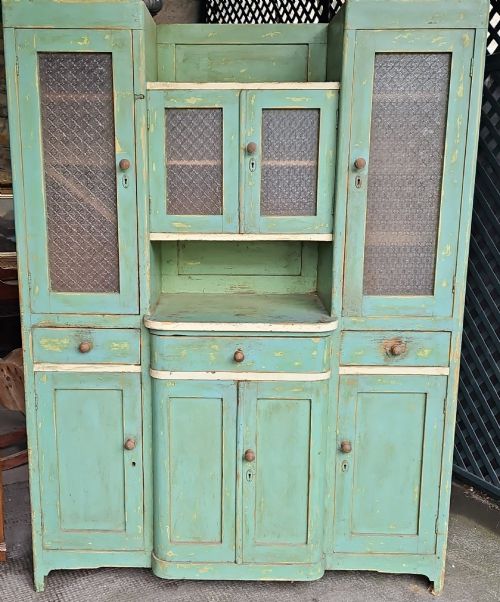


Rustic Country Hutch
A rustic country hutch brings honest utility and vernacular character to a room, offering open display shelves and practical enclosed storage.
Rustic Country Hutch
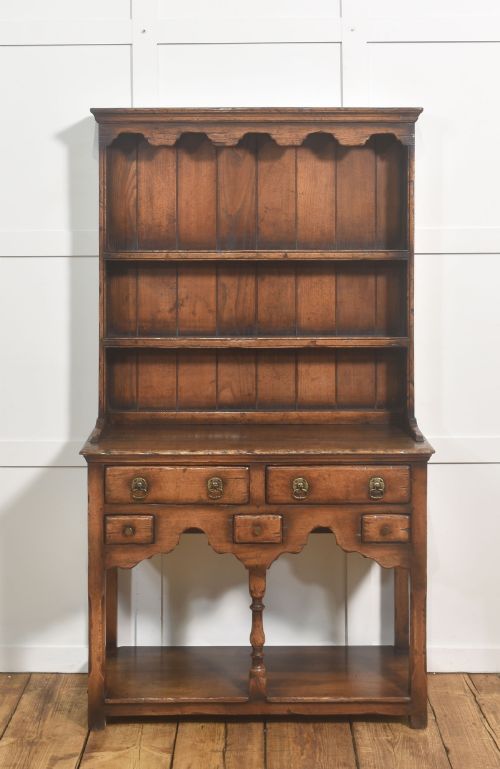
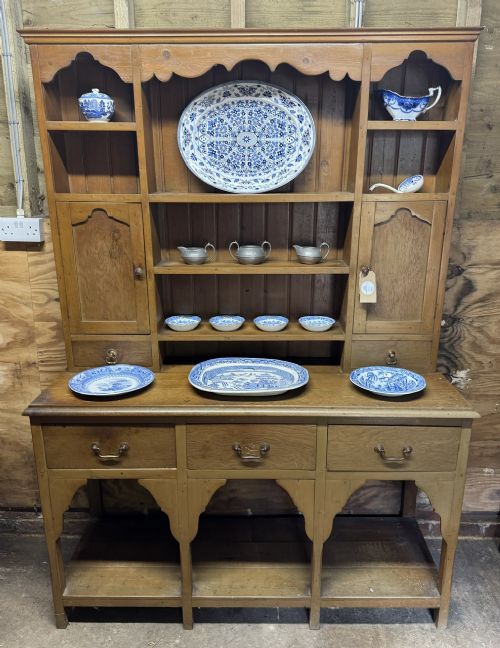
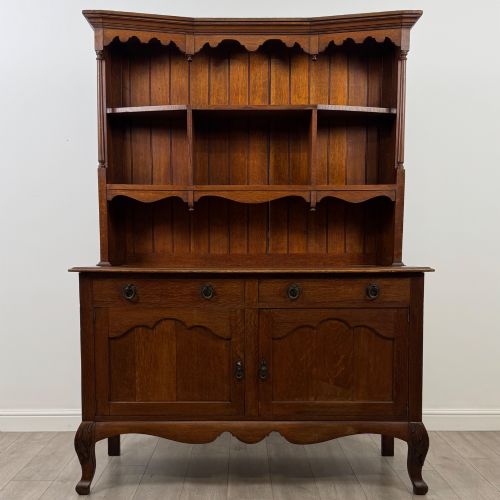
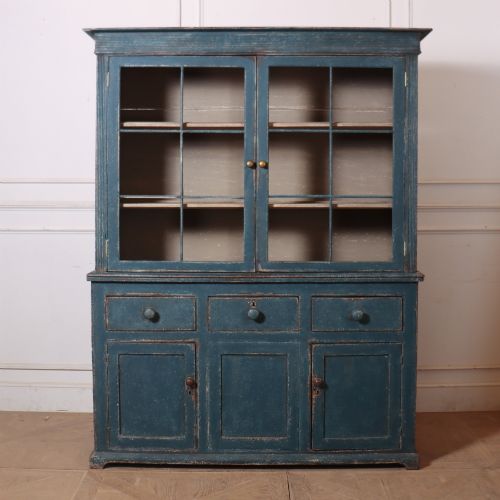
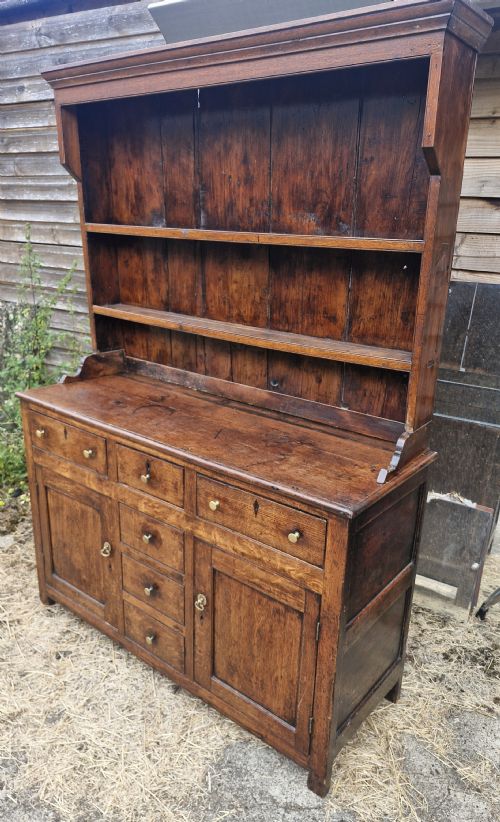
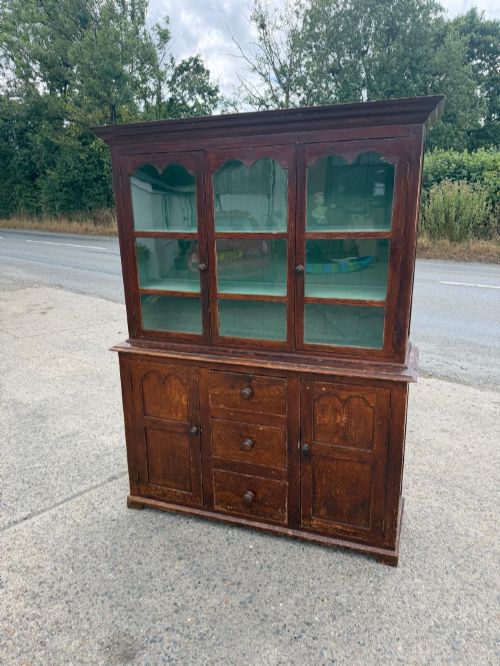
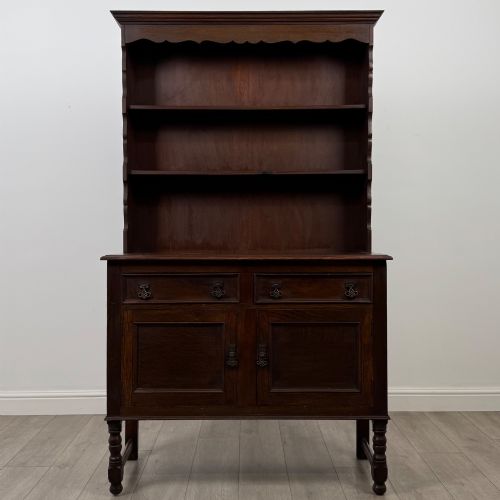
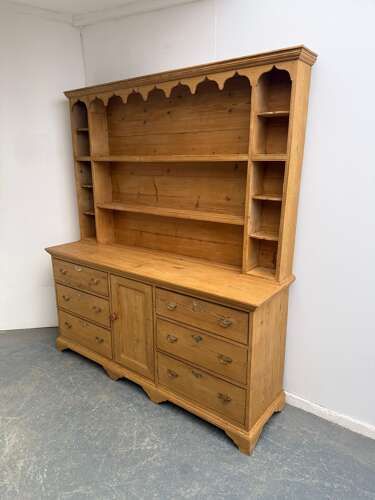
When you search for a rustic country hutch, you are looking at utilitarian storage furniture designed for farmhouse kitchens and rural cottage dining spaces. These pieces combine lower cupboards or drawer banks with upper plate racks or glazed cabinets.
The pieces on this page span the eighteenth, nineteenth and early twentieth centuries, drawing on regional British, Irish, French, Scandinavian and Hungarian traditions. Oak and pine dominate the forms, supplemented by walnut, elm and fruitwood.
You will most frequently encounter regional kitchen dressers and cottage cupboards constructed with local timbers and traditional joinery. These forms range from compact single pieces to substantial two-part units built for daily domestic life.
How they were made
Cabinetmakers built these pieces using solid native hardwoods and softwoods such as oak, pine, elm and walnut, often joining them with pegged mortise and tenon construction. Surfaces received hand-applied wax finishes, traditional paint schemes or clear varnishes that preserved the natural grain and growth marks of the timber.
Hardware typically included brass drawer pulls, iron hinges and occasionally bone escutcheons, fastened securely to heavy plank doors and dovetailed drawer boxes. Glazed top sections utilised hand-blown or cylinder glass panes secured with wooden glazing bars within sturdy frames.
Rustic Country Hutch Retail Price Guide 2026
Typical asking prices for rustic country hutch among the pieces listed under this phrase on Sellingantiques today, from the lower quarter to the upper quarter. They describe what is for sale here now, not the wider market.
Regional styles represented on this page include English Country, Georgian, Victorian Country, Rustic Farmhouse, and Scandinavian Country forms.
What varies in quality
Quality rests upon the integrity of the timber selection and the retention of original surface patination, from deep wax-rubbed oak to layered historic paint. Pieces retaining their original plate racks, backboards and hardware demonstrate superior historical completeness.
Construction nuance separates standard vernacular output from finer regional workshop production, evident in disciplined dovetailing, balanced proportions and harmonious integration of the upper rack to the base.
The Rustic Country Hutch Glossary
- Plate rack
- An open set of wooden shelves mounted on the upper back of a dresser, designed for displaying ceramic plates upright against grooves.
- Patina
- The surface sheen and softening of colour developed on wood and paint through decades of handling, cleaning and exposure to light.
- Breakfront
- A cabinet design where the central section projects forward from the flanking outer sections, adding architectural depth.
- Buffet vaisselier
- A French term for a two-part storage piece combining a lower buffet cupboard with an upper plate display section.
- Escutcheon
- A decorative shield or plate surrounding a keyhole, commonly cast in brass or forged in iron to protect the surrounding wood.
Rustic Country Hutch: Frequently Asked Questions
What is a rustic country hutch used for?
These pieces served historically in rural kitchens and dining rooms to store heavy crockery, table linens, and dry foodstuffs while displaying everyday ceramics on open upper shelves.
Today, they function brilliantly in modern homes as kitchen storage, living room display cabinets, or dining room servers for tableware.
How do I date a rustic country hutch?
Dating relies on examining construction methods, such as hand-cut dovetails on drawer boxes, pegged frame joints, and the type of timber used by the regional maker.
Secondary clues include the style of hardware, the presence of hand-blown glass, and the depth of the surface patina accumulated over generations.
How do I care for a waxed wood finish?
Maintain a waxed surface by dusting regularly with a soft, dry cloth and avoiding placement near direct heat sources or strong sunlight that can dry the timber.
Apply a traditional beeswax polish sparingly when the wood appears dry, buffing gently to restore the soft historic lustre.