


Rustic Ceramic Olive Jar
A rustic ceramic olive jar brings the tactile weight of Mediterranean and French provincial courtyards into modern rooms.
Rustic Ceramic Olive Jar
A rustic ceramic olive jar encompasses heavy storage vessels and garden planters shaped for utilitarian agricultural work across the Mediterranean. These pieces originate from regional traditions in France, Italy, Turkey, and Portugal, spanning from the eighteenth century into the early twentieth century.
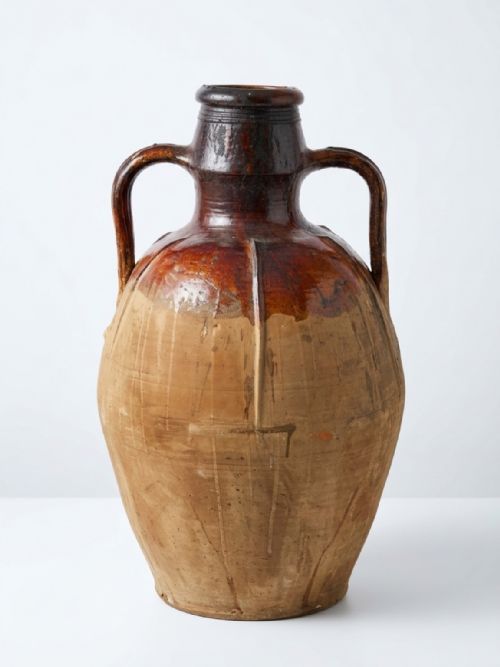
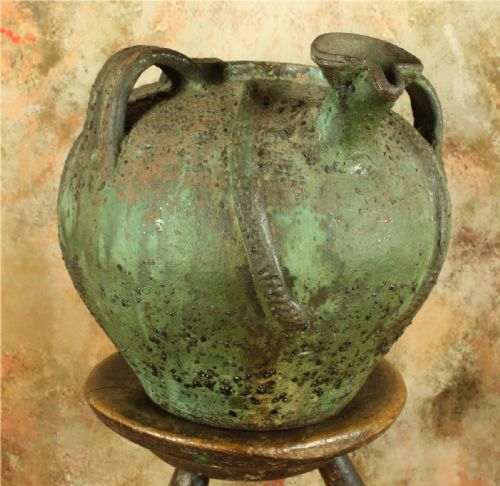
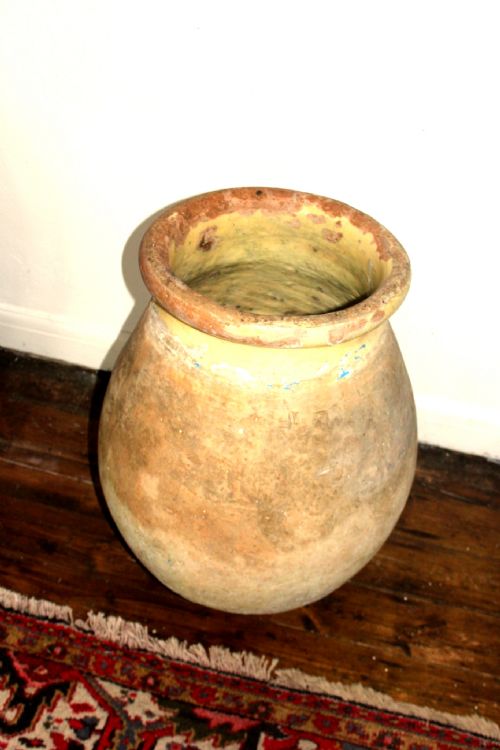
The version most commonly met on this page is the large nineteenth-century terracotta vessel, often showing the marks of agricultural storage for oil or wine. Forms range from three-handled jugs and tall amphorae to wide garden urns, frequently set on wrought iron stands.
Makers shaped these earthenware bodies by hand to hold provisions, resulting in thick walls designed to keep contents cool. Surviving examples bring weathered patinas and artisanal character directly from European farmyards into contemporary interiors.
Materials and construction
Potters worked with local terracotta, clay, and earthenware, throwing or building large vessels by hand to withstand heavy agricultural demands. The resulting bodies possess dense, porous walls that sometimes received partial ceramic glaze or painted surface treatments.
Iron mounts and wrought iron elements occasionally accompanied these vessels to support heavy bases or provide handles for lifting oil and wine. Years of exposure to Mediterranean weather created the aged patinas and surface variations seen on these nineteenth-century and eighteenth-century pieces.
Available forms span garden planters, three-handled oil jugs, amphorae, and large decorative urns set on wrought iron stands.
Factors that define quality
Quality rests in the harmony of proportion and the integrity of the handmade terracotta body, where generous scale meets balanced throwing. Superior examples display honest surface wear and patinas earned through genuine utility rather than artificial ageing.
The presence of early glazes, distinct regional handle configurations, and intact historical surfaces elevate certain vessels above standard utility wares. Strength in the fired clay and stability in large forms dictate how well these utilitarian pieces survive centuries of use.
The Rustic Ceramic Olive Jar Glossary
- Terracotta
- A porous, unglazed or slip-glazed fired earthenware made from reddish clay. This foundational material provides the earthy weight characteristic of Mediterranean storage vessels.
- Amphora
- A tall ancient storage vessel featuring two handles and a narrow neck tapering to a base. Traditional forms served to transport and store wine, oil, and dry goods.
- Confit jar
- A rounded ceramic pot historically used in rural France for preserving meats under fat. These pieces often feature glazed upper sections above raw terracotta bodies.
- Patina
- The surface texture, wear, and coloration developed through age and handling over decades or centuries. Authentic surface variation marks the genuine history of these utilitarian pots.
Rustic Ceramic Olive Jar: Frequently Asked Questions
How were these jars originally used?
These large vessels served rural households and agricultural estates as functional storage containers for olive oil, wine, and food preservation. Their thick terracotta walls helped regulate internal temperatures to keep provisions cool.
Over decades of agricultural work, exposure to the elements and handling left distinct surface wear across the earthenware bodies. Today, these utilitarian objects transition easily into decorative garden urns and interior vessels.
Can these pots stay outside in winter?
Terracotta is inherently porous and can absorb moisture, making unglazed vessels vulnerable to cracking during freezing temperatures. Protecting older earthenware during harsh winter months prevents frost damage.
Many collectors choose to bring these large containers indoors or shelter them under covered patios when temperatures drop below freezing.
How do I date an old terracotta jar?
Dating relies on examining the forming techniques, tool marks, clay consistency, and the character of any applied glazes or surface paint. Eighteenth-century and nineteenth-century pieces often show distinct hand-thrown irregularities absent in later industrial production.
Regional styles and historical forms also offer clues, as specific handle placements and proportions align with distinct European village traditions.
Where should I place a large jar at home?
Large vessels anchor empty corners in living rooms, hallways, and entranceways, bringing sculptural weight to domestic interiors. They stand effectively on their own as architectural statements or hold dried branches and stems.
In outdoor settings, garden urns and planters anchor patio spaces, often displayed on wrought iron stands to elevate the terracotta forms.