
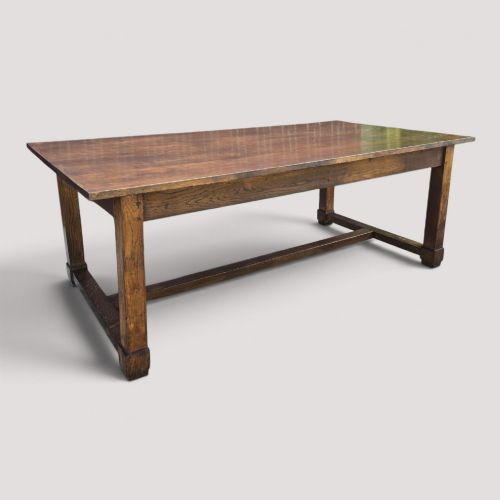
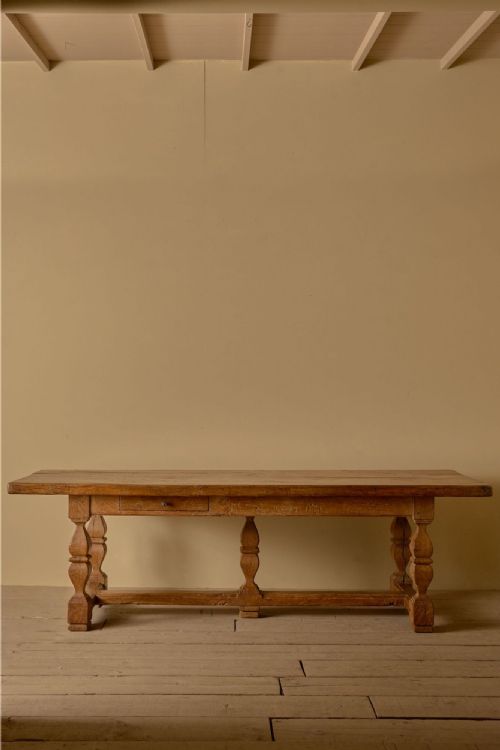
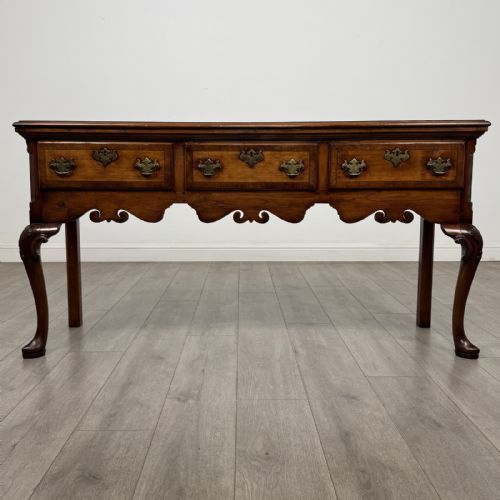
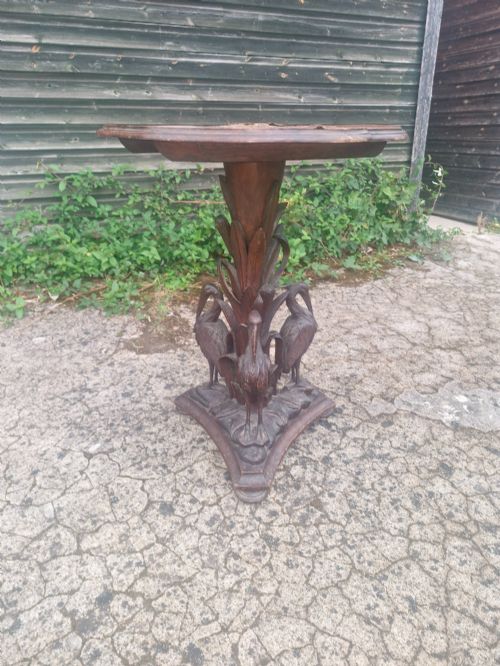
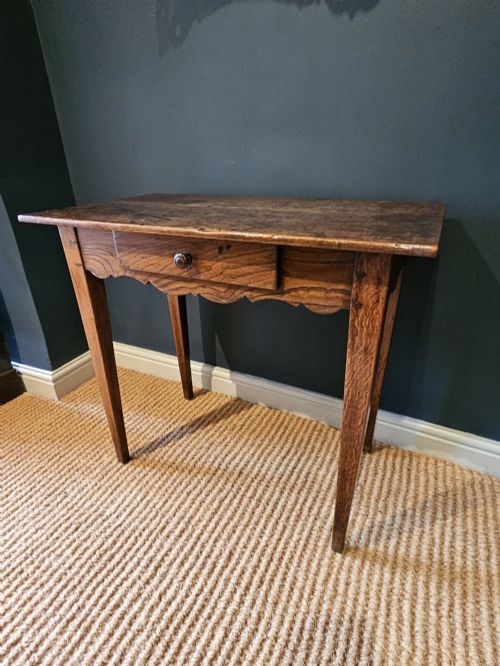
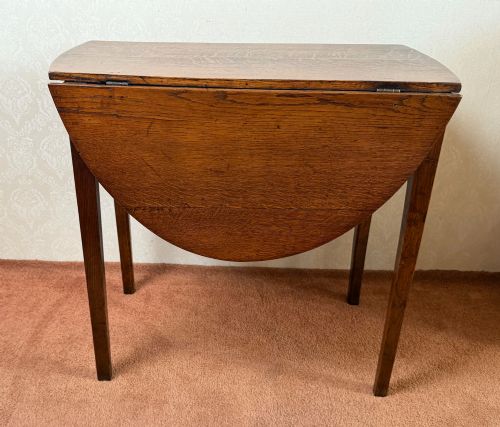
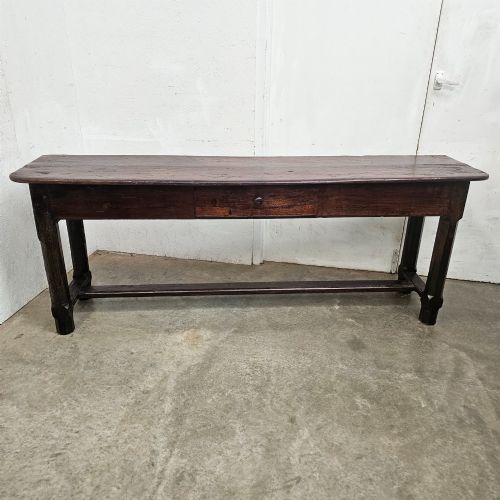
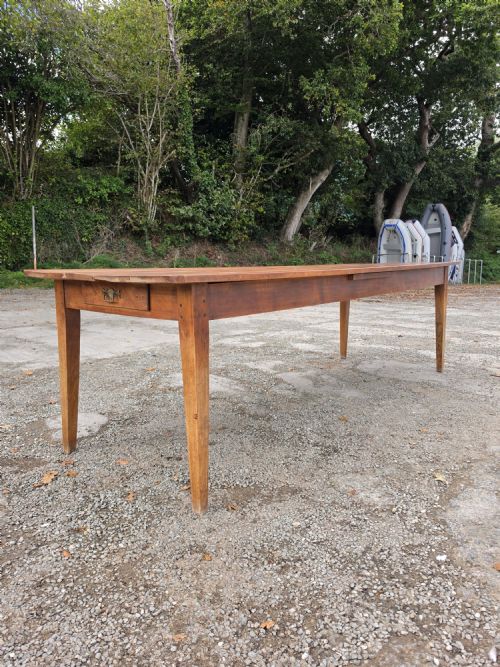
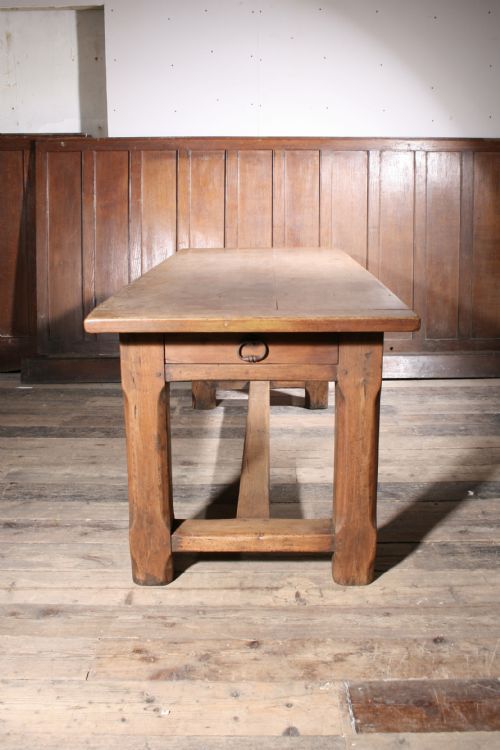
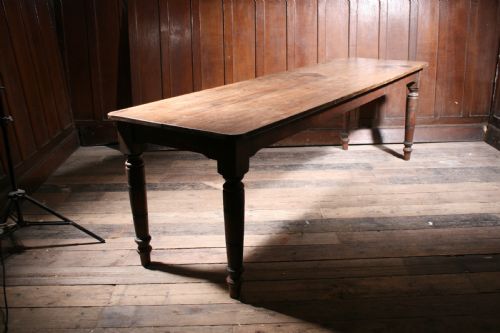
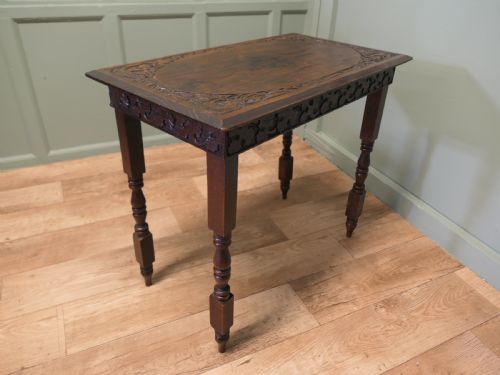
Rustic Brown Wooden Table
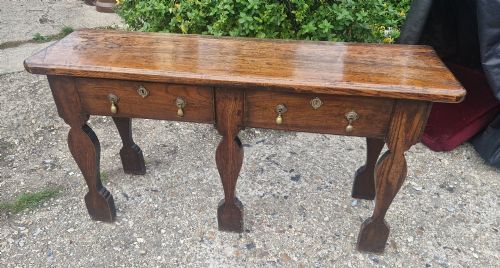
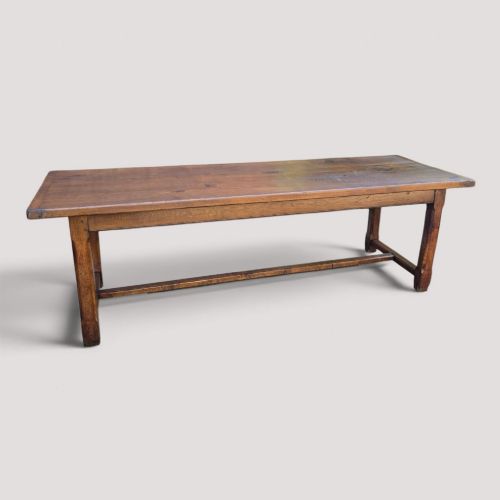
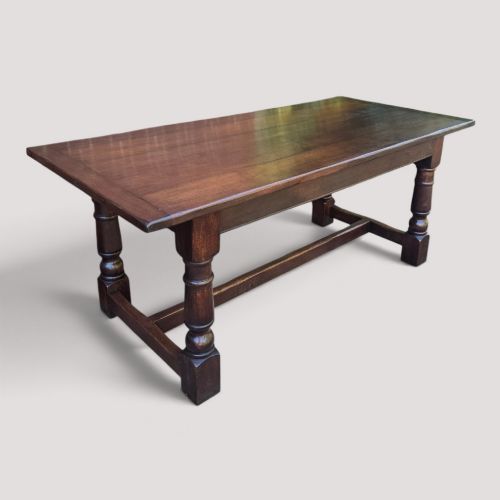
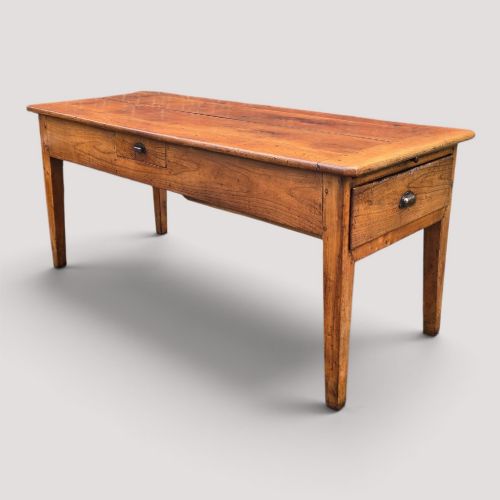
A rustic brown wooden table brings honest utility and deep timber grain to a room.
Rustic Brown Wooden Table
A rustic brown wooden table is a functional domestic surface shaped by tradition, showing the natural warmth of timber. Buyers seeking a rustic brown wooden table will encounter pieces spanning several centuries, primarily domestic furniture designed for daily use.
The selections on this page draw heavily from the eighteenth and nineteenth centuries, alongside early twentieth-century examples. Common forms include large farmhouse dining tables, compact side tables, coffee tables, and occasional serving pieces.
Originating largely from English and French country workshops, these tables display regional vernacular characteristics. Oak, elm, fruitwood, and pine dominate the forms, reflecting the accessible timbers of their respective eras.
Materials and Construction
Cabinetmakers and rural joiners relied on solid hardwoods and softwoods such as oak, fruitwood, elm, and pine for primary surfaces and framing. Beech often provided strength for turned legs and structural supports, while iron and brass hardware added functional reinforcement.
Joinery methods prioritized durability through pegged mortise and tenon joints, dovetails, and turned wooden components. Surfaces display the tool marks of hand-planing, while some examples retain historic painted finishes like scumble or regional pigments.
Periods represented span from the 1800s through the Edwardian era, encompassing Georgian vernacular and Arts and Crafts movements.
Assessing Quality and Character
Quality rests in the integrity of the timber selection and the retention of original surfaces. Tables fashioned from thick, mature planks of oak or fruitwood demonstrate superior structural substance compared to later utility builds.
The relationship between the top boards and the base structure dictates the visual harmony of the piece. Untouched patination, honest wear from decades of domestic service, and sound joinery elevate an ordinary table into a notable example of vernacular craft.
The Rustic Brown Wooden Table Glossary
- Vernacular
- Everyday objects built by local craftspeople using regional traditions rather than high-style academic designs. These pieces prioritize function and local material availability.
- Refectory
- A long dining table historically used in communal dining halls. In domestic settings, these provide expansive timber surfaces supported by stretcher bases.
- Cricket table
- A small, lightweight three-legged table originating in the eighteenth century. The tripod base provides stability on uneven stone floors.
- Gateleg table
- A drop-leaf table with hinged flaps supported by swinging legs that resemble a opening gate. This design allows the surface area to expand or contract as needed.
- Scumble
- A decorative painting technique used to imitate wood grain or create translucent surface patterns. It appears on nineteenth-century pieces to enrich plain softwoods.
Rustic Brown Wooden Table: Frequently Asked Questions
How do I clean an antique wooden table?
Maintain the surface with a soft cloth and natural beeswax to nourish the dry timber. Avoid modern chemical sprays that strip the historic patination.
Keep the wood away from direct heat sources and strong sunlight to prevent the boards from splitting or warping over time.
Can I use an antique farmhouse table daily?
These tables were built for heavy domestic work and kitchen use, making them durable for everyday living. Use coasters and placemats to protect the historic surface from moisture and heat rings.
Embrace minor marks and dents as part of the ongoing history of the timber.
How do I tell an 18th century table from a 19th century one?
Examine the underside and the fastening methods used to attach the top boards to the frame. Eighteenth-century examples often feature hand- cleft timber and pegged joints without modern metal screws.
Tool marks left by pit saws or adzes point towards earlier rural production methods.
What is the difference between oak and fruitwood tables?
Oak offers a heavy, open-grained structure with strong medullary rays, common in English vernacular and refectory forms. Fruitwood, such as cherry or pear, provides a warmer tone with a finer, smoother grain favoured in French provincial pieces.
Both timbers age to a deep brown patina through exposure to light and air.