


Anglo Burmese Teak Table
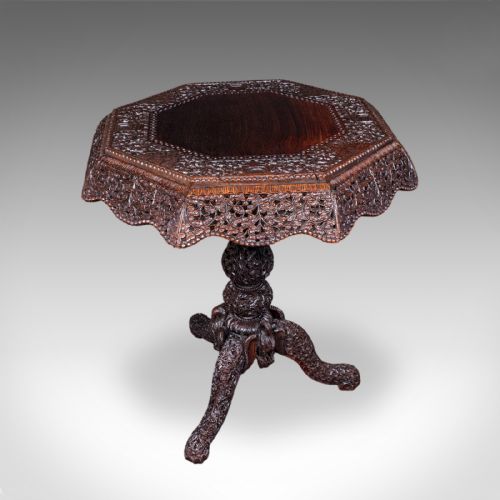
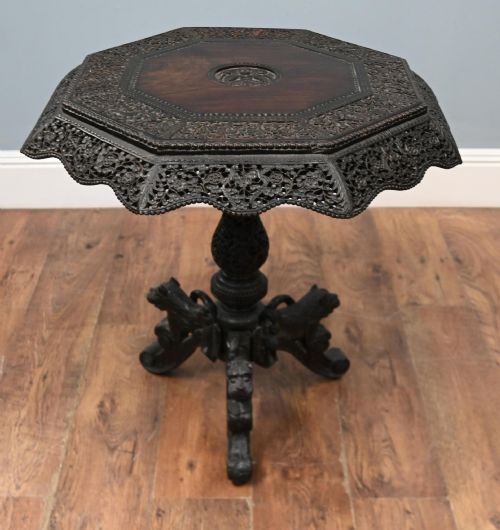
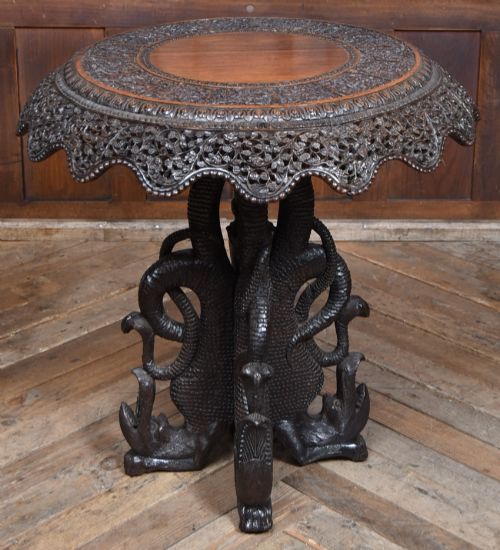
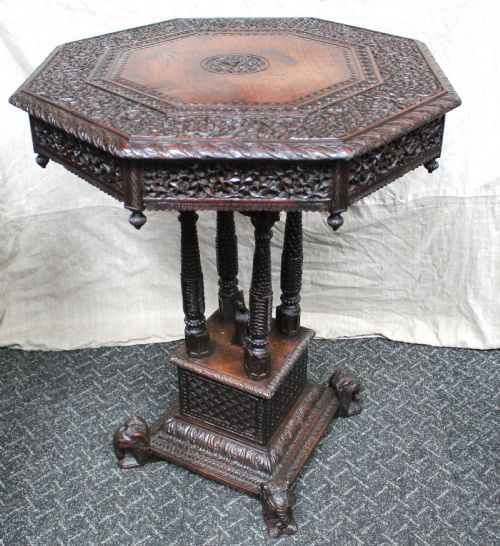
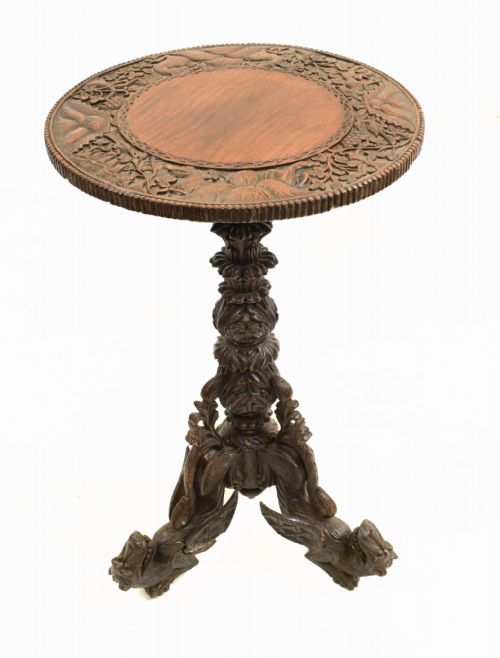
An anglo burmese teak table brings intricate colonial carving and dense tropical timber directly into a room.
Anglo Burmese Teak Table
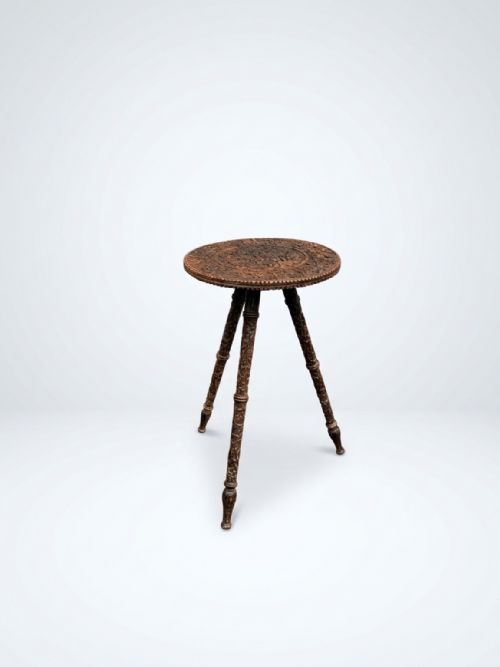
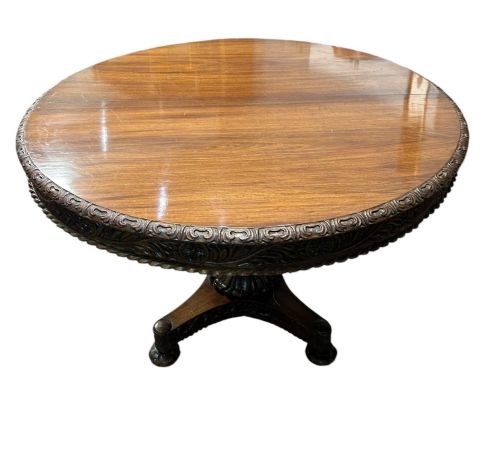
An anglo burmese teak table encompasses diverse nineteenth century forms, from small occasional pieces and side tables to console tables and larger dining surfaces. These items combine British domestic furniture forms with traditional Burmese craftsmanship, often featuring deep relief carving and distinctive structural elements like elephant legs.
How they were made
Makers utilised dense teak and other regional hardwoods, carving the timber by hand to achieve deeply textured surface ornament. Skilled artisans wrought complex figural and floral motifs directly into the solid wood.
Construction methods combined traditional joinery with surface embellishment, occasionally incorporating painted details or bone elements. The heavy timber was shaped into robust frames capable of supporting elaborate, dense relief work.
What varies in quality
The depth and crispness of the hand carving separate finer examples from simpler provincial work. Superior pieces display sharply defined motifs and balanced proportions across the entire structure.
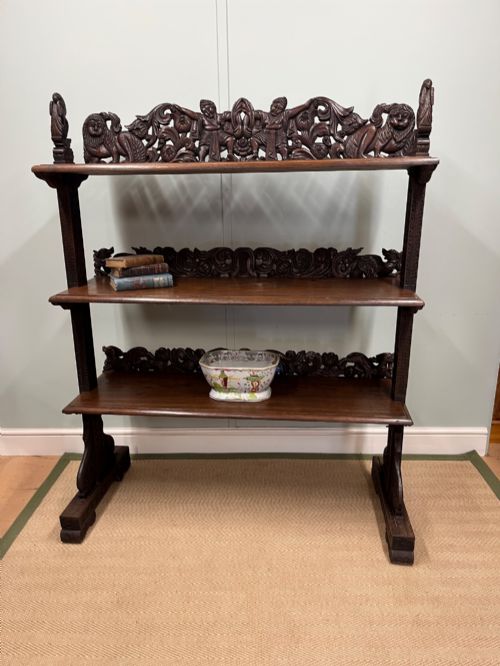
The choice of timber and the complexity of the form also dictate quality. Tables featuring specialised configurations, such as tilt mechanisms or tiered shelving, demonstrate higher levels of nineteenth century joinery skill.
The Anglo Burmese Teak Table Glossary
- Anglo-Burmese
- A style describing nineteenth century furniture created under British colonial influence in Burma, combining local carving traditions with European forms.
- Tilt top table
- A table with a hinged top that can be rotated to a vertical position when not in use, saving space in domestic interiors.
- Teak
- A dense, oil rich tropical hardwood native to South and Southeast Asia, prized for its durability and suitability for intricate carving.
- Two tier side table
- A secondary furnishing featuring an upper surface and a lower shelf supported by carved uprights or legs.
- Buffet
- A sturdy piece of furniture designed for serving or storage, appearing here in multi tiered wooden configurations from the nineteenth century.
Anglo Burmese Teak Table: Frequently Asked Questions
How do I date an anglo burmese teak table?
Dating relies on stylistic markers, construction methods, and recorded production periods from the nineteenth century. Victorian examples often show specific colonial influences and standard joinery techniques of the era.
Examining the wear on the teak and the style of the hand carving helps narrow down whether a piece originates from the mid or late nineteenth century.
Where were these tables originally used?
These tables served in colonial households, officers' quarters, and domestic British interiors during the nineteenth century. Their varied forms suited drawing rooms, libraries, and lounges.
Smaller occasional tables and book stands were designed for mobility and specific daily tasks, while larger console and dining tables anchored formal rooms.
How do I care for a teak table?
Maintenance requires keeping the dense hardwood away from direct heat sources and sudden humidity changes to prevent movement in the timber. Regular dusting with a dry cloth preserves the intricate hand carved surfaces.
Avoid harsh chemical polishes that can build up within the deep recesses of the carved relief work over time.
What is the difference between side and occasional tables?
Side tables typically stood against walls or beside seating to hold lamps and decorative objects, whereas occasional tables were smaller and moved about a room as needed. Both forms utilise heavy teak and dense colonial carving.
Tiered versions and tilt top designs further distinguish specific occasional forms from standard flat topped side tables.