
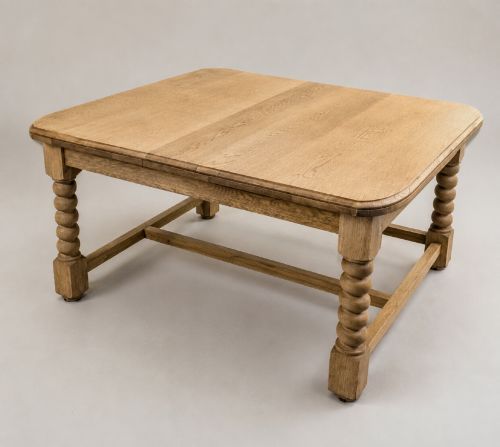
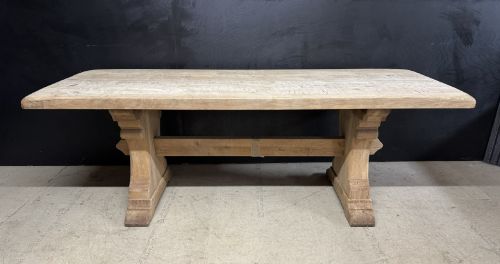
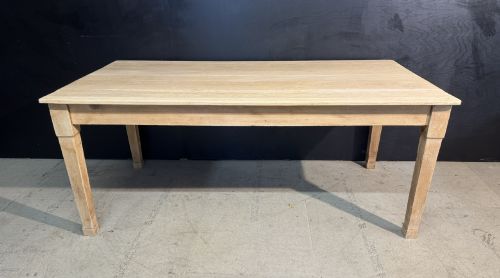
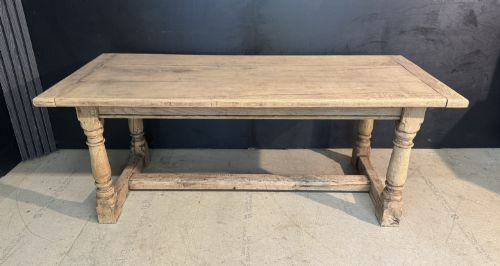
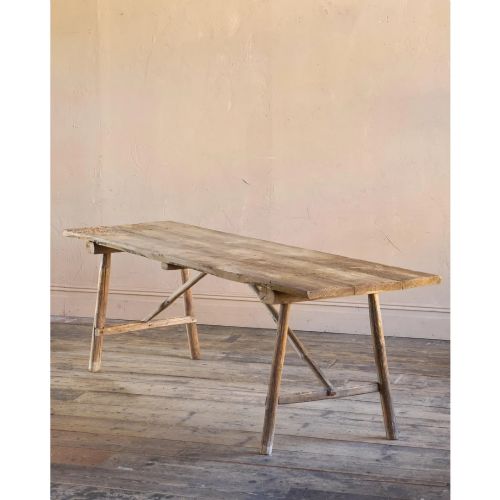
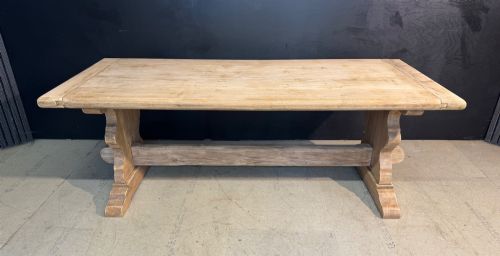
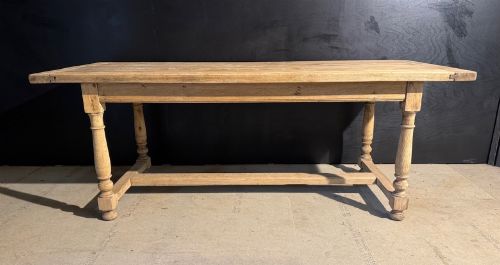
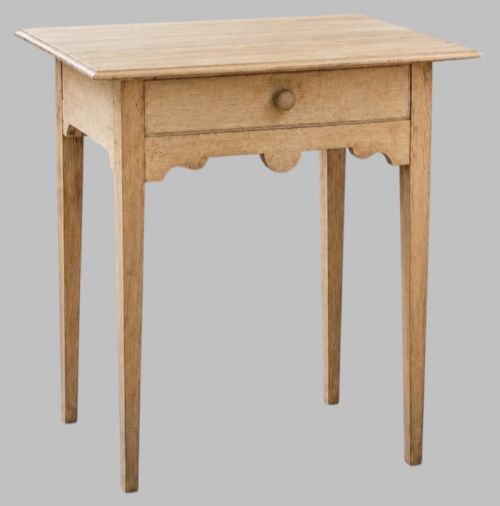
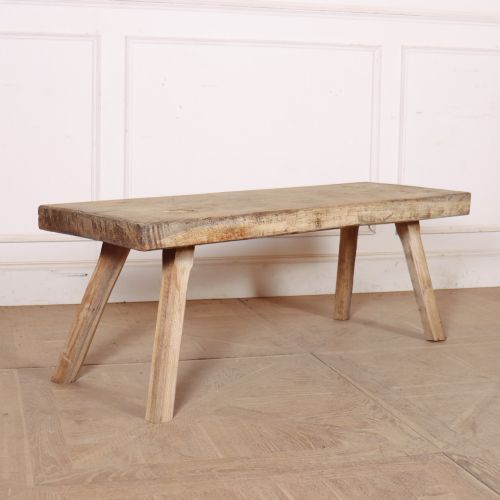
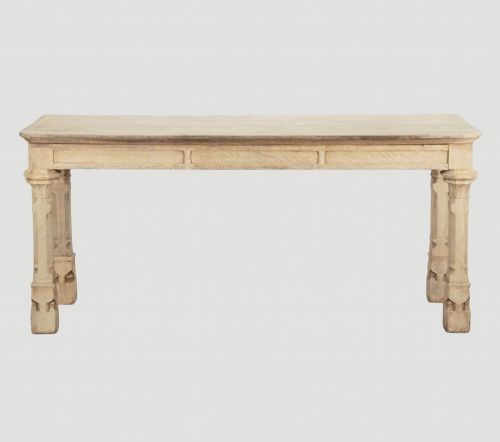


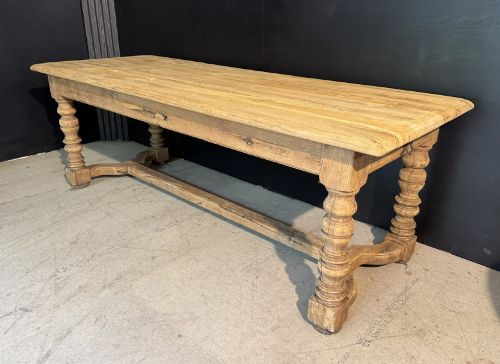

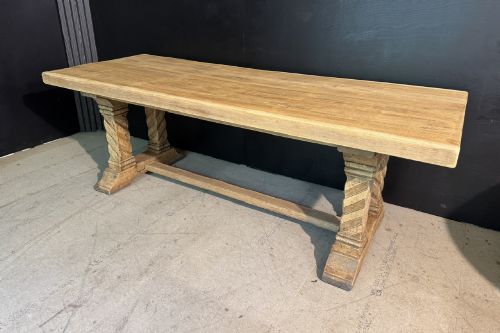

Rustic Bleached Oak Table
A rustic bleached oak table brings honest timber and weathered character to a room, offering a durable surface shaped by decades of domestic use.
Rustic Bleached Oak Table
A rustic bleached oak table is defined by its substantial timber construction and softened, lighter tone achieved through historical weathering or treatment. When searching for a rustic bleached oak table, buyers most frequently encounter farmhouse dining tables dating from the early twentieth century alongside nineteenth-century examples and earlier Georgian pieces.
Beyond standard dining formats, the selection spans diverse functional forms including coffee tables, console tables, side tables, and drapers tables. Origins range from English workshops to French provincial makers, as well as Spanish and Italian examples sharing a sturdy, country aesthetic.
The material integrity remains rooted in solid oak, occasionally paired with secondary timbers like pine or accented with brass and iron hardware. These surfaces carry the grain and marks of past utility, making each piece distinct in its proportion and surface texture.
Materials and construction
Construction relies heavily on solid oak timber, valued for its density, durability, and prominent grain pattern. Joinery is traditionally robust, designed to withstand daily domestic labour in kitchens, halls, and dining rooms.
The characteristic pale finish on these tables results from natural ageing processes or deliberate bleaching techniques applied to the raw oak. Secondary structural elements, when present, may incorporate pine alongside iron and brass fixings used for hinges, handles, or structural reinforcement.
The listings on this page span several centuries, featuring oak, pine, iron, and brass across dining, console, and coffee table forms.
Assessing quality and craftsmanship
Quality in these tables is determined by the selection of the timber and the integrity of the original construction rather than surface perfection. Better examples display stable framing, well-fitted joints, and timber that has bleached evenly while retaining its natural structural strength.
Proportion and utility set finer pieces apart, particularly in functional details like smooth-running drawers on side and drapers tables. The transition from heavy dark oak to a successful bleached finish requires balance, preserving the historic character of the wood without masking its natural grain.
The Rustic Bleached Oak Table Glossary
- Bleached oak
- Oak timber that has been lightened in colour, either through exposure to light and elements over time or via chemical treatment. This process softens the traditional dark tones of the wood.
- Farmhouse table
- A large, sturdy wooden table traditionally used for daily kitchen and dining tasks. These pieces usually feature thick timber tops and simple, robust legs.
- Drapers table
- A long, narrow table historically used in textile shops for measuring and folding cloth. They often incorporate multiple drawers beneath the top.
- Refectory table
- A long dining table traditionally used in monastic refectories or large halls. They are characterised by their elongated proportions and strong stretcher bases.
- Potboard dresser
- A sideboard or dresser base featuring an open lower shelf traditionally used for storing pots and pans. This storage shelf sits close to the floor between the legs.
Rustic Bleached Oak Table: Frequently Asked Questions
How do I clean a bleached oak table?
Dust the surface regularly with a soft, dry cloth to prevent grit buildup in the open grain of the bleached timber.
For routine cleaning, use a damp cloth with mild soap, drying the surface immediately to protect the lighter finish.
Are these tables suitable for daily dining?
Solid oak construction makes these tables exceptionally durable and well-suited for everyday family meals and kitchen activities.
The aged surfaces are already accustomed to heavy use, meaning normal daily life adds to their existing character rather than damaging them.
How can I tell the age of the table?
Dating relies on examining construction methods, tool marks, and hardware types used in the framing and drawers.
Earlier pieces from the Georgian period show hand-cut joinery, while twentieth-century examples often display machine-sawn elements combined with traditional pegged joints.
What is the difference between French and English styles?
French provincial and country tables frequently feature softer leg profiles, subtle carvings, and fruitwood or oak construction.
English farmhouse tables tend to be heavier and more utilitarian in their geometry, prioritising sheer mass and unadorned structural strength.