
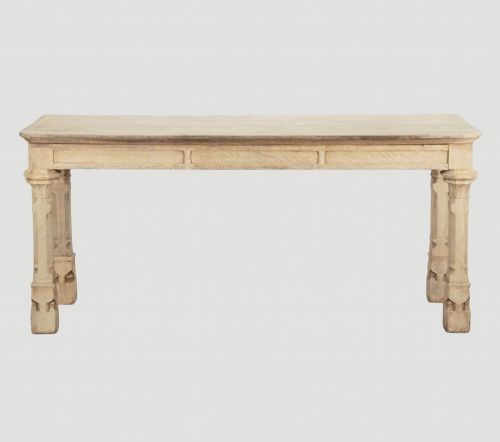


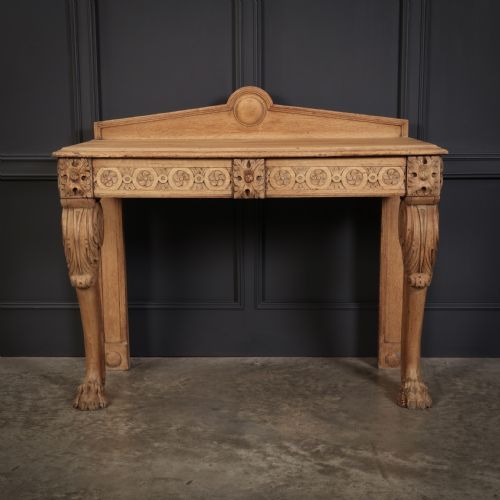

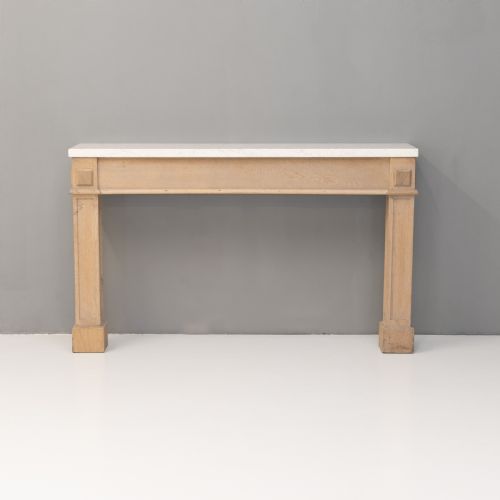


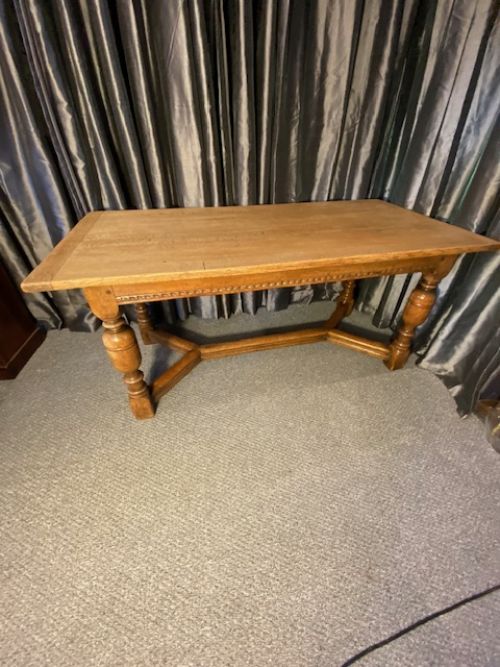

Bleached Oak Console
Bleached oak console tables bring pale timber tones and practical proportions to hallways, dining rooms and sitting rooms.
Bleached Oak Console
A bleached oak console sits against a wall in a hallway, dining room or living space, offering a surface for lamps, books or decorative objects. When searching for a bleached oak console, buyers encounter forms that span several centuries and originate from workshops across England, France, Scotland, Italy, Spain and the Netherlands.
The pieces listed on this page include console tables, drapers tables, serving tables, hall tables and dressers adapted to narrow formats. French provincial, English country, Georgian and Gothic revival styles dominate the selection, showing how different regional traditions adapted the timber.
Most examples date from the nineteenth century, though eighteenth-century items and early twentieth-century interpretations appear regularly. These tables range from simple trestle designs to carved pieces featuring potboards and brass fittings.
What separates examples
The depth of the grain and the consistency of the pale tone determine the visual success of the bleaching process, as uneven lightening can obscure the natural character of the timber. Finely executed carving on skirts and legs distinguishes bespoke console tables from utilitarian drapers tables and plain side tables.
Structural integrity depends on the original purpose of the piece, where tables built for heavy serving or drapers work often retain more robust framing than decorative hall tables. The proportion of the base to the top, along with the retention of original brass hardware, shapes the overall character of each item.
Listings feature pieces from the 18th Century, 19th Century and early 20th Century, alongside materials such as oak, marble, pine and brass.
The Bleached Oak Console Glossary
- Console table
- A table designed to stand against a wall, typically secured with brackets or supported by front legs. These pieces suit narrow spaces like hallways and landings.
- Drapers table
- A long, utilitarian table originally used in fabric shops, featuring a narrow profile and frequently utilised as a console or serving surface today.
- Potboard
- An open slatted lower shelf fitted beneath a dresser or console table, traditionally used for storing pots and heavy tableware.
- Trestle table
- A table consisting of two or more support frames connected by a horizontal beam, common in French provincial and country furniture.
- Bleached oak
- Timber that has been treated to remove its original dark finish, resulting in a pale, uniform surface that highlights the grain.
Bleached Oak Console: Frequently Asked Questions
Where do I put a console table?
Console tables fit well in narrow circulation spaces such as hallways, corridors and landings where floor space is limited. They also serve effectively behind sofas or against dining room walls for serving food and displaying objects.
The shallow depth of these pieces allows them to occupy minimal space while providing a functional surface for lamps and everyday items.
How do I clean bleached oak?
Dust bleached oak regularly with a soft, dry cloth to prevent dirt from settling into the open grain of the wood. Avoid harsh chemical cleaners and excessive water, which can damage the pale surface and alter the finish.
Apply a coat of clear, quality wax occasionally if the timber begins to look dry, buffing it gently with a clean cloth to maintain a soft sheen.
What is the difference between a console and a hall table?
Console tables are traditionally designed to stand flat against a wall, sometimes requiring wall fixings for stability, and often feature decorative carving on the front and sides. Hall tables are generally freestanding pieces built with four legs and a more utilitarian construction suitable for daily comings and goings.
Both types share a narrow profile, but hall tables frequently include drawers for keys and post, whereas consoles prioritize surface display.
How do I date an oak console?
Dating an oak console involves examining the construction methods, tool marks, joinery and hardware used in the frame. Hand-cut dovetails, pegged joints and the type of saw marks left on hidden timber provide clues to the period of manufacture.
Stylistic indicators, such as Gothic revival arches or Georgian proportions, help narrow down the decade or century of origin when compared against documented examples.