
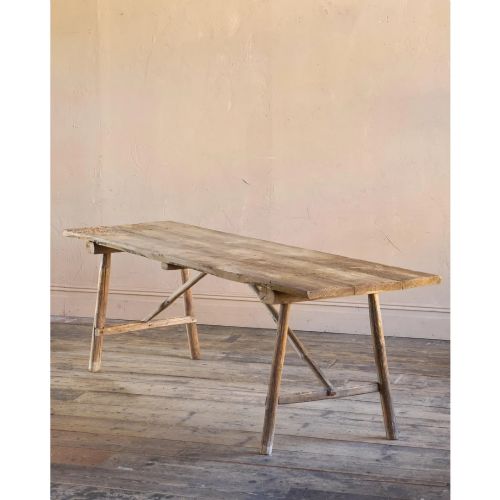
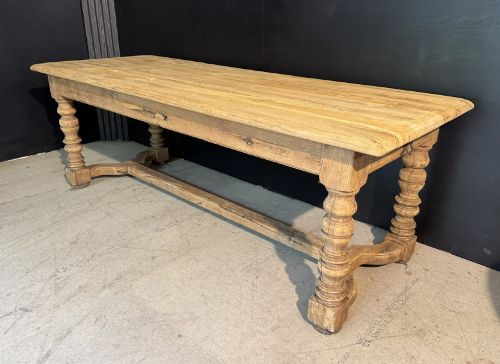


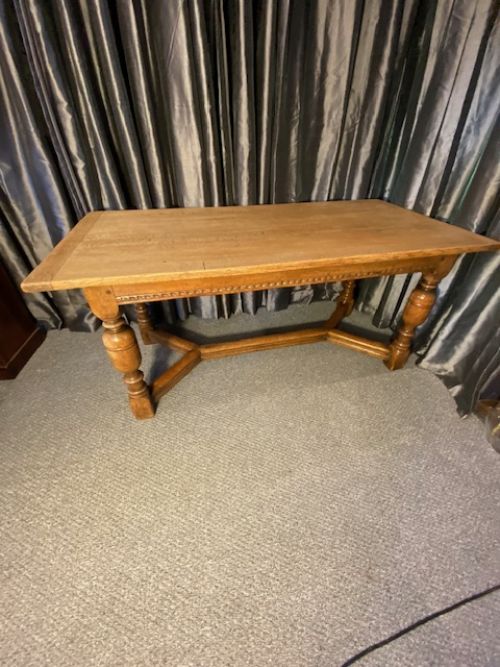


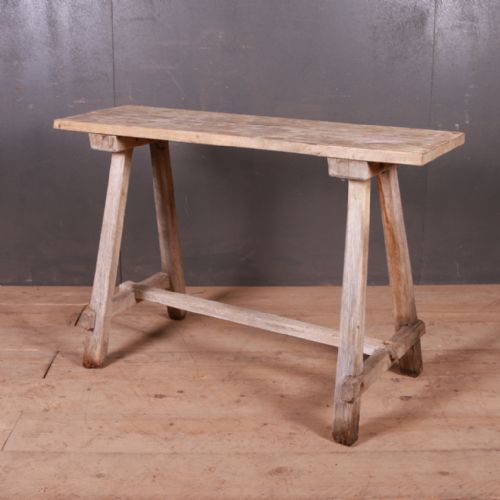
Bleached Oak Desk Table
A bleached oak desk table brings rustic warmth and stripped-back utility to a room.
Bleached Oak Desk Table
A bleached oak desk table is a versatile surface bridging the gap between domestic writing furniture and sturdy country dining boards. When you search for this phrase, you find practical pieces adapted from earlier forms, often originating from French or English rural traditions.
The most common examples on this page are French trestle tables and servers from the nineteenth century or the early twentieth century. These objects typically present a pale, weathered timber finish that exposes the natural grain of the oak.
Makers designed these items for heavy daily use in farmhouses and workshops, meaning they combine generous proportions with honest construction. They serve equally well as writing desks in modern studies or as functional centrepieces in kitchens.
How they were made
Makers constructed these tables primarily from solid oak and associated timbers like pine or softwood for internal framing. Carpenters utilised traditional joinery techniques, securing heavy planks with pegged tenons and sturdy trestle supports.
The characteristic pale appearance results from a bleaching or stripping process applied to older surfaces, which removes dark historic varnishes or waxes. Iron and brass hardware, such as drawer pulls or structural brackets, frequently accent the stripped timber.
Listings feature pieces spanning the nineteenth century up to nineteen twenty, utilising oak, pine, and weathered timber.
What varies in quality
Quality in a bleached oak desk table depends heavily on the integrity of the timber and the subtlety of the surface finish. Superior pieces retain deep patination and honest wear beneath the bleached exterior, rather than bearing harsh chemical stripping that flattens the grain.
Construction methods also separate standard utility tables from finer regional examples. Well-balanced proportions, hand-carved details on drawers or skirts, and heavy-gauge oak boards indicate superior craftsmanship.
The Bleached Oak Desk Table Glossary
- Trestle table
- A table supported by two or more upright frames connected by a horizontal beam. This design offers maximum legroom beneath the surface.
- Bleached oak
- Timber treated to lighten its natural colour, revealing the porous grain and softening the visual weight of the wood. It suits contemporary rustic interiors.
- Primitive country
- A style denoting straightforward, unpretentious furniture made for domestic utility without elaborate ornamentation. These pieces rely on simple lines and robust materials.
- Serving table
- A long, narrow table traditionally used for holding food or utensils during meals. In modern settings, they function effectively as narrow writing desks or console surfaces.
Bleached Oak Desk Table: Frequently Asked Questions
How do I use a bleached oak desk table?
These tables function well as writing desks, study surfaces, or central room tables in both traditional and modern interiors. Their generous proportions provide ample workspace for daily tasks.
The pale finish allows the furniture to blend easily with various colour schemes, brightening darker rooms while maintaining a grounded, organic feel.
Are these tables suitable for daily work?
Most pieces offer sturdy construction designed for heavy domestic or workshop use, making them durable enough for regular computer work or writing. The solid timber surfaces handle normal daily wear resiliently.
Buyers should consider adding a protective pad if using delicate writing instruments on older, uneven oak planks.
How do I clean a bleached oak surface?
Dust the surface regularly with a soft, dry cloth to prevent dirt from settling into the open grain of the stripped timber. Avoid harsh chemical cleaners that might strip away the remaining finish.
Spills should be wiped immediately with a slightly damp cloth to prevent staining on untreated or lightly sealed wood.
How do I date an older oak table?
Examine the construction marks, tool traces, and the way the boards connect beneath the top. Hand-cut joinery and signs of historical wear often point towards nineteenth-century origins.
The specific style of the trestle supports and the presence of secondary woods like pine can also offer clues to the period of manufacture.