




Rustic Bird Carvings
Rustic bird carvings are hand-carved avian sculptures and decoys that bring tactile folk art character into country interiors.
Rustic Bird Carvings
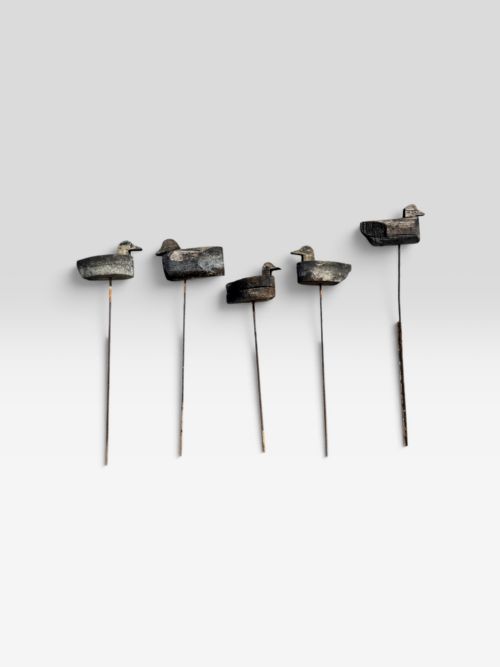
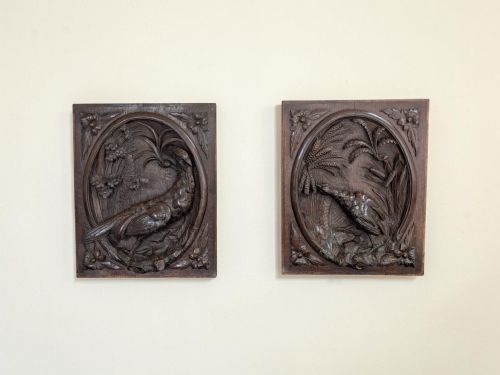
Rustic bird carvings encompass working waterfowl decoys, country house dovecotes, and Black Forest sculptures made across the nineteenth and early twentieth centuries. When searching for rustic bird carvings, buyers encounter working decoys like ducks, geese, and pigeons alongside architectural pieces such as stick stands and hat racks shaped as eagles or herons.
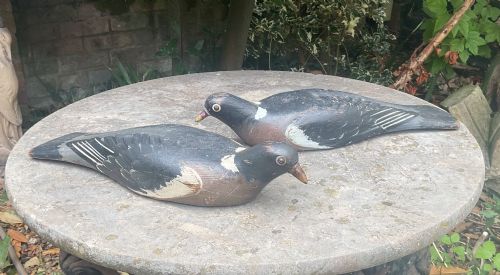
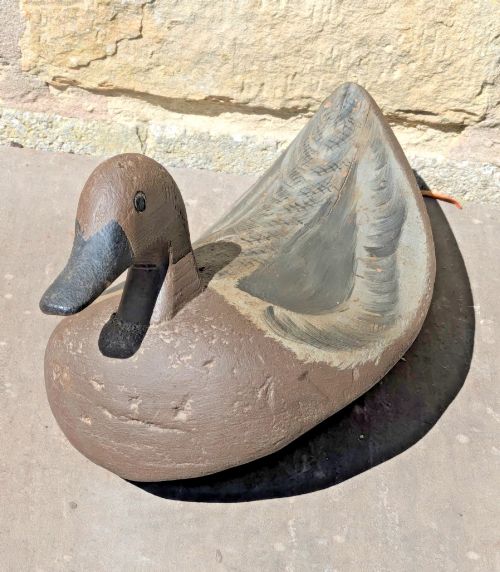
The objects stem from English, French, and Black Forest traditions, spanning the Victorian, Edwardian, and 1920s periods. Most examples seen here take the form of hand-painted wooden decoy ducks or decorative water birds carved from solid timber.
Makers shaped these utilitarian objects for shooting or domestic utility rather than salon display, resulting in honest folk art forms. The selection ranges from single decorative sculptures to pairs of painted wood decoy pigeons and sets of three carved wood decoys.
How they were made
Makers fashioned these pieces primarily from carved wood, timber, and pine, working by hand to shape the avian bodies. Iron and metal often appear in structural elements or functional hooks on items like coat racks.
Surfaces frequently feature hand-applied paint and gesso, preserving the working finish and patination accumulated over decades of use. Carvers utilised simple gouges and knives to define plumage and posture, leaving tool marks visible across the wood.
Current listings feature wood, paint, iron, and gesso across items dated from the 1880s through the 1930s.
What varies in quality
Quality rests in the vigour of the carving and the integrity of the original painted surface, where authentic working wear enhances the visual weight. Strong anatomical proportion paired with expressive stance separates master folk art from rigid production work.
The retention of untouched early paint layers dictates desirability, as stripped or heavily restored surfaces alter the historic character. Construction depth, such as hollow-carved decoy bodies versus solid blocks, also influences the craftsmanship of the piece.
The Rustic Bird Carvings Glossary
- Decoy
- A carved and painted bird used by hunters to attract waterfowl or pigeons. Traditional decoys feature weighted bottoms or attachment loops for field placement.
- Gesso
- A plaster-like mixture applied to wood surfaces to provide a smooth base for painting. It often underlies the polychrome finishes on older decorative objects.
- Polychrome
- Decorated in multiple colours. This term describes the original painted surface layers surviving on nineteenth and early twentieth-century wooden sculptures.
Rustic Bird Carvings: Frequently Asked Questions
What are rustic bird carvings?
These pieces are hand-carved wooden birds, primarily working decoys and folk art sculptures, created during the nineteenth and early twentieth centuries for shooting or domestic utility.
They reflect regional traditions from England, France, and the Black Forest, using local timber and hand-applied paint.
How were old decoys used?
Hunters placed wooden ducks, geese, and pigeons on water or in fields to attract live birds within shooting range.
Many feature weighted bases or attachment points designed to keep them upright and stable during practical use.
How do I style them at home?
Their honest folk art forms suit country house interiors, plain-shelved libraries, and rustic table settings.
Displaying them in small groups or pairs highlights the variation in hand-painted surfaces and carved postures.
How do I tell periods apart?
Victorian and nineteenth-century pieces often display deeper tool marks and simpler construction, while Edwardian and 1920s examples show refined paint layers.
Material choices like pine versus denser hardwoods also help distinguish regional workshops and eras.