


Antique Hunting Decoy Birds
Antique hunting decoy birds are working timber carvings brought indoors as folk art, prized for their weathered surface and sculptural silhouette.
Antique Hunting Decoy Birds
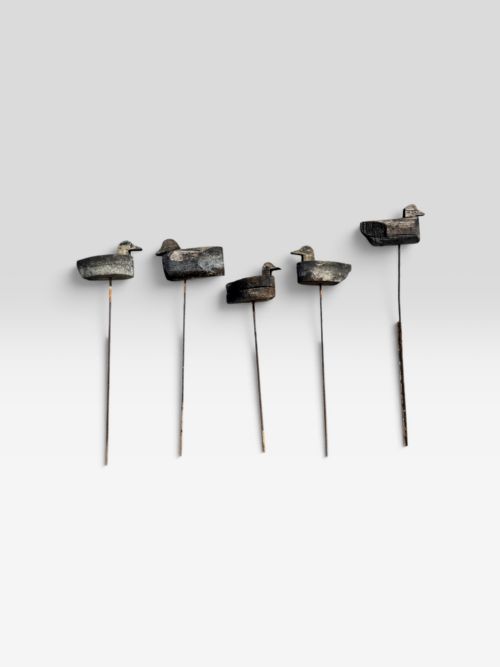
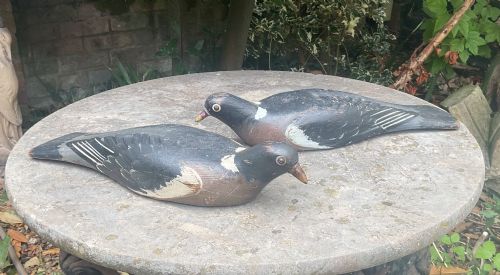
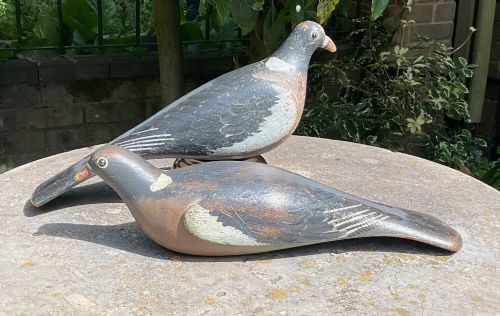
When you search for antique hunting decoy birds, you encounter working carvings designed to lure wildfowl, now collected as vernacular sculpture. The selection here spans the nineteenth century, the Edwardian period, and the nineteen-twenties and thirties, representing British working traditions.
Pigeons, ducks, and geese dominate the forms, appearing individually, in pairs, and in sets of three. Materials run from carved hardwood and turned timber to iron details and glass eyes, with original painted finishes defining the surface.
Folk art and Victorian styles anchor these pieces, showing the straightforward craftsmanship of makers who worked for utility rather than the showroom. These objects bring a quiet, utilitarian presence to a modern interior.
How they were made
Makers fashioned these decoys from solid timber and hardwood, shaping the body by hand or on a lathe to create buoyant, hydrodynamic forms. Tool marks often remain visible beneath layers of lead or oil paint.
Surfaces received hand-painted pigments to mimic the plumage of pigeons, ducks, and geese, weathering through decades of exposure in fields and marshes. Glass eyes and iron fittings occasionally provide realistic detail to the head and bill.
Listings span the nineteenth century through the nineteen-thirties, featuring painted wood, iron, glass, and turned hardwood.
What varies in quality
The strength of the silhouette and the integrity of the original paint layer separate ordinary examples from exceptional ones. Decoys retaining their untouched, weathered pigmentation carry far more visual presence than those stripped or heavily repainted.
Anatomy and posture dictate the character of the carving, with bolder, more naturalistic stances commanding attention. The weight and selection of the timber also contribute to the tactile solidity of the piece.
The Antique Hunting Decoy Birds Glossary
- Decoy
- A carved or moulded figure used to attract wild birds or animals within shooting range. These working objects now serve entirely decorative purposes in domestic interiors.
- Treen
- Small handmade wooden household objects and utilitarian items produced before the era of plastics. These pieces demonstrate traditional rural turning and carving skills.
- Folk art
- Art produced from an indigenous culture or peasant tradition without the constraints of academic training. The style relies on utilitarian function and direct craftsmanship.
- Hardwood
- Timber from broad-leaved deciduous trees, offering dense and durable material for working carvings. It resists splitting and holds fine detail under the knife.
Antique Hunting Decoy Birds: Frequently Asked Questions
How were decoy birds used?
Shooters placed them on water or in fields to lure ducks, geese, and pigeons within range. They relied on convincing silhouettes and painted plumage to fool passing birds.
Once retrieved, they spent decades in damp hides and sheds, which created their distinctive weathered patination.
How do I style decoy birds at home?
Their restrained forms and earthy painted surfaces suit rustic, minimalist, and traditional interiors alike. Place a single pigeon on a bookshelf or group a trio of ducks on a sideboard.
Keep them away from direct heat sources to protect the aged timber and historic paint layers.
How do I date an old decoy?
Examine the tool marks, the composition of the timber, and the chemistry of the paint layers. Nineteenth-century examples often display simpler hand-carving and deeper patination.
Twentieth-century pieces tend to show cleaner turning methods and different pigment binders.