
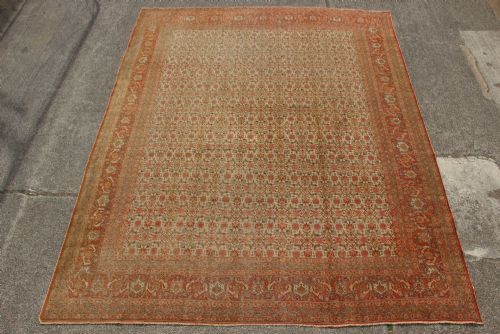
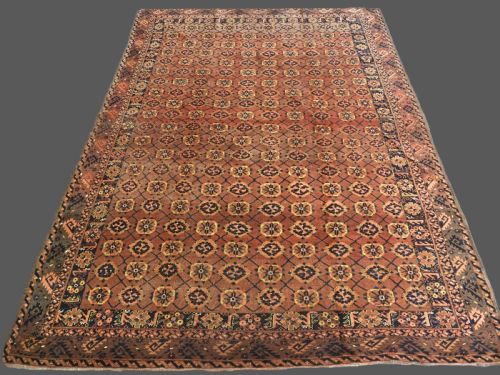
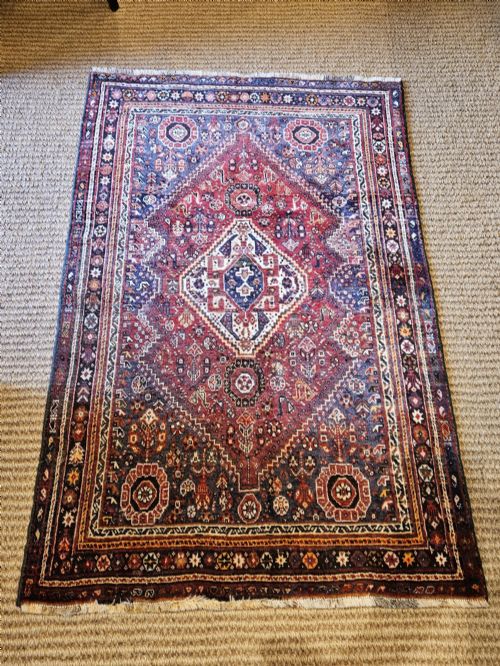
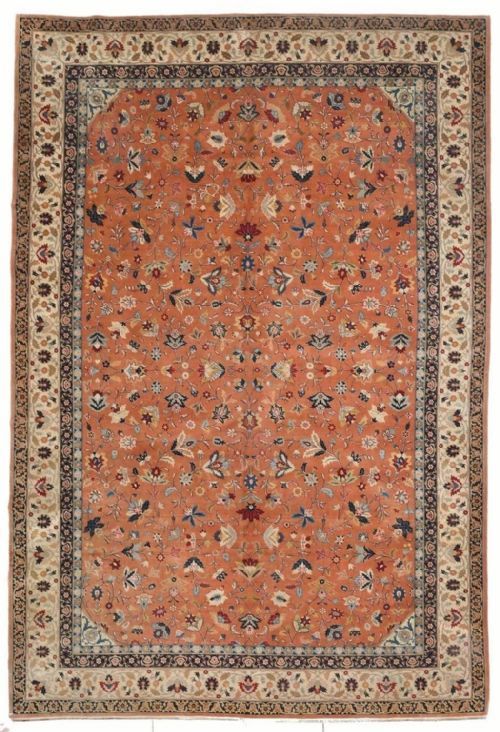


Rust Wool Floor Rug
A rust wool floor rug brings warmth and deep earthy tones to a room through traditional woven craftsmanship.

Rust Wool Floor Rug
A rust wool floor rug typically appears as a room-sized carpet, area rug, or runner originating from Persian and tribal traditions. Buyers searching for this phrase encounter woven floor coverings that span periods from the mid nineteenth century through to the early twentieth century.
The selection includes specific regional styles such as Heriz, Tabriz, Baluch, Afshar, and Bakshaish carpets. These pieces range from small village formats to large oversize carpets designed for substantial living spaces.
How they were made
These floor coverings utilise wool for the pile and foundation, often combined with cotton for structural support in larger carpets. Weavers knotted or wove these materials by hand, employing traditional techniques passed down through generations in Persian and tribal workshops.
Natural dyeing methods produced the characteristic rust backgrounds and rich colour palettes seen across the nineteenth and early twentieth-century pieces. The density of the weave varies according to the specific regional origin, ranging from coarse tribal kilims to finely knotted city carpets.
Listings feature wool and cotton floor rugs spanning the mid nineteenth century to the early twentieth century.
What varies in quality
The distinction between standard examples and the finest pieces rests on the precision of the weave and the clarity of the design. Khorassan, Tabriz, and Ferahan carpets often demonstrate exceptional knot density and refined artistic execution.
Condition and scale also define the hierarchy within these floor rugs. Large, intact room-sized Heriz and Ziegler carpets command attention for their grand proportions and robust structural integrity.
The Rust Wool Floor Rug Glossary
- Heriz carpet
- A durable room-sized floor covering originating from northwest Persia, known for bold geometric medallions and robust construction. These pieces often feature large central motifs flanked by heavy corner spandrels.
- Tabriz carpet
- A finely knotted Persian floor rug produced in a major urban weaving centre. They display intricate floral patterns and sophisticated medallion layouts.
- Baluch rug
- A tribal floor covering woven by nomadic groups, frequently featuring geometric patterns, dark wool grounds, and distinctive small octagons or calyx lattice designs.
- Kilim
- A flat-woven carpet or rug produced without a pile. These pieces rely on interlocking warp and weft threads to create sharp geometric banded designs.
- Bakshaish
- An early regional Persian carpet style associated with rustic charm and large-scale geometric abstraction. They represent some of the earliest nineteenth-century floor coverings in this tradition.
Rust Wool Floor Rug: Frequently Asked Questions
How do I clean a wool floor rug?
Regular gentle vacuuming without a beater bar removes surface dust and loose grit from the wool pile. Professional specialist cleaning is recommended for deeper maintenance to protect the natural dyes.
Water and harsh detergents damage the foundation fibres and alter the colour balance of the rug. Addressing spills immediately with dry blotting prevents moisture from settling into the cotton and wool structure.
Are these rugs suitable for high traffic?
Traditional wool floor coverings possess natural resilience that withstands regular foot movement in domestic settings. The dense knotting and lanolin-rich wool fibres resist dirt and wear over decades of use.
Placing a suitable underlay beneath the rug prevents sliding and cushions the foundation against hard flooring. This simple addition extends the working life of large carpets and runners in busy hallways or living rooms.
How do I identify a Heriz rug?
Heriz carpets are characterised by large, bold geometric medallions set against prominent rust or red backgrounds. The corner spandrels typically display distinct angular leaf and vine motifs.
The heavy wool pile and robust cotton foundation give these northwest Persian carpets a substantial, stiff handle. Their sturdy construction distinguishes them from finer urban Persian weaves.
What is the difference between a rug and a carpet?
The distinction traditionally rests on scale, where carpets cover entire rooms and rugs occupy specific smaller floor areas. Historical terminology often uses both words interchangeably for large woven floor textiles.
Runners represent a distinct subcategory defined by their long, narrow proportions suited for corridors. All these forms utilise identical hand-knotted or flat-woven wool techniques.