
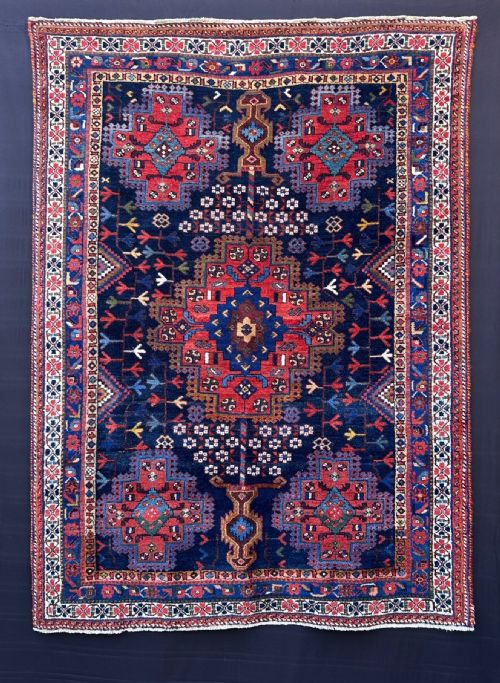
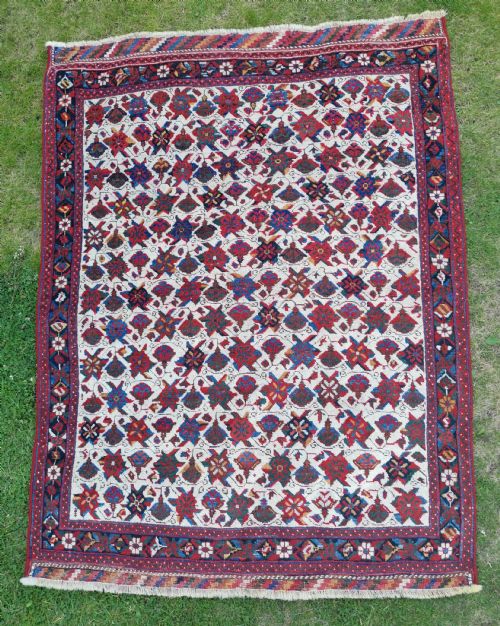
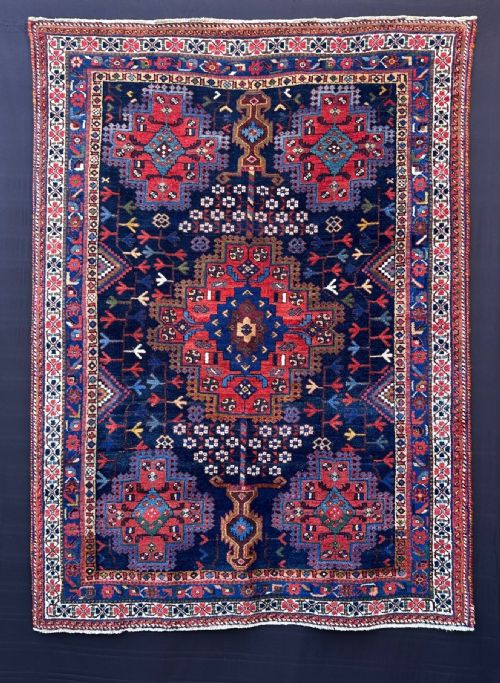
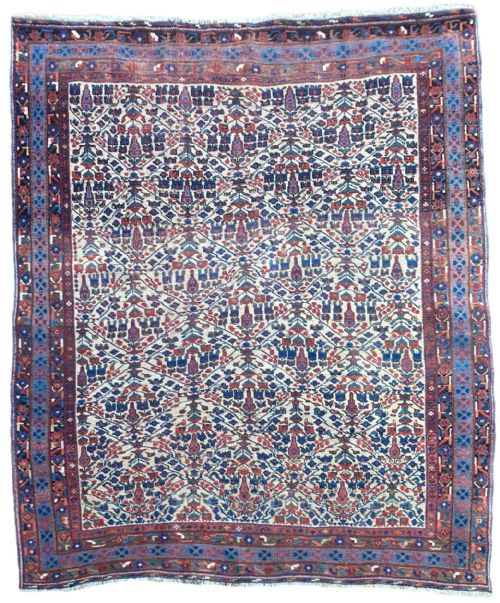


Kerman Tribal Area Rug
A kerman tribal area rug brings authentic nomadic artistry into a room through dense wool patterns woven across southern Persia.

Kerman Tribal Area Rug
These pieces encompass regional floor coverings and utility textiles originating from nomadic groups within the Kerman Province of southern Persia. When searching for a kerman tribal area rug, buyers encounter antique works attributed to the Afshar tribes and the Neiriz or Sirjan regions.
The inventory on this page consists predominantly of hand-knotted rugs and specific utilitarian weaves like bread sofreh created by nomadic makers. Dating spans the late nineteenth century through to the early twentieth century, capturing distinct tribal motifs in formats suited for modern floor placement.
How they were made
Nomadic weavers constructed these textiles using resilient wool for the pile and foundation yarns, alongside cotton foundations depending on the specific tribal origin. The technical execution relies on traditional hand-knotting and flatweaving methods passed down through generations in southern Persia.
Makers utilised locally sourced animal fibres and traditional dye traditions to build durable surfaces designed to withstand daily nomadic camp life. The resulting structure balances flexible handling with tight knot densities.
Nomadic weavers frequently incorporated stray camel hairs directly into the wool mix, leaving tiny golden fibres hidden within the pile.
What varies in quality
The upper tier of these textiles displays exceptional fineness in knot density and precision of geometric tribal layout. Superior examples maintain structural integrity across the wool pile and crisp definition within the central medallions and border systems.
Weaker execution appears where wool quality declines or where heavy wear alters the original proportions of the field and borders. The distinction lies entirely in the handled weight, crispness of design translation, and material preservation over time.
The Kerman Tribal Area Rug Glossary
- Sofreh
- A flatwoven textile traditionally utilised for handling bread or serving meals within nomadic households. These functional pieces double as striking tribal textiles.
- Pile
- The soft nap surface of a rug formed by the cut ends of knots tied to the warp threads. It provides both comfort underfoot and protection for the structural foundation.
- Neiriz
- A specific geographical region located within the Kerman Province associated with distinct regional weaving characteristics. Pieces attributed here often display unique tribal iconography.
Kerman Tribal Area Rug: Frequently Asked Questions
How old are these tribal rugs?
The available pieces primarily date from the late nineteenth century through the early decades of the twentieth century, specifically spanning the 1870s to the 1920s.
These dates place the manufacturing period firmly within the traditional nomadic weaving era of southern Persia before modern commercial production altered local methods.
Where were these rugs made?
Production is centered in the Kerman Province of southern Persia, with specific pieces originating from the Neiriz and Sirjan areas.
Nomadic groups such as the Afshar tribes created these textiles within their seasonal camps and regional settlements using local materials.
What is a bread sofreh?
A bread sofreh is a flatwoven nomadic utility textile that served a practical domestic purpose in daily camp life.
Unlike standard floor coverings, these pieces were designed for food preparation and handling, resulting in unique formats and flatweave constructions.
What materials did weavers use?
Surviving examples are constructed using natural wool for the pile and structural yarns, combined with cotton foundations in specific regional pieces.
These traditional fibres provided the necessary durability for nomadic use and allowed the natural dyes to age with rich patination.
How do I care for an antique rug?
Protect the wool pile by placing the rug in low-traffic areas and using a breathable, high-quality underlay to prevent shifting.
Routine gentle vacuuming without a rotating brush roll helps maintain the wool fibres while preserving the antique foundation.