

Rural Scene Art Canvas
A rural scene art canvas brings traditional countryside life, farming landscapes and pastoral tranquility into an interior through oil paint on stretched fabric.
Rural Scene Art Canvas
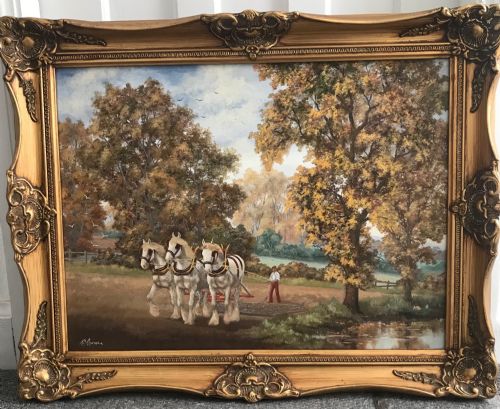
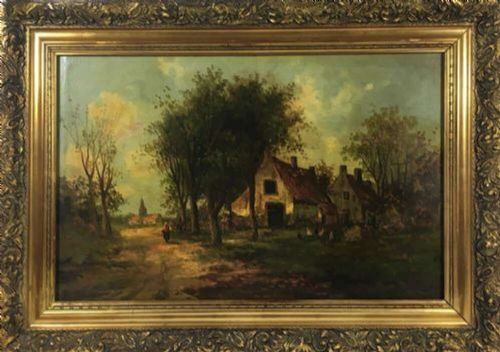
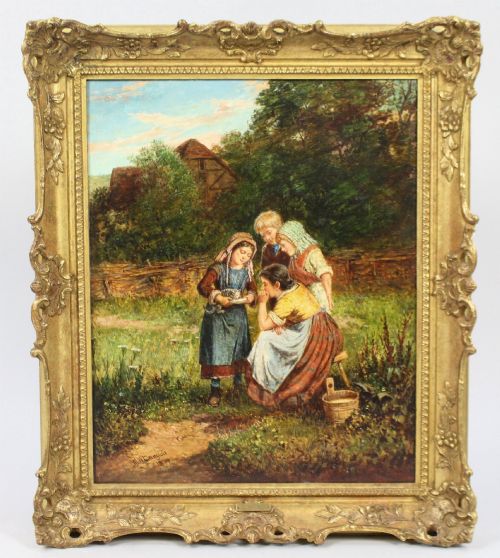
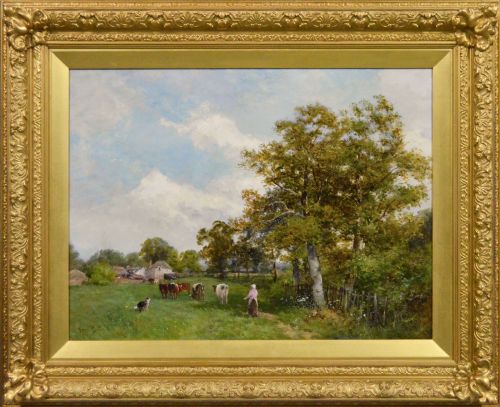
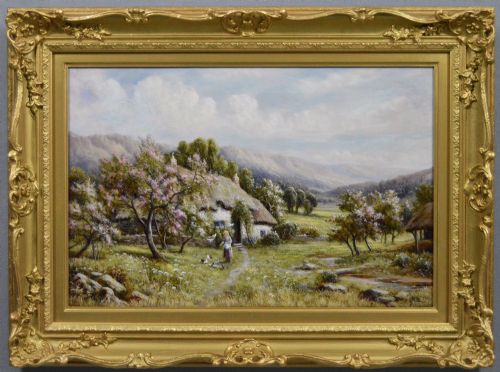
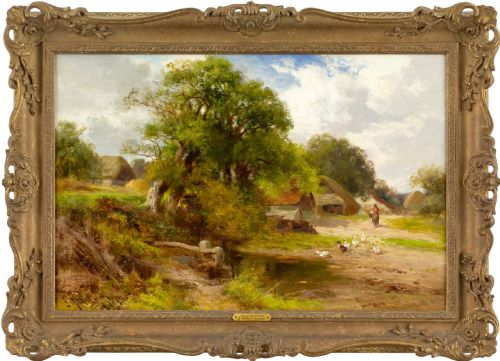
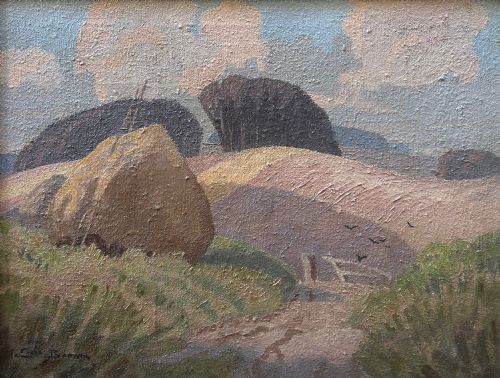
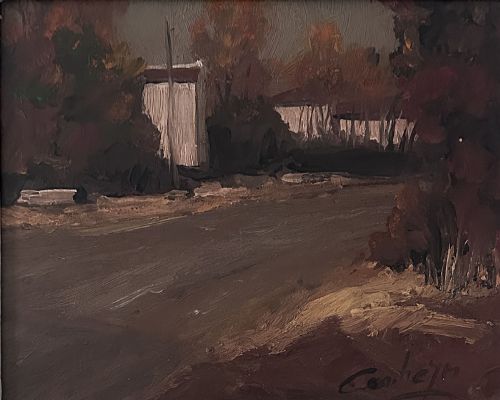
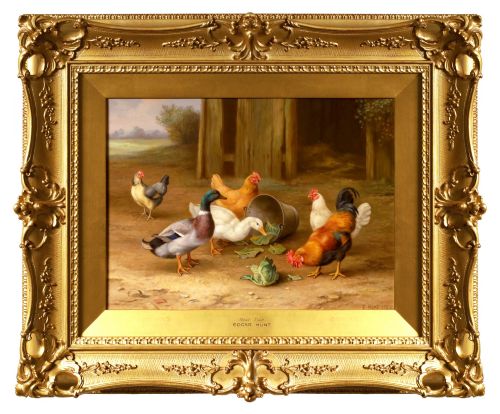
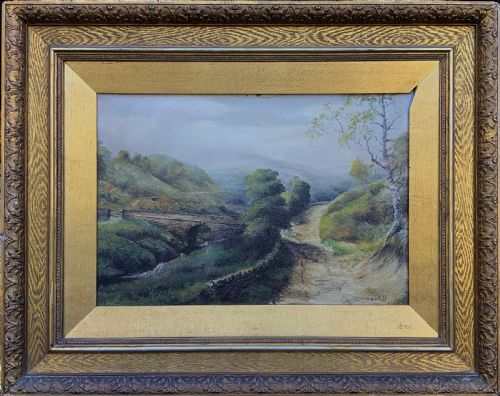
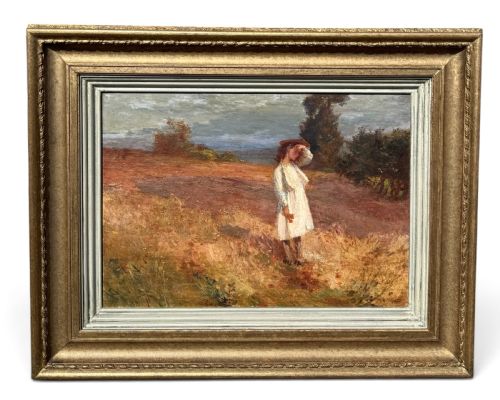
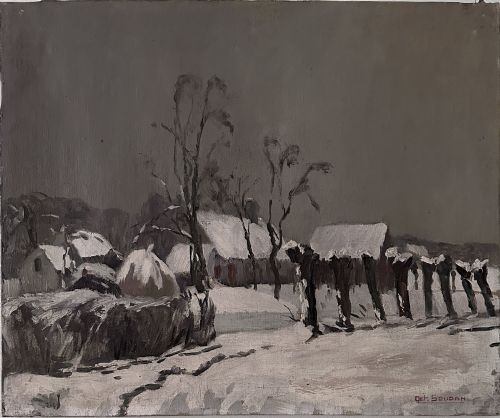
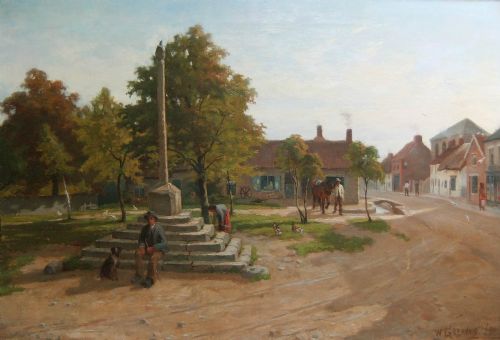
A rural scene art canvas captures traditional country life, agricultural labour and domestic farmyard animals through oil paint applied to stretched fabric. These works frequently depict cottages, streams, working horses, cattle and haystacks across British and European landscapes.
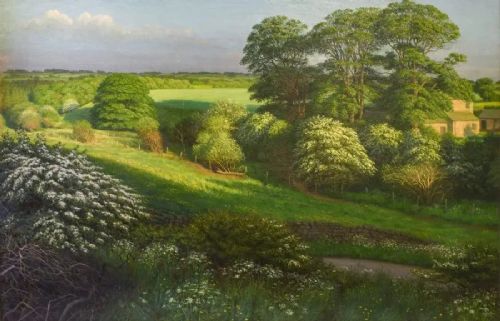
The pieces available span from the nineteenth century through the mid-twentieth century, encompassing Victorian pastoral views, British Impressionism and post-impressionist interpretations. Buyers most commonly encounter nineteenth-century works and early twentieth-century framed paintings showing agricultural workers or farm animals in pastoral settings.
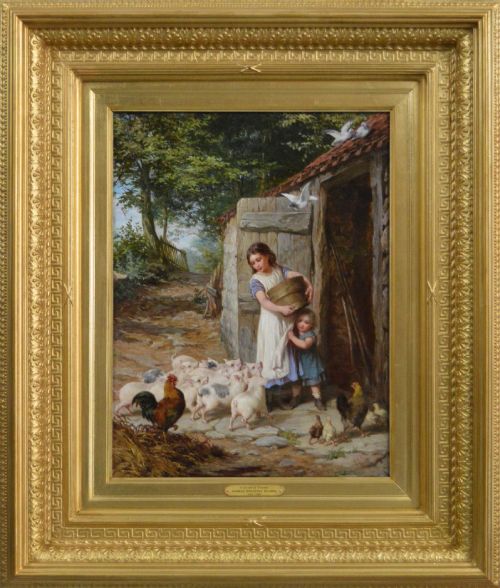
Subjects range from wide farming valleys and village streams to intimate farmyard scenes featuring poultry, pigs and sheep. Works vary from detailed Victorian realism to looser impressionistic brushwork reflecting changing light and seasonal shifts.
Materials and construction methods
Artists painted these works using oil paint applied directly onto a stretched woven canvas surface, often supported by a wooden stretcher frame. The oil medium allowed for layered depth, gradual blending of tones and rich texture in depicting foliage, earth and livestock.
Listings feature works from the nineteenth century, the Edwardian era, and the mid-twentieth century, executed in oil on canvas.
Factors that distinguish quality
Quality in these pastoral paintings rests primarily upon the artist's command of natural light, anatomical accuracy in depicting animals and figures, and composition. Finer works demonstrate confident brushwork and tonal harmony rather than rigid, formulaic rendering of landscape elements.
The preservation of the paint surface and the stability of the canvas significantly influence the standing of a piece. Original stretchers and undamaged oil layers without excessive retouching maintain the visual integrity intended by the painter.
Mark William Langlois·David Bates·Robert John Hammond·George Augustus Holmes·Edgar Hunt·Thomas Sidney Cooper·Henry John Boddington·Charles Vickers
The Rural Scene Art Canvas Glossary
- Oil on Canvas
- Pigment mixed with drying oil applied to a woven fabric support. This combination provides durability and allows for rich textural application.
- Giltwood
- Wood carved and covered with a thin layer of gold leaf or gold paint. Frames utilising this finish were common for nineteenth-century and early twentieth-century fine art.
- Gesso
- A plaster-like mixture applied to wooden frames as a base for gilding or painting. It creates a smooth surface for decorative mouldings.
- Barbizon School
- A French movement toward realism in landscape painting, emphasising atmospheric conditions and naturalistic rural settings. Painters associated with this group worked directly from nature.
Rural Scene Art Canvas: Frequently Asked Questions
How do I identify the period of an oil painting?
Dating relies on stylistic clues, clothing styles of figures, framing materials, and stretcher construction methods. Canvas preparation and inscriptions on the reverse often provide additional chronological evidence.
Examining the signature and comparing the handling of paint to known dated works by the artist helps narrow the decade of creation.
Where should I hang a rural landscape canvas?
These works suit traditional living spaces, studies or dining rooms where natural light complements the warm tones of oil paint. Placing the painting away from direct sunlight and moisture preserves the pigments.
Pairing the canvas with wooden furniture and neutral walls enhances the pastoral atmosphere of the artwork.
What is the difference between Victorian pastoral and realism?
Victorian pastoral art idealises rural life with soft lighting and serene compositions of shepherds and cottages. Realism focuses more closely on the actual labour and accurate details of agricultural work.
Both styles capture nineteenth-century countryside subjects but differ in their emotional tone and attention to everyday toil.
How do I care for an antique canvas painting?
Keep the painting in a stable environment away from extreme temperature fluctuations and high humidity that can warp wooden stretchers. Dust the surface gently with a soft, dry brush without applying pressure.
Avoid using liquid cleaners or touching the paint layer directly to prevent damage to the delicate oil medium.