



Farmhouse Oil Painting Artwork
Farmhouse oil painting artwork brings rural architecture, working fields and domestic animals onto canvas through the hands of Victorian, Edwardian and mid-century painters.
Farmhouse Oil Painting Artwork
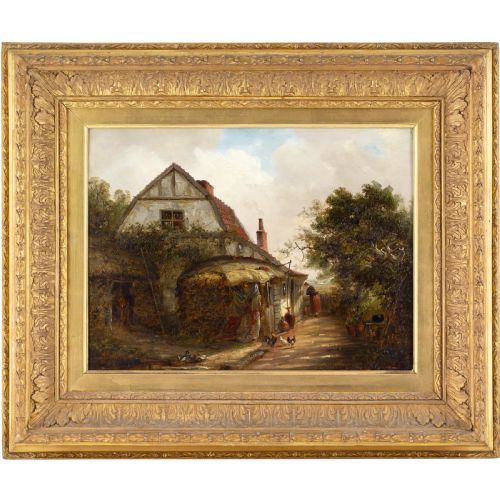
A farmhouse oil painting artwork captures rural domestic life, agricultural yards, barns and provincial cottages through oil pigments applied to canvas or wood board. These works record the changing character of the countryside from the Victorian era through the mid-twentieth century.
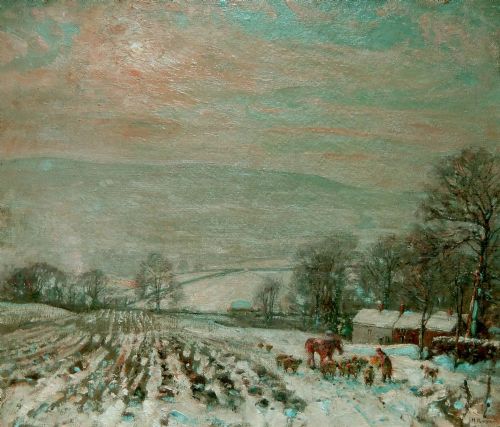
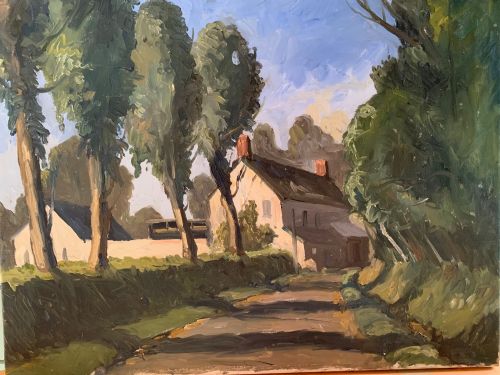
The selections available here span British pastoral scenes by named artists alongside French provincial and Corsican landscapes. Pieces range from Victorian genre paintings to mid-century impressionist interpretations of old farmhouses and working horses.
Buyers will find both framed canvases from the nineteenth century and twentieth-century French colourist boards depicting farmyards, laundry by haystacks, and winter feeding scenes. Each piece offers a direct view into historical rural environments.
How they were made
Artists painted primarily with oil paint on stretched canvas or wood panels, building texture and depth through layered brushwork. The physical application ranges from detailed Victorian academic work to the looser, expressive strokes of post-impressionism and mid-century French colourism.
Frames play a structural and aesthetic role, frequently utilising gilt wood, gilded wood or gessoed mouldings to complement the palette of the canvas within.
Farmhouse Oil Painting Artwork Retail Price Guide 2026
Typical asking prices for farmhouse oil painting artwork among the pieces listed under this phrase on Sellingantiques today, from the lower quarter to the upper quarter. They describe what is for sale here now, not the wider market.
Listings incorporate canvases and wood boards spanning the Victorian period through to the nineteen-sixties.
What varies in quality
Quality rests upon the artist's command of light, composition and perspective, distinguishing routine topographical records from deeply observed pastoral interpretations. Works by established painters demonstrate superior draftsmanship, particularly in the rendering of livestock, figures and architectural proportions.
The preservation of the original pigment and the integrity of the canvas support dictate the physical standard of the piece. Surviving frames, especially period giltwood mouldings, contribute significantly to the overall integrity and visual weight of the artwork.
Herbert Royle·Raimond Louis Lecourt·James Kyd·Majorie Hoare·Owen Bowen·Georgina Lara
The Farmhouse Oil Painting Artwork Glossary
- Oil on canvas
- A painting technique where oil-based pigments are applied to a woven fabric support stretched over a wooden frame. This method allows for rich colour blending and textured brushstrokes.
- Gilt wood
- Wood coated with a thin layer of gold leaf or metallic gilt finish. It is commonly found on the decorative frames enclosing period oil paintings.
- Post-Impressionism
- An art movement following impressionism that extends its use of vivid colours and thick application while emphasising geometric forms and expressive content. Works in this style often show simplified shapes and bold brushwork.
- Victorian Pastoral
- A nineteenth-century genre focusing on idealized rural scenes, agricultural labour and tranquil countryside landscapes. These paintings typically employ realistic detail and warm, naturalistic palettes.
- French Provincial
- A style reflecting the regional architecture, furniture and domestic life of provincial France. In painting, it denotes rural subjects such as courtyards, farmhouses and local landscapes.
Farmhouse Oil Painting Artwork: Frequently Asked Questions
How do I date a farmhouse oil painting?
Dating relies upon stylistic markers, costume details in any figures, stretcher construction, and the type of canvas or board used. Victorian works display different framing conventions and pigment handling compared to mid-century French colourist pieces.
Signatures, exhibition labels, and inscriptions on the reverse of the canvas or wood panel often provide direct evidence of the year and the artist's identity.
Where should I hang these paintings?
These works suit dining rooms, libraries or hallways where traditional or provincial character is desired. They pair well with natural wood furniture and neutral wall colours that allow the pigments of the landscape to stand out.
Direct sunlight and damp environments should be avoided to protect the oil paint and canvas from degradation over time.
What is the difference between canvas and board?
Canvas is fabric stretched over a wooden frame, offering slight give and a textured surface suited for layered brushwork. Board provides a rigid, flat wooden support that was frequently utilised by twentieth-century artists painting outdoors.
Both materials were standard for their respective periods, though boards are more commonly encountered in mid-century provincial and impressionist works.
Are these frames original?
Some pieces retain their period gilt wood or wooden frames from the nineteenth or early twentieth century, while others have been reframed later in their lives. Original frames often show wear consistent with the age of the canvas.
The presence of period framing enhances the historical context of the artwork, though aesthetic compatibility remains the primary consideration for display.