





Rural Pastoral Oil Painting
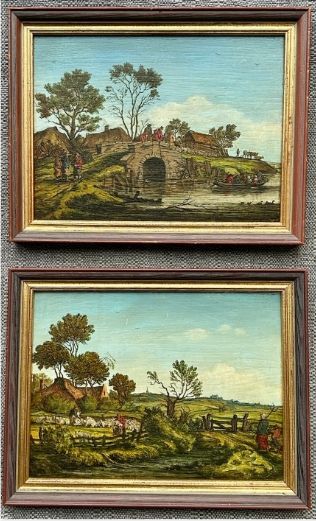
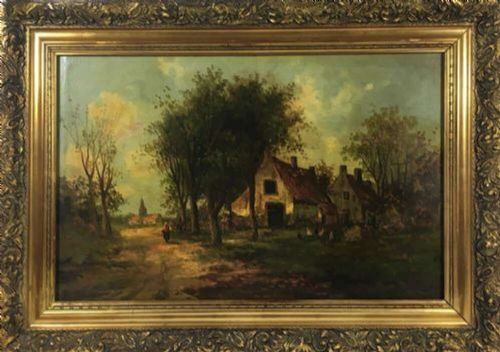
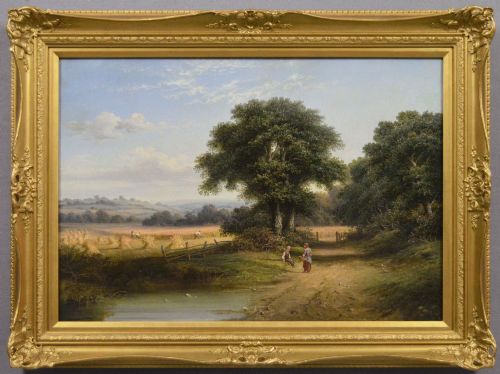
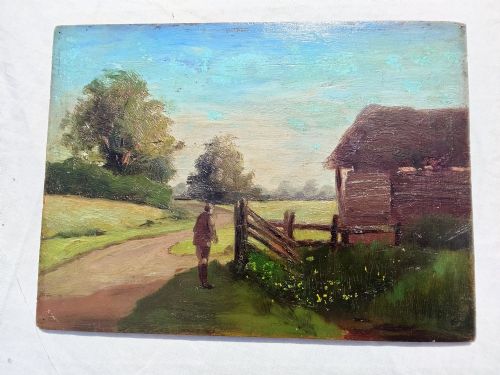
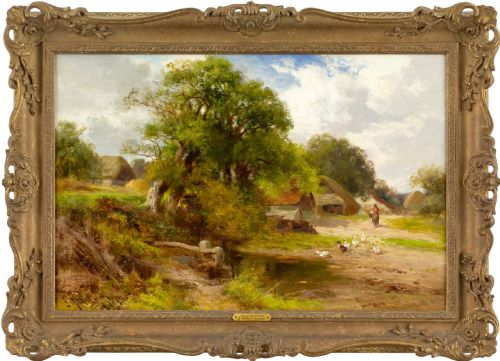
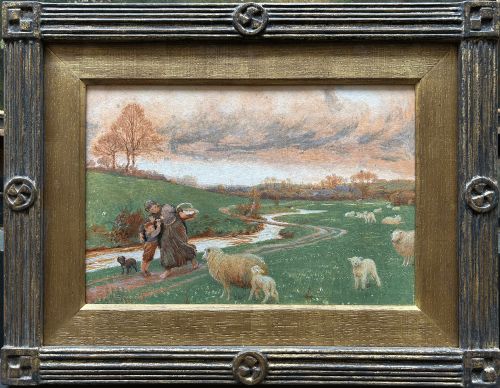
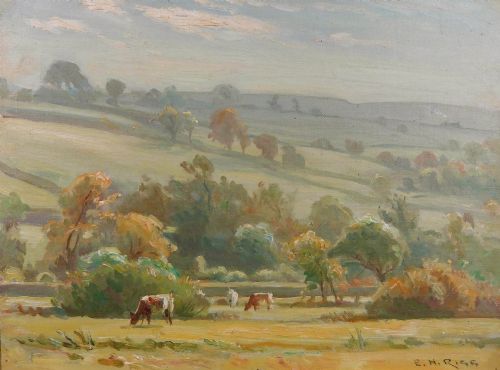
A rural pastoral oil painting captures quiet countryside scenes of farmyards, rivers and grazing livestock, bringing historic rural calm directly into a room.
Rural Pastoral Oil Painting
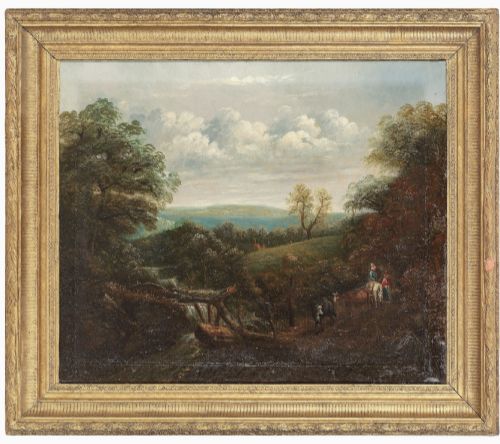
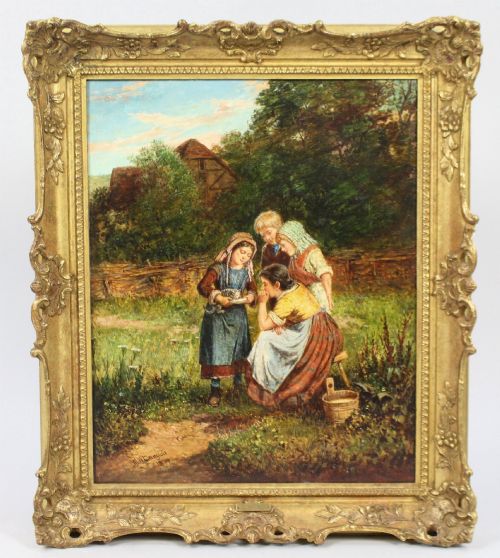
A rural pastoral oil painting portrays traditional country life, featuring subjects such as thatched cottages, harvest fields, farmyards, and rivers with figures, cattle or sheep. These works span the nineteenth century into the mid-twentieth century, capturing British, French, Flemish and German rural landscapes.
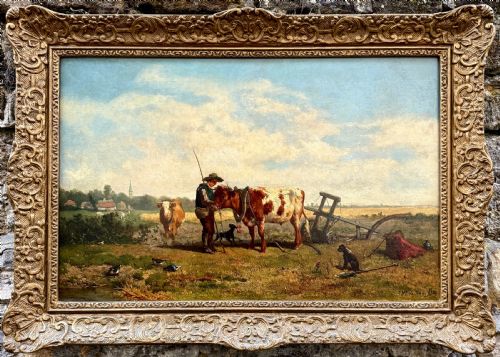
The most common pieces on this page are nineteenth-century British school canvases and board paintings, often depicting shepherds, cattle drovers, or labourers at work in pastoral settings. Artists of this era focused heavily on natural light, seasonal changes, and the daily rhythms of agricultural communities.
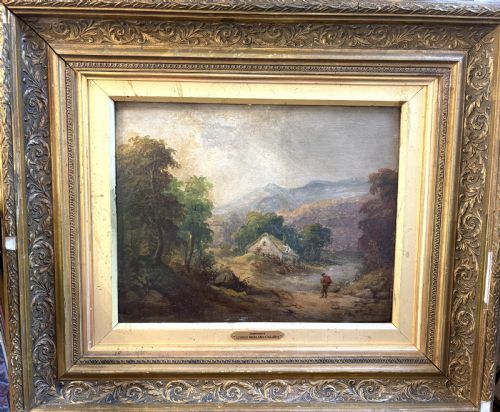
Framed works dominate the selection, utilising period giltwood and gesso frames that complement the natural tones of oil paint on canvas or wood. Buyers encounter both signed works by known artists and pieces attributed to broader regional schools.
Materials and technique
Artists applied oil paint using brushes and occasionally palette knives onto prepared supports of woven canvas, wooden panels, or wooden boards. These traditional grounds allowed for rich layering, blending of tones, and the creation of textured atmospheric effects in skies and foliage.
The physical framing forms an integral part of the piece, with many paintings housed in period giltwood or gesso frames that use carved wooden mouldings finished in gold leaf or gilt. These frames protect the edges of the canvas and provide a formal boundary for the pastoral scene.
Kittens, geese, and resting bulls occasionally share the canvas with hardworking farm labourers and wandering sheep.
What separates the finest works
Quality rests in the handling of light and shadow, where superior brushwork creates a convincing sense of atmosphere, depth, and seasonal warmth across a landscape. Weaker examples often rely on formulaic compositions and flat colour application without true tonal variation.
The execution of figures and animals distinguishes accomplished painters from lesser practitioners, as seen in the anatomical accuracy of working horses, cattle, and sheep, alongside the natural posture of human labourers. Original period framing also contributes significantly to the integrity of the piece.
George Graham·W Klombeck·William Joseph Shayer Senior·Mark William Langlois·David Bates·Walter Heath Williams·John Horace Hooper·Frederick Walker·Ernest Higgins Rigg·Miles Birkett Foster·George Morland·Johannes de Haas·Owen Bowen·Charles Clair·William Henry Mander·Thomas Sidney Cooper·Samuel Joseph Clark·Henry John Boddington·Robert John Hammond·Frederick James Knowles·Willem Anton Alexander Knip·Frank Percy Wild·Heinrich Harder·Charles Vickers·Frederick W Jackson
The Rural Pastoral Oil Painting Glossary
- Oil on Canvas
- A painting technique where oil paint is applied to a stretched woven fabric support, usually linen or cotton. This combination offers durability and a slightly textured surface that holds layered pigments well.
- Giltwood
- Wood carved and coated with gold leaf or a gold-coloured finish, frequently used for traditional picture frames. It provides a reflective border that enhances the warm tones of an oil painting.
- Gesso
- A paint mixture consisting of a binder mixed with chalk, gypsum, or pigment, applied to wood panels or canvases as a base before oil painting. It creates a smooth, stable surface for the artist.
- Wood Panel
- A rigid flat wooden support used instead of canvas for painting, common in earlier European traditions. Panels provide a completely stable surface that prevents the cracking often found on aged fabric.
Rural Pastoral Oil Painting: Frequently Asked Questions
What subjects appear in these paintings?
These works typically show agricultural landscapes, farmyard animals, rivers, cottages, and labourers at work or resting in the countryside.
Scenes often focus on sheep grazing, cattle being herded, harvests, and quiet river views under changing seasonal light.
How do I date an oil painting?
Dating relies on stylistic evidence, artist signatures, framing materials, and the physical characteristics of the canvas or wooden board.
Nineteenth-century works frequently feature specific stretcher types, handwritten inscriptions on the reverse, or distinct framing styles characteristic of the period.
How should I hang and light them?
These paintings suit traditional or transitional interiors, ideally hung at eye level away from direct, harsh sunlight.
Using a dedicated picture light or soft ambient room lighting helps reveal the rich texture of the oil paint and the detail of the giltwood frame.
Are these paintings signed by the artist?
Many pieces carry visible signatures, monograms, or artist inscriptions, either on the front canvas or recorded on the wooden stretcher behind.
Other works are attributed to specific regional schools or remain unsigned while still reflecting the distinct hand of a period workshop.