



Ruby Red Glass Goblet
A ruby red glass goblet brings rich colour to a table, offering the depth and character sought by collectors of nineteenth-century glassware.
Ruby Red Glass Goblet
A ruby red glass goblet is a drinking vessel or decorative piece shaped by nineteenth-century glassmakers, most commonly seen in Victorian and Bohemian styles. Buyers searching this phrase encounter items spanning the mid to late nineteenth century, including single presentation goblets and sets of wine glasses.
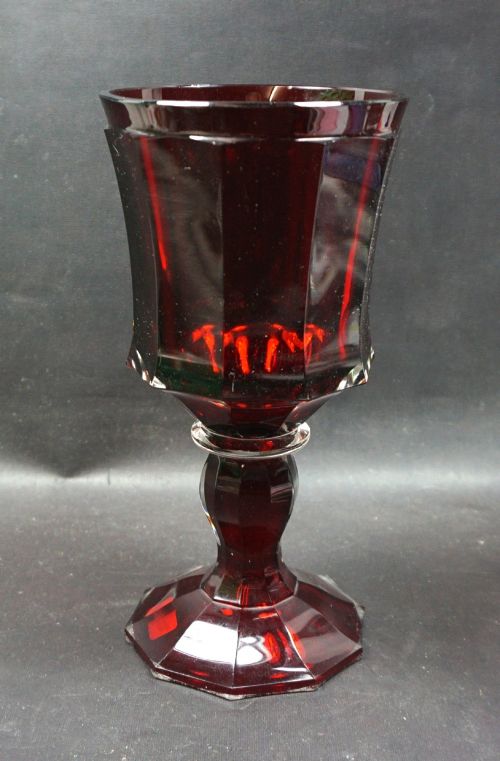
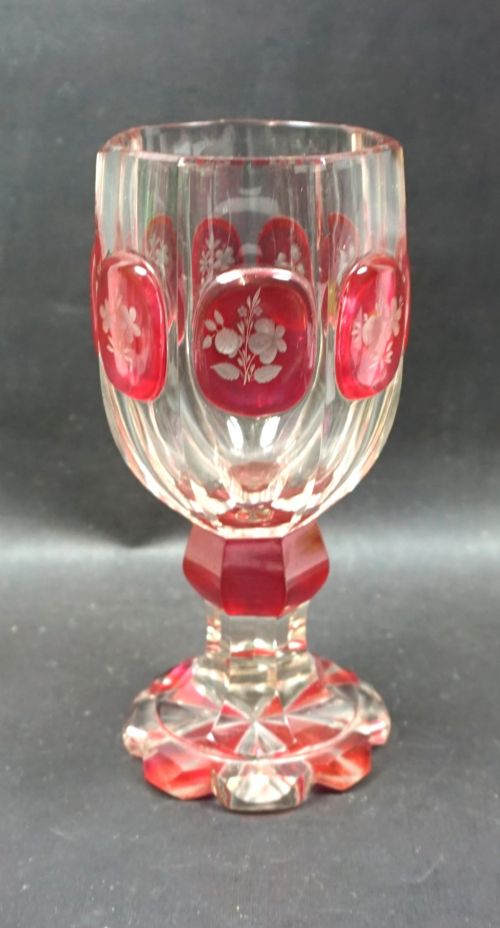
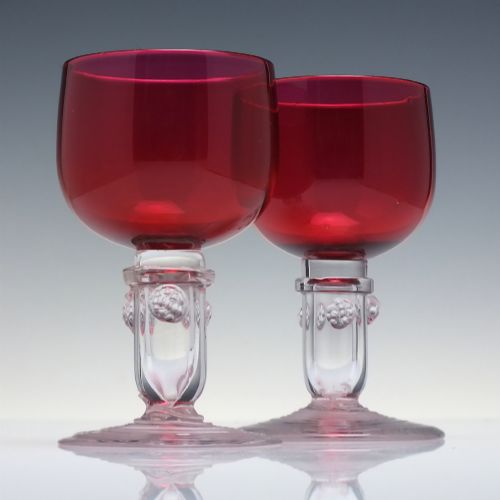
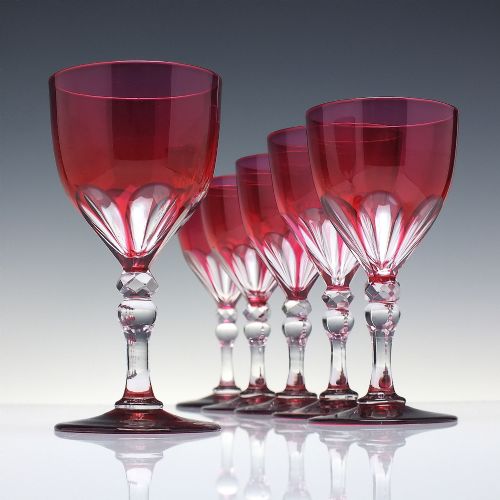
The pieces on this page heavily feature cranberry glass alongside flashed glass and clear crystal variants. Forms range from large Bohemian display vessels engraved with floral motifs to sets of hand-blown wine glasses produced during the Victorian era.
Origins trace primarily to British and Bohemian workshops of the 1850s, 1870s, 1880s, and 1890s. The selection balances larger statement goblets with matched sets intended for dining.
How they were made
Makers utilised lead crystal and specialised glass batches containing gold or copper compounds to achieve deep ruby and cranberry hues. Artisans shaped these vessels using traditional hand-blowing techniques, creating the stems, bowls, and feet characteristic of nineteenth-century stemware.
Decoration often involved cutting away outer layers of flashed glass to reveal clear crystal beneath, or engraving surface designs such as flowers into the red glass layer. Enamel decoration was also applied to enhance the visual detail of Bohemian and Victorian pieces.
Ruby Red Glass Goblet Retail Price Guide 2026
Typical asking prices for ruby red glass goblet among the pieces listed under this phrase on Sellingantiques today, from the lower quarter to the upper quarter. They describe what is for sale here now, not the wider market.
Victorian diners loved matching fifteen cranberry wine glasses for a single feast, ensuring every guest raised a rosy toast.
What varies in quality
Quality in these goblets rests upon the depth of the glass colour and the precision of the hand-cutting or engraving. Master craftsmen achieved sharper facets and more delicate floral motifs, whereas simpler items relied solely on plain blown coloured glass.
The uniformity of sets and the clarity of the underlying crystal or lead crystal further distinguish finer pieces from standard production. Intricate overlay work, such as crystal cut over red glass, requires superior technical skill compared to solid cranberry glass.
The Ruby Red Glass Goblet Glossary
- Cranberry glass
- A transparent pinkish-red glass created by adding gold chloride to the molten batch. It became exceptionally popular during the Victorian period for tableware and decorative items.
- Flashed glass
- A vessel made by dipping a core of clear or contrasting glass into a thin layer of coloured glass before blowing. This technique allowed artisans to cut through the outer ruby layer to expose the clear glass underneath.
- Lead crystal
- A high-clarity glass containing lead oxide, which increases weight, brilliance, and workability for cutting. It forms the heavy base of many nineteenth-century goblets.
- Bohemian
- Pertaining to the glass-making region of Bohemia, known for elaborate cutting, overlay techniques, and engraved floral decoration during the nineteenth century.
- Hand-blown stemware
- Glassware formed by inflating molten metal on a blowpipe rather than using a mould. This method leaves subtle individual variations in each piece of stemware.
Ruby Red Glass Goblet: Frequently Asked Questions
What is a ruby red glass goblet?
A ruby red glass goblet is a nineteenth-century drinking vessel or display piece made from coloured glass, often associated with Victorian and Bohemian traditions. These items range from large, intricately engraved presentation goblets to matched sets of dining glasses.
Craftsmen produced them using methods like glass-blowing and overlay cutting to achieve rich red tones. They serve as both decorative objects and functional tableware for collectors.
How were these coloured glasses used?
Nineteenth-century households utilised cranberry wine glasses and goblets for formal dining and special occasions. Sets were designed to hold wine or display the vibrant table aesthetics favoured during the Victorian era.
Larger goblets often functioned as mantel ornaments or cabinet pieces rather than daily drinking vessels. Their striking colour added warmth and formality to dining settings.
How do I care for antique glassware?
Antique glassware requires gentle hand washing in lukewarm water with mild detergent to preserve the surface finish and delicate enamel or engraved details. Dishwashers should be avoided because thermal shock and harsh detergents can damage nineteenth-century glass.
Storage should involve adequate spacing between pieces to prevent chipping on rims and stems. Careful handling protects the hand-blown crystal and overlay layers from accidental impact.
How can I tell Victorian pieces apart?
Distinguishing Victorian pieces involves examining the depth of colour, the weight of the lead crystal, and the manufacturing marks left by hand-blowing. Victorian cranberry glass often exhibits a specific pinkish-red hue distinct from earlier or later chemical formulations.
Stylistic cues such as floral engraving and Bohemian overlay techniques help separate regional outputs of the 1850s to 1890s. Comparing the thickness of the glass and the regularity of the stems clarifies the period and origin.