





Antique Red Stemware
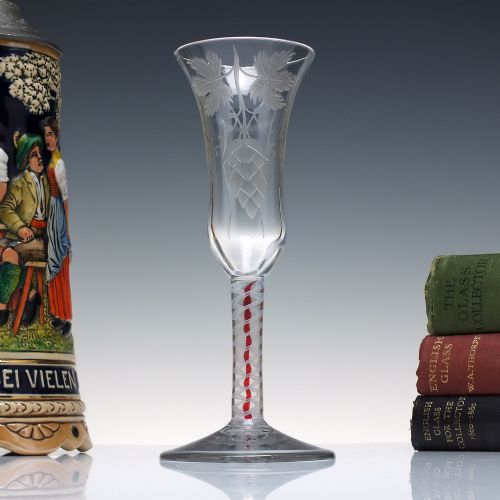
These antique red stemware pieces bring rich colour and historic character to the table, ranging from Victorian cranberry wine glasses to Georgian colour twist ale glasses.
Antique Red Stemware
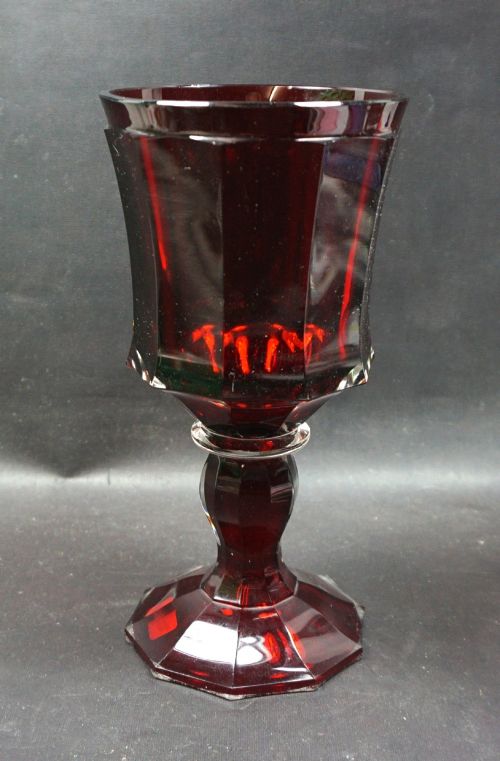
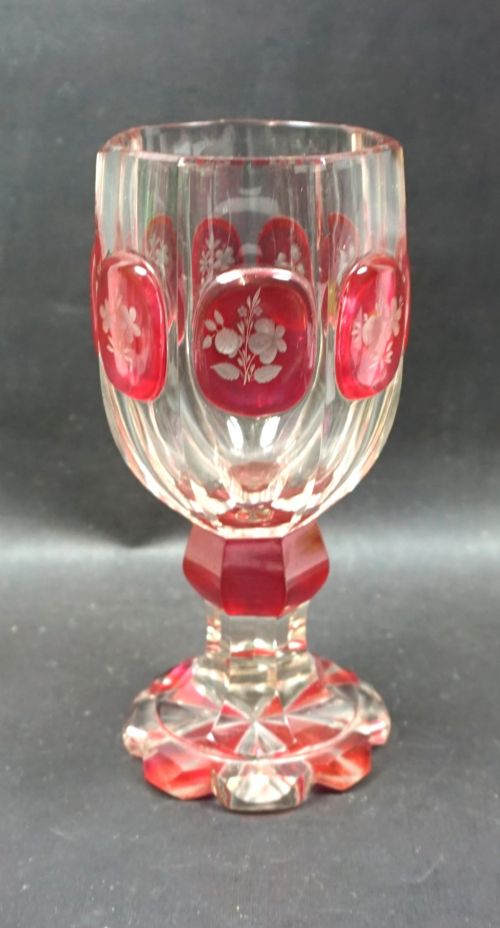
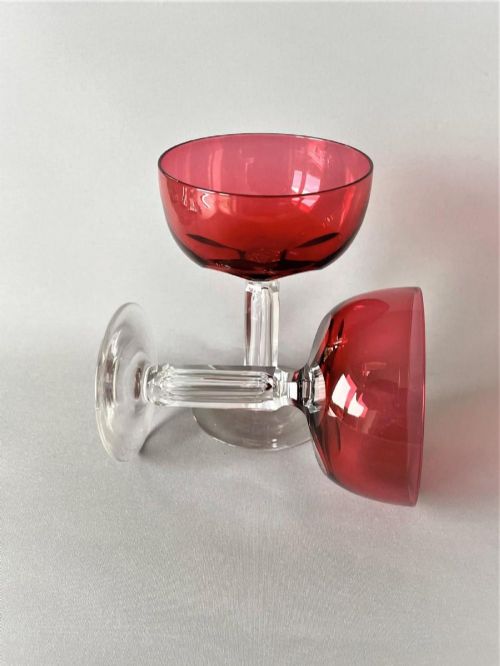
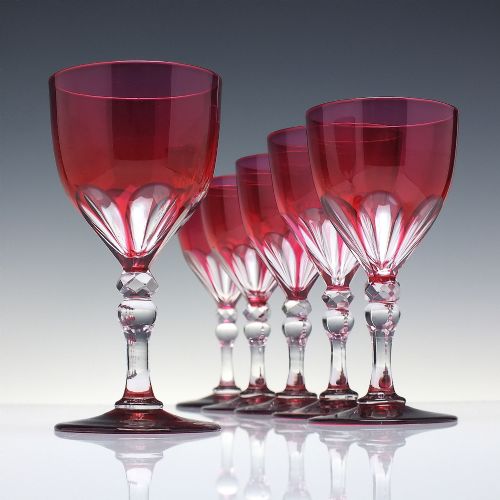
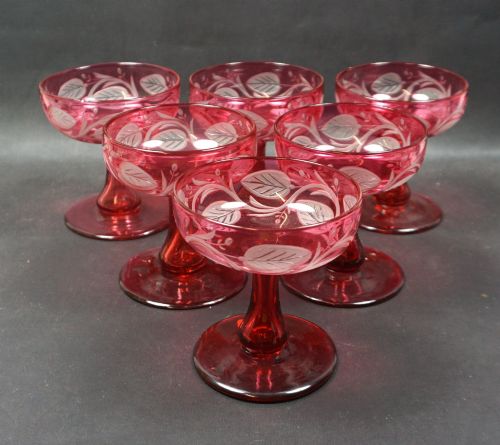
When you search for antique red stemware, you encounter a striking array of drinking vessels spanning the Georgian, Victorian, and Art Deco periods. The selection on this page leans heavily towards Victorian cranberry glass wine glasses and champagne coupes, alongside earlier Bohemian flashed and overlay goblets.
Forms vary from large display goblets and champagne coupes to standard wine glasses, liqueur glasses, and ale glasses. Most pieces emerge in matched sets of six or fifteen, though individual larger goblets and pairs also appear across the listings.
How they were made
These items rely on traditional glassmaking methods, incorporating hand-blown techniques and layered fabrication. Makers utilised cranberry glass, ruby glass, and flashed glass where a thin layer of red colour coats a clear glass or lead crystal body.
Decoration often involved surface engraving, such as floral motifs and convolvulus designs cut into the red overlay to reveal the clear crystal beneath. Earlier Georgian examples showcase complex internal manipulations like colour twist stems.
Antique Red Stemware Retail Price Guide 2026
Typical asking prices for red stemware among the pieces listed under this phrase on Sellingantiques today, from the lower quarter to the upper quarter. They describe what is for sale here now, not the wider market.
The listings span periods from the 18th century up to the 1920s, featuring materials such as cranberry glass, clear glass, lead crystal, and flashed glass.
What varies in quality
Quality in these vessels rests upon the depth and uniformity of the red coloration and the crispness of any engraved or cut decoration. Overlay pieces demonstrate superior craftsmanship when the contrast between the outer red layer and the inner crystal remains sharp and even.
The finesse of the hand-blowing process dictates the balance and weight of the stemware, distinguishing standard table glassware from finer cabinet specimens like Bohemian goblets and Georgian colour twist ale glasses.
The Antique Red Stemware Glossary
- Cranberry glass
- A transparent pinkish-red glass coloured with gold chloride. It became particularly popular during the Victorian era for tableware and decorative items.
- Flashed glass
- Glass created by dipping a blown gather of clear glass into a pot of coloured glass, or vice versa, before shaping. This technique allows artisans to cut through the outer layer to expose the contrasting colour underneath.
- Overlay
- A method where a vessel of clear crystal is cased in one or more layers of coloured glass. Cutting away portions of the outer layer creates intricate geometric or floral patterns.
- Colour twist
- An optical effect found in the stems of certain drinking glasses produced by drawing out coloured glass threads within the molten metal during formation.
- Champagne coupe
- A shallow, broad-bowled stemmed glass designed for sparkling wines. These appear frequently in Victorian cranberry glass configurations.
Antique Red Stemware: Frequently Asked Questions
Are these glasses safe to use?
Most antique drinking glasses can handle careful hand washing and gentle use during special occasions. However, their age and delicate hand-blown construction mean they require mindful handling away from modern dishwashers.
Displaying them or using them strictly for light toasts helps preserve the historic surfaces, engraving, and rich red colours for future generations.
How do I identify Victorian pieces?
Victorian examples frequently appear as rich cranberry glass wine glasses and champagne coupes, often found in sets of six or more. The glass typically displays the characteristic warm pinkish-red tone associated with nineteenth-century production methods.
Earlier pieces from the Georgian era tend to feature distinct techniques like colour twist stems, while mid-nineteenth-century Bohemian items often showcase heavy crystal over red glass overlays.
What is flashed glass?
Flashed glass consists of a clear glass or crystal body covered with a very thin exterior layer of coloured glass. This method allowed makers to achieve vibrant red hues while retaining structural clarity.
When artisans engraved or cut through this outer red layer, the clear glass underneath was exposed to form decorative patterns such as flowers and convolvulus.
How should I store them?
Store your stemware upright on a stable, flat surface within a cabinet where temperature fluctuations remain minimal. Ensure adequate space between individual glasses to prevent rim chipping.
Avoid stacking them or placing them near direct heat sources, which can stress antique materials over time.