


Ruby Lapel Pin
A ruby lapel pin brings a brilliant flash of crimson to a lapel, offering centuries of gemstone artistry in miniature.
Ruby Lapel Pin
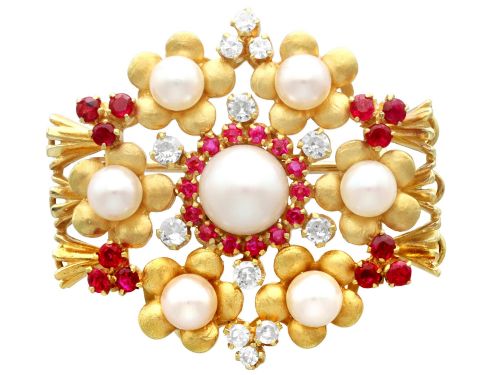
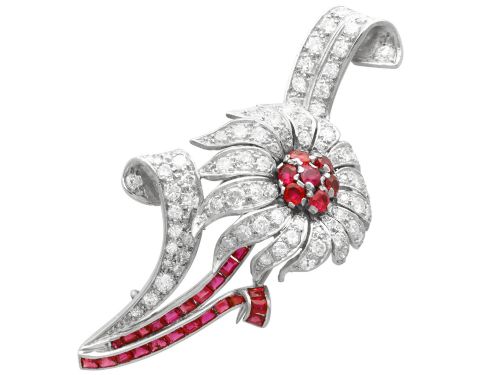
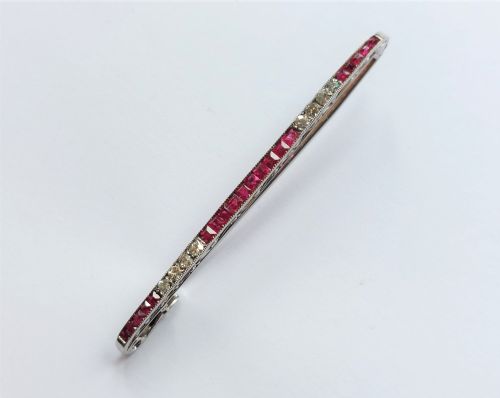
When you search for a ruby lapel pin, you encounter a selection of antique and vintage brooches, often taking the form of bar brooches, crescent designs, and figural animal pieces. These jewels hail from periods spanning the Georgian era through the Victorian, Edwardian, and Art Deco movements, right up to Mid-Century and 1960s creations.
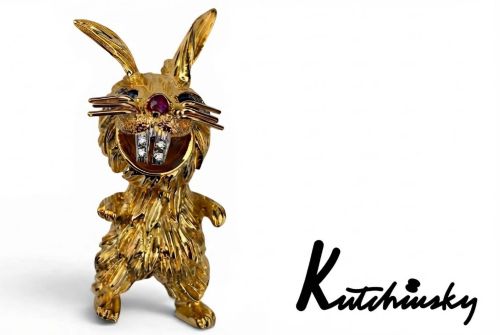
You are most likely to meet bar brooches set with rubies and diamonds alongside charming figurative subjects like birds, rabbits, owls, and insects. Makers utilise yellow gold, rose gold, white gold, platinum, and silver as the foundation metals to mount these vibrant red stones.
The assortment on this page ranges from early nineteenth century rose diamond and flat cut ruby works to signed mid-century animal brooches. Each piece demonstrates how jewellers across different decades adapted the ruby for personal adornment on the lapel or breast.
Materials and construction methods
Jews working in the Victorian and Edwardian periods frequently combined silver and gold, mounting stones in silver to enhance their brilliance while using gold for structural strength on the reverse. Later pieces rely on platinum or various carats of yellow and white gold, from nine carat up to eighteen carat.
Gemstones including diamonds, sapphires, emerald paste, and pearls often accompany the central rubies, secured in settings ranging from delicate claw mounts to flush and bezel configurations. Master craftsmen hand-carved or cast figural motifs such as cockerels, butterflies, and bicycles, integrating enamelling and detailed wirework into the designs.
The listings feature ruby lapel pins set in yellow gold, white gold, rose gold, platinum, and silver, spanning Victorian, Edwardian, Art Deco, and 1960s styles.
Quality factors in lapel jewellery
Quality rests upon the stone selection and the precision of the metalwork, distinguishing standard commercial output from high workshop production. Better examples display well-matched rubies with strong saturation alongside lively diamonds that catch the light effectively.
The finesse of the underlying structure matters greatly, seen in the clean integration of pin mechanisms, the crispness of chased feather or floral details, and signatures from noted makers. Pieces that retain their original settings and exhibit balanced proportions command greater appreciation.
Kutchinsky·Ben Rosenfeld
The Ruby Lapel Pin Glossary
- Bar brooch
- A slender horizontal pin featuring gemstones or decorative motifs spread across a linear metal bar. This form was exceptionally popular during the Victorian and Edwardian periods.
- Flat cut ruby
- An early stone-cutting style where the gem possesses a flat top face and minimal pavilion depth. This technique is frequently observed in eighteenth century and Georgian jewellery.
- Crescent brooch
- A curved ornament shaped like a waxing moon, often graduated in size with alternating rubies and diamonds. They were widely worn pinned to the collar or lapel.
- Platinum
- A dense, durable white metal utilised extensively in Edwardian and Art Deco jewellery for its strength in holding intricate gemstone settings securely.
Ruby Lapel Pin: Frequently Asked Questions
How do I wear a ruby lapel pin safely?
Pin the jewel securely through the thickest part of the lapel fabric, ensuring the safety catch is fully engaged to prevent loss during movement.
Heavier figural brooches benefit from being anchored near a structural seam so the weight distributes evenly across the cloth.
What periods do these pins come from?
The pieces span multiple eras, beginning with eighteenth century Georgian work and moving through Victorian, Edwardian, and Art Deco styles.
Later examples extend into Mid-Century modern designs and 1960s animal figural creations by known makers.
Can I use a brooch as a lapel pin?
Many antique and vintage brooches function perfectly as lapel pins due to their modest scale and secure pin stems.
Design formats like bar brooches and small animal subjects lend themselves naturally to lapel placement.