
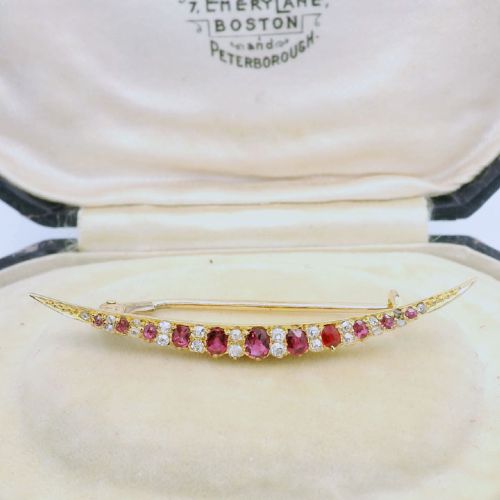


Gold Ruby Crescent Brooch
A gold ruby crescent brooch brings together glowing stones and sweeping curves in pieces that add quiet distinction to any lapel.
Gold Ruby Crescent Brooch
A gold ruby crescent brooch is a traditional piece of jewellery shaped in the distinctive curve of a moon, frequently set with rubies alongside diamonds or pearls. These decorative pins emerge from the late nineteenth and early twentieth centuries, spanning the Victorian and Edwardian eras.
The selections available here include floral bar brooches, swallow motifs, and classic graduated moon crescents. They appear in varied carats of gold, from nine carat to eighteen carat yellow and rose gold, often housing substantial rubies and supporting diamond accents.
How they were made
Goldsmiths constructed these brooches using yellow gold, rose gold, and occasionally platinum settings to secure the gemstones. Metalwork techniques involved casting and hand-working the gold into the slender crescent silhouette required for the pin.
Rubies and diamonds are flush-set, claw-set, or bead-set directly into the gold frame alongside pearls. Master jewellers balanced the weight of larger stones like Thai rubies against delicate gold wirework and pin mechanisms.
Listings feature items from the Victorian, Edwardian, and 1900 periods, constructed in yellow gold, rose gold, and platinum.
What varies in quality
The grade of the gold, demonstrated by markings for nine, fifteen, or eighteen carat metal, establishes the foundational quality of the mounting. Heavier gold weights and the presence of platinum denote more substantial manufacturing standards.
Gemstone selection dictates the upper tier of these pieces, particularly when natural rubies and diamonds of significant carat weight are present. The precision of the stone setting and the crispness of the crescent shape distinguish finer examples from standard work.
The Gold Ruby Crescent Brooch Glossary
- Crescent brooch
- A decorative pin formed in the shape of a curved moon. This silhouette was exceptionally popular during the late Victorian and Edwardian periods.
- Carat
- A unit measuring the purity of gold, such as nine carat or fifteen carat. It also measures the weight of gemstones like rubies and diamonds.
- Bar brooch
- A slender horizontal metal pin that often incorporates a central decorative element like a crescent or floral cluster. These pieces fasten securely to heavy fabrics.
- Platinum
- A dense, silvery-white precious metal utilised in jewellery manufacturing. It provides strong, secure settings for diamonds and coloured stones.
Gold Ruby Crescent Brooch: Frequently Asked Questions
How do I wear a crescent brooch?
These brooches fasten securely to lapels, scarves, or heavy winter coats using traditional pin and C-clasp mechanisms.
They also function as pendants when fitted with concealed loops, offering versatile ways to display the gold and gemstones.
What periods do these brooches come from?
The pieces span the late nineteenth and early twentieth centuries, covering the Victorian and Edwardian eras.
Dates range from the 1890s through to approximately 1910, reflecting changing jewellery tastes of those decades.
Are the rubies natural?
Many listings specify natural stones, including examples originating from sources like Thailand.
Gemstone selection varies across the pieces, often paired with supporting diamonds or pearls within the gold frames.
What gold carats are used?
The mountings appear in nine carat, fifteen carat, and eighteen carat gold, alongside rose and yellow variations.
Platinum is also utilised in certain settings to mount the diamonds and rubies securely.