
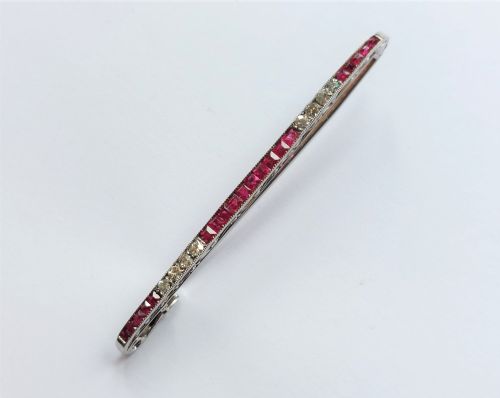


Ruby Diamond Bar Pin
A ruby diamond bar pin is a slender linear jewel combining vibrant red stones and glittering gems, prized for fastening lapels and collars with period elegance.
Ruby Diamond Bar Pin
A ruby diamond bar pin brings together colourful corundum and sparkling gemstones in a horizontal linear format that sits neatly on a lapel or scarf. The pieces available span several distinct eras, offering slender linear mounts alongside whimsical figurative shapes.
The Edwardian and Art Deco periods dominate the selection, bringing precise geometric geometry and delicate openwork mounts. Alongside straight bar configurations, collectors encounter charming figurative subjects including insects, birds, and botanical motifs.
Materials and construction methods
Goldsmiths utilised a variety of precious metals to anchor the stones, employing yellow gold, rose gold, white gold, and platinum, frequently combining silver with gold in earlier examples. Metalwork techniques range from delicate millegrain edges to structured channel settings.
Stones are selected for proportion and contrast, pairing deep red rubies with bright diamonds and occasional accents of pearls or enamel. The mountings are engineered to maintain rigidity across a narrow span while securing multiple small gemstones.
Listings feature yellow gold, rose gold, white gold, platinum, and silver alongside pearls and enamel.
Quality factors in antique bar brooches
The distinction between standard examples and superior specimens rests on the precision of the metalwork and the integration of the stones. Finer mounts display meticulous hand-piercing, even gemstone calibration, and secure flush or bead settings that protect the girdle of each stone.
The choice of precious metal influences the overall refinement, with platinum and high-carat gold foundations permitting finer wirework and more durable settings than lower gold alloys.
The Ruby Diamond Bar Pin Glossary
- Bar brooch
- A slender horizontal pin designed to fasten garments while displaying gemstones along its length. This form provides a structured canvas for symmetrical or graduated stone arrangements.
- Millegrain
- A decorative technique featuring a row of tiny raised metal beads along the edge of a setting. This method softens the metallic boundary and adds texture to Edwardian mounts.
- Art Deco
- A design style prevalent in the 1920s favouring clean geometric lines and strong symmetry. Pieces from this era often utilise platinum and white gold alongside calibrated rubies.
- Edwardian
- A period spanning the early twentieth century characterised by light, airy platinum and gold mountings. Jewels from this time frequently incorporate delicate openwork and floral garlands.
Ruby Diamond Bar Pin: Frequently Asked Questions
How do I wear a ruby diamond bar pin safely?
Secure the pin through a sturdy weave of fabric such as a wool lapel or heavy scarf, ensuring the safety catch is fully locked. Using a protective backing clutch provides extra security when wearing the brooch on valuable garments.
Position the pin horizontally or at a slight diagonal across structural seams to distribute the weight evenly and prevent the stem from bending.
What periods do these bar pins come from?
The available selection spans from the late Victorian era through the Edwardian period and the 1920s Art Deco movement, extending into mid-century designs. Each era brings distinct metal choices and mounting styles.
Earlier examples often feature yellow or rose gold with organic motifs, while later pieces favour white gold and platinum with geometric precision.
How should I clean my antique bar pin?
Use a soft brush with warm soapy water to gently remove dust from behind the ruby and diamond settings, avoiding harsh chemical dips that can damage pearls or enamel. Dry the piece thoroughly with a soft lint-free cloth.
Inspect the pin periodically with a loupe to ensure the tiny claws holding the stones remain firm and secure.