





15ct Gold Ruby Jewellery
These pieces of 15ct gold ruby jewellery combine rich red corundum with warm lower-karat gold to give you genuine antique and vintage character.
15ct Gold Ruby Jewellery
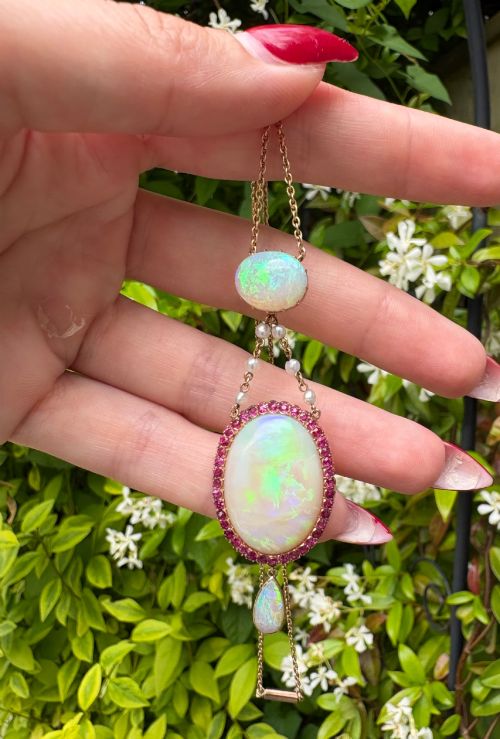
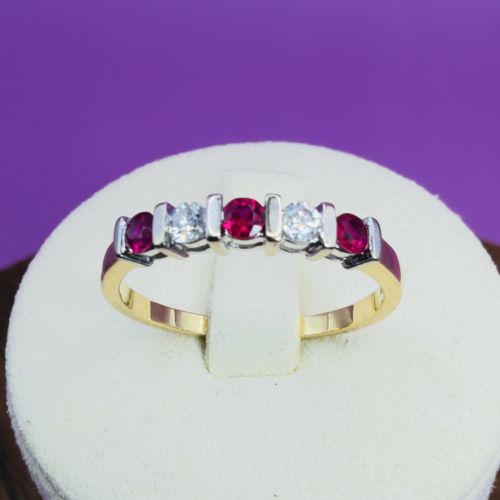
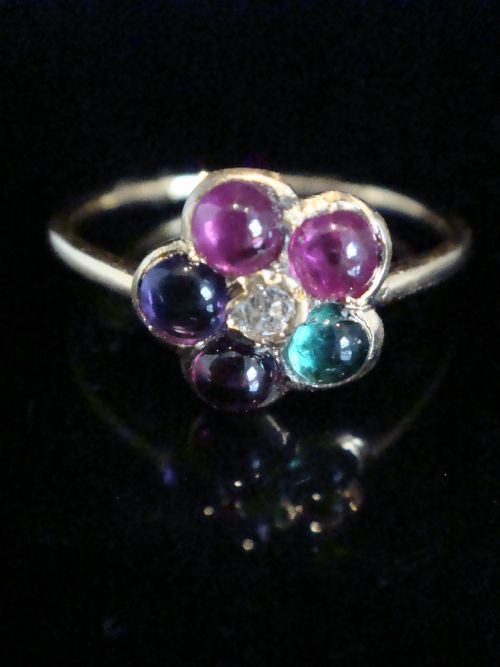
When you search for 15ct gold ruby jewellery, you encounter a selection of rings, brooches, necklaces, and bangles spanning the Georgian, Victorian, Edwardian, and mid-century periods. These items pair the deep crimson of natural rubies with the characteristic warm tone of fifteen-carat gold.
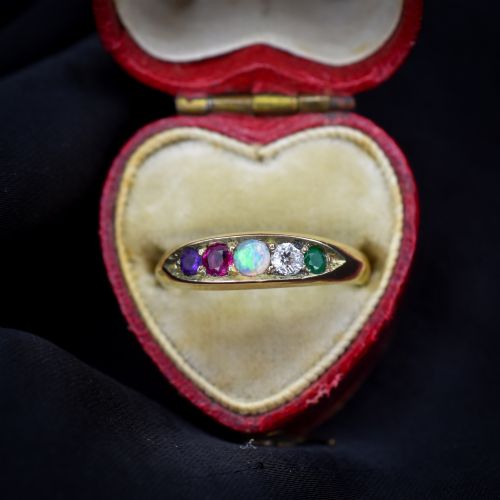
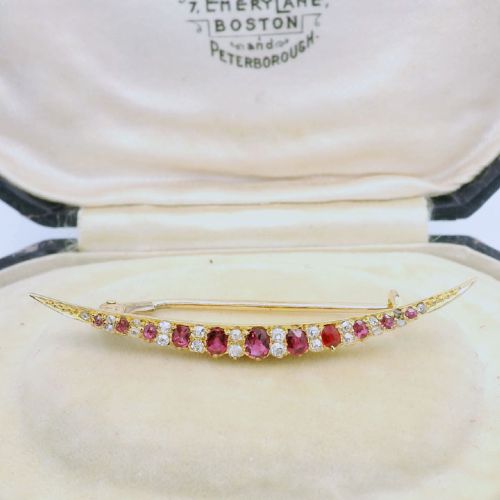
The most common forms on this page include five-stone band rings, crescent brooches, and floral bar brooches often accented with diamonds or pearls. Pieces range from patterned nineteenth-century bands to Edwardian star bangles and double heart necklaces.
How they were made
Goldsmiths utilised fifteen-carat gold, a distinct British standard alloy that provides a rich yellow colour intermediate between modern nine-carat and eighteen-carat metal. They set rubies alongside rose-cut diamonds, seed pearls, and opals using traditional claw and collet techniques.
Craftsmen shaped these metals into intricate floral motifs, geometric cluster heads, and hinged bangles, frequently incorporating hallmarks such as town marks and specific date ciphers.
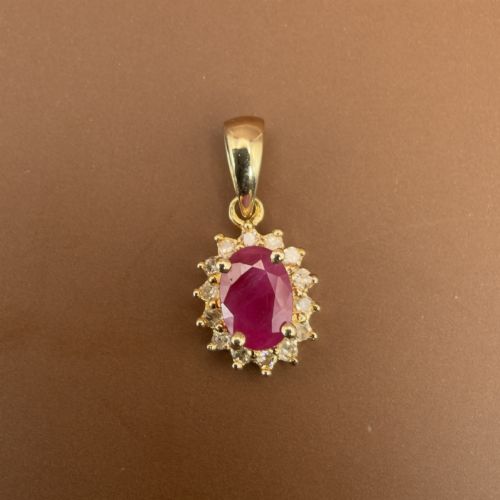
Object forms on this page include band rings, cluster pendants, floral bar brooches, crescent brooches, hinged bangles, and double heart necklaces.
What varies in quality
The distinction between standard and superior pieces rests on the saturation and clarity of the rubies, alongside the crispness of the surrounding gold work. Fine examples display well-matched stones with vibrant colour rather than inclusions that dull the brilliance.
Weight, structural integrity in settings like claws and bezels, and the preservation of original hallmarks or patterned band engraving further separate standard items from exceptional survivals.
The 15ct Gold Ruby Jewellery Glossary
- 15ct Gold
- An alloy containing fifteen parts pure gold out of twenty-four, yielding a deeper yellow hue than nine-carat gold and commonly found in British antique pieces.
- Ruby
- A red variety of the mineral corundum coloured by chromium, prized in these items for its distinct crimson shade.
- Rose Cut
- A vintage diamond cut featuring a flat base and a domed crown with triangular facets, frequently seen in Edwardian and Victorian settings.
- Seed Pearl
- A very small natural or saltwater pearl, often utilised in clusters or floral arrangements alongside rubies in antique jewellery.
- Bar Brooch
- A long, slender pin brooch design popular in the Victorian and Edwardian eras, often mounted with a central cluster of gems.
15ct Gold Ruby Jewellery: Frequently Asked Questions
What is 15ct gold ruby jewellery?
It is antique and vintage jewellery made from fifteen-carat gold set with rubies, frequently accompanied by diamonds, pearls, or opals. These items date primarily from the nineteenth and early twentieth centuries.
The gold alloy offers a distinct warm tone that differs visibly from modern lower-carat or higher-carat alternatives, giving each piece a characteristic period appearance.
How do I care for my antique ruby jewellery?
Clean your pieces gently with warm soapy water and a soft brush, avoiding harsh chemical dips or ultrasonic cleaners that might harm softer accompanying stones like pearls or opals.
Store items individually in soft pouches to prevent the harder rubies or diamonds from scratching the fifteen-carat gold mounts.
How can I date these pieces?
Dating relies on British hallmarks, assay office marks, style characteristics, and construction methods. Edwardian items often feature delicate millegrain work and platinum-topped gold, while Victorian pieces showcase bolder settings.
Specific letters within hallmarks correspond to exact years of assay, helping to pinpoint the creation date.