



Gold Gemstone Bar Pin
A gold gemstone bar pin is a slender historic fastener set with diamonds, rubies or pearls that secures a lapel with period elegance.
Gold Gemstone Bar Pin
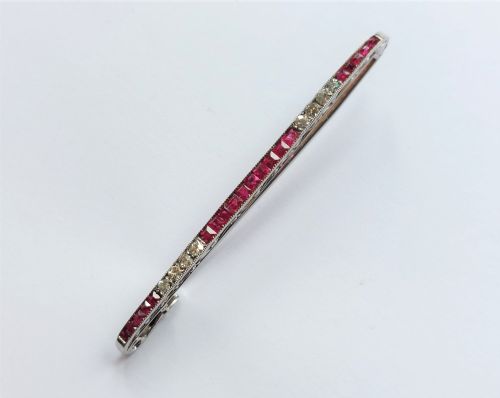
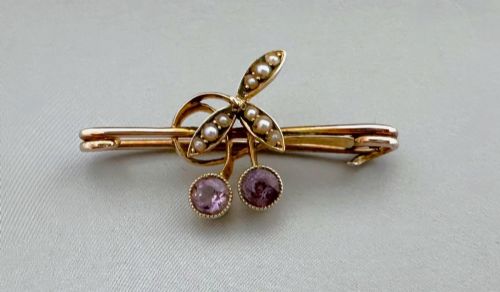
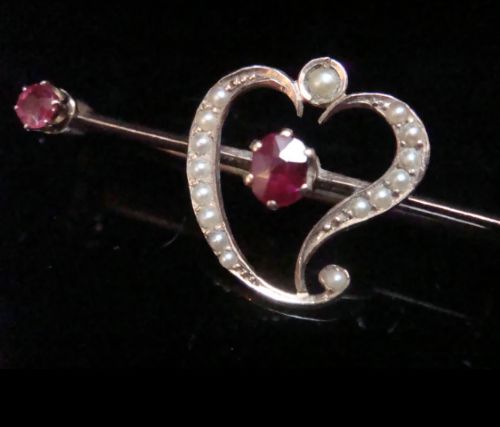
A gold gemstone bar pin combines a linear metal shaft with clustered stones, drawing primarily from Victorian, Edwardian and Art Deco aesthetics. The pieces on this page span the late nineteenth century through to the mid-twentieth century, offering slender profiles designed to fasten securely through woven fabrics.
Makers shaped these jewels across distinct eras, yielding simple nineteenth-century gold bars alongside geometric 1920s platinum and white gold creations. Buyers encounter peridot, ruby, diamond and seed pearl configurations most frequently on this page, reflecting the dominant gemstone choices of the period workshops.
Materials and construction methods
Goldsmiths worked with 9ct and 15ct yellow and rose gold, later incorporating white gold and silver into twentieth-century geometric frames. These metals were drawn into sturdy bars or cast into intricate floral, heart and crescent motifs designed to hold central gemstones.
Gemstones including diamonds, rubies, peridots, garnets and seed pearls were secured using claw settings, collets and delicate seed pearl stringing or peg settings. The integration of unheated sapphires, chrysoberyls and imperial pink topaz demonstrates the careful stone selection characteristic of period jewellers.
Gemstones recorded across the available pieces include diamonds, rubies, peridots, tourmalines, aquamarines, garnets, opals, and seed pearls.
Evaluating period craftsmanship
Quality rests in the precision of the metalwork, from hand-carved gold mounts to the balanced proportion of the central gemstone cluster against the linear pin. Finer examples display meticulous stone matching, secure peg-setting for pearls and crisp detailing in floral or crescent motifs.
The integrity of the pin mechanism and the purity of the gold alloy further distinguish the pieces. Higher tiers exhibit well-executed stone cuts, such as old-cut diamonds and unheated sapphires, set within substantial 15ct gold or white gold structures.
The Gold Gemstone Bar Pin Glossary
- Bar brooch
- A slender linear fastener designed to pin garments, often set with stones along its length. This form provides the structural foundation for the pieces gathered here.
- Seed pearl
- A very small natural or cultured pearl, typically unpierced or half-drilled, used in dense clusters during the Victorian and Edwardian eras. These tiny pearls add delicate texture around central gemstones.
- Old-cut diamond
- A hand-faceted diamond shape predating modern brilliant cuts, characterised by a smaller table and higher crown. They display a characteristic soft, candlelit sparkle.
- Cabochon
- A gemstone shaped and polished with a smooth, convex surface rather than faceted. This technique highlights the natural colour and inclusions of stones such as chalcedony and opal.
Gold Gemstone Bar Pin: Frequently Asked Questions
How do I wear a bar pin safely?
Secure the pin through a sturdy weave of fabric such as a wool lapel or heavy scarf, ensuring the safety clasp is fully engaged. Using a backing cap or securing guard behind the fabric prevents the pin from slipping during wear.
Store the piece flat in a dedicated jewellery box when not in use to protect the delicate pin stem from bending under pressure.
How do I date an antique bar pin?
Examine the metal purity hallmarks, gemstone cuts and overall stylistic motifs to establish the era of manufacture. Victorian pieces often utilise 15ct yellow gold with seed pearls and cabochons, whereas Edwardian and Art Deco examples favour white gold, platinum and geometric diamond settings.
Consulting specialist hallmarking guides helps confirm the specific decade of production based on stamped maker marks and assay office symbols.
Were these pins used differently in the past?
Victorians and Edwardians utilised these pieces to fasten lace collars, cravats, shawls and heavy winter coats. They served both a practical fastening function and a decorative purpose, displaying social standing and sentimental motifs like hearts and clovers.
Over time, changing fashions transformed them from functional garment closures into purely decorative lapel ornaments worn on modern tailoring.
How do I clean delicate gemstone pins?
Wipe the gold metal and durable stones gently with a soft, damp microfibre cloth to remove surface dust. Avoid submerging pearl or opal pieces in water or liquid cleaners, as moisture damages seed pearls and porous stones.
Professional periodic inspection ensures that claw settings and seed pearl stringing remain secure without compromising the historic integrity of the piece.