


Royal Worcester Urn Vase
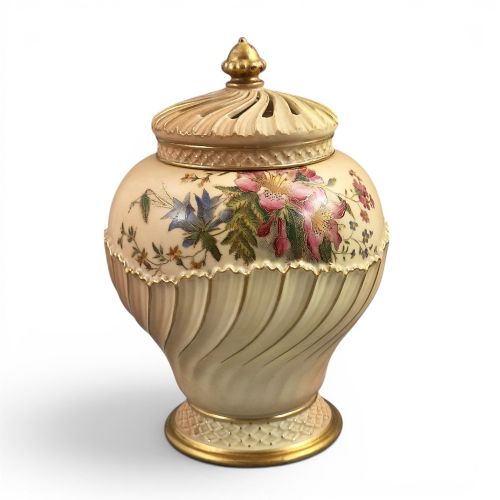
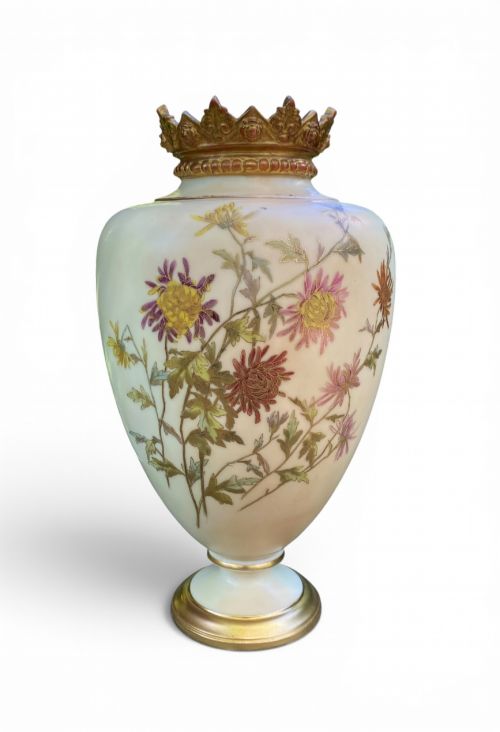
Royal worcester urn vase examples bring together painted fruit, blush ivory ground and fine bone china from the Victorian and Edwardian periods.
Royal Worcester Urn Vase
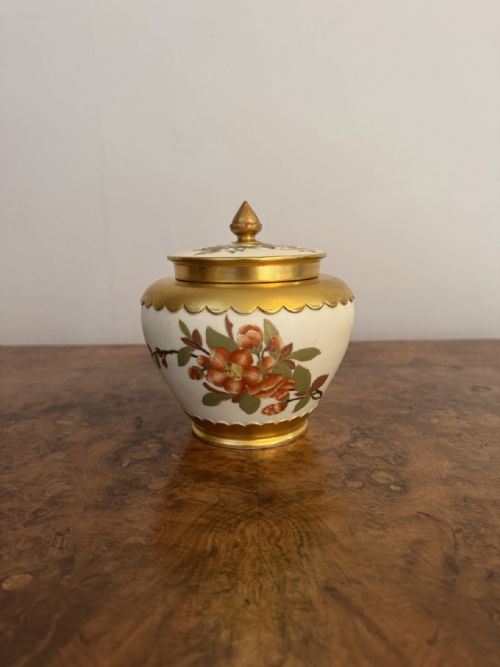
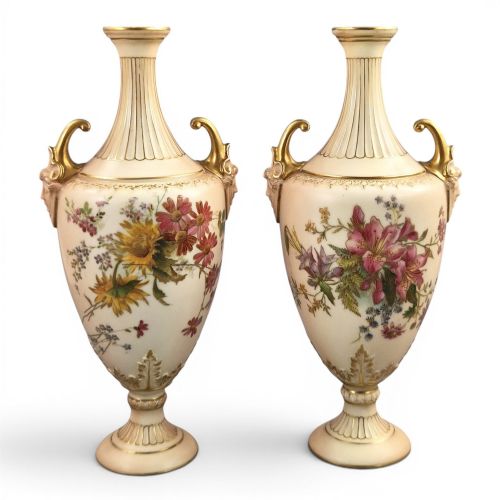
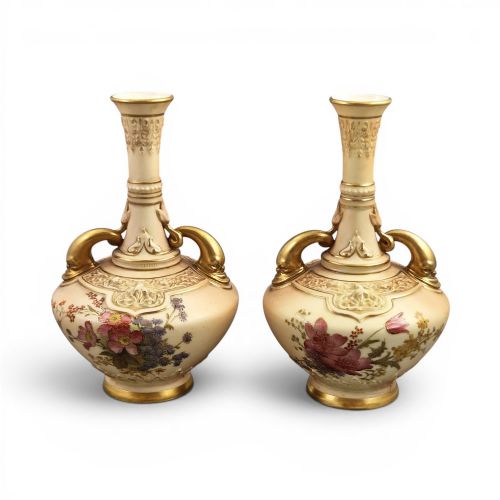
A royal worcester urn vase selection comprises lidded potpourri jars, twin-handled vessels and cabinet pieces originating from the nineteenth and twentieth centuries. Buyers frequently encounter blush ivory ground examples alongside hand-painted fruit and bird subjects created during the Edwardian era and the interwar decades.
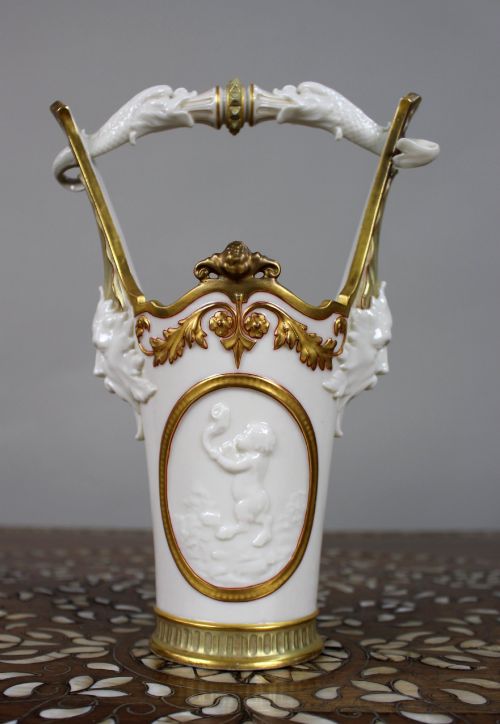
The objects take diverse forms ranging from small miniature holders to large exhibition pieces, often complete with pierced gilt handles and covers. Traditional English styles dominate the record, alongside Victorian neo-classical shapes and late Victorian aesthetic movement designs.
How they were made
Potters shaped fine bone china and porcelain into ovoid vessels, ewers and pedestal jars before applying coloured glazes and enamel decoration. Artisans then utilised gold leaf and elaborate gilding to accentuate handles, rims and shoulders.
Many surfaces received hand-painted subjects from factory artists, employing delicate brushwork for feathers, florals and fruit compositions before firing the pieces to fix the pigments.
Listings span the nineteenth century, Edwardian era and 1950s, utilising porcelain, bone china, enamel and gold leaf.
What varies in quality
The standard of a royal worcester urn vase rests on the skill of the painting and the complexity of the body work. Signed works by documented artists command greater attention than standard floral patterns, particularly when depicting intricate fruit, storks, swans or pheasants.
Execution of reticulation, pierced gilt handles and delicate mouldings further separates standard production wares from exhibition-grade pieces created during the late nineteenth and early twentieth centuries.
Hadley and Sons·A.B. Daniell and Son·George Owen·James Stinton·Harry Stinton·C. Baldwyn·Walter Powell
The Royal Worcester Urn Vase Glossary
- Blush ivory
- A soft, creamy matte glaze developed by the factory to imitate ivory surfaces. This finish became a characteristic background for floral and animal painting.
- Reticulation
- The technique of piercing clay before firing to create openwork lattice patterns. George Owen mastered this difficult process on factory vessels.
- Pot pourri
- A vessel featuring a pierced cover designed to diffuse dried scent. These jars often stand on pedestal bases with twin handles.
- Gilding
- The application of gold leaf or gold paint to ceramic edges and handles. This metal decoration defines the neoclassical and aesthetic styles.
- Ewer
- A large jug with a decorated spout and handle, frequently paired with urns for display. These decorative vessels follow classical forms.
Royal Worcester Urn Vase: Frequently Asked Questions
What is a blush ivory vase?
Blush ivory refers to a specialised matte cream glaze developed to resemble elephant ivory. It provides a muted background for hand-painted flora and fauna.
Such pieces date largely from the late Victorian and Edwardian periods and appear frequently with gilt detailing.
How are painted fruit vases identified?
Painted fruit pieces feature detailed studies of apples, peaches and grapes against dark or mossy backgrounds. These works usually bear the signature of a specialist factory artist.
Such items appear across twentieth-century production dates up to the 1960s.
Where should I display an urn vase?
Urn vases require stable surfaces away from direct sunlight to preserve delicate enamel colours and gold leaf highlights. Cabinet placement protects lidded pieces and delicate handles from accidental damage.
Pair arrangements look best displayed on mantelpieces or pedestals.
How can I tell the period?
Periods are identified through base marks, glaze types and painting styles spanning the nineteenth century onwards. Victorian examples often lean towards classical or aesthetic movement forms, while Edwardian pieces favour blush grounds.
Later mid-century items focus heavily on signed fruit compositions.