




Royal Worcester Covered Vase
A royal worcester covered vase brings together fine porcelain, delicate gilding, and hand-painted artistry that collectors value.
Royal Worcester Covered Vase
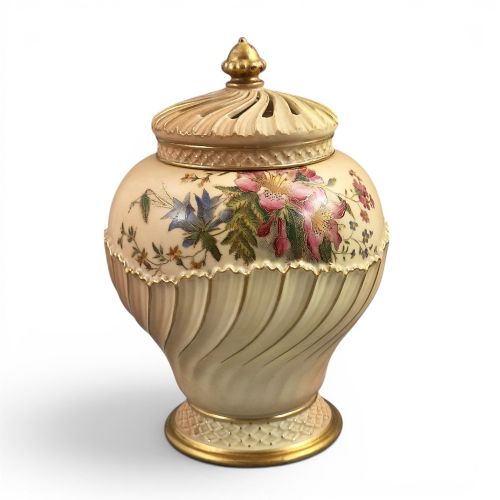
A royal worcester covered vase represents the pinnacle of traditional English porcelain, combining sculptural form with meticulous hand-painted detail. Buyers searching this phrase typically encounter lidded vessels and pot-pourri jars spanning the nineteenth and twentieth centuries.
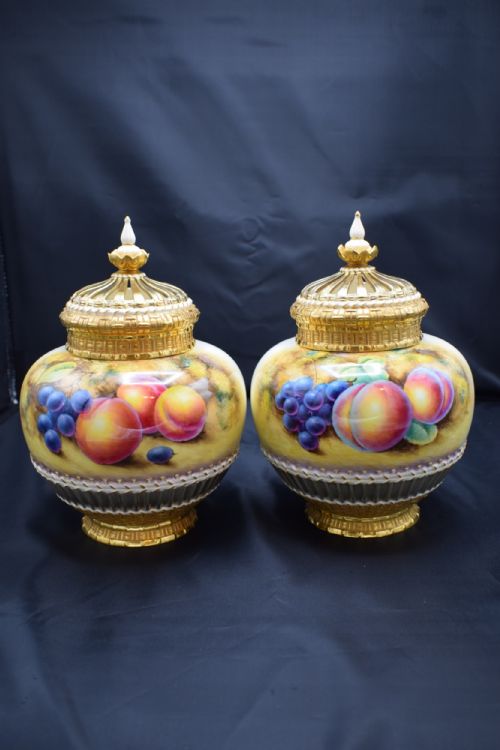
The selection ranges from early blush ivory pieces of the Edwardian era to mid-century painted fruit and landscape designs. Common forms include pedestal vases, ginger jars, and crown-lidded pot-pourri vessels.
Originating from the renowned Worcester factory, these pieces reflect distinct stylistic shifts from Victorian ornamentation through to twentieth-century artistry. The most frequently met examples feature delicate floral motifs or naturalistic scenes signed by celebrated artists.
Materials and Techniques
Makers utilised high-grade porcelain and bone china as the primary canvas, shaping them into robust ceramic vessels with matching lids. These forms were then fired to achieve a smooth vitreous body ready for decoration.
Artisans applied enamel colours and gold leaf by hand, often incorporating rich gilding to highlight handles, rims, and covers. The blush ivory technique imparted a soft, matte cream background that distinguished many Edwardian pieces.
Listings feature porcelain, bone china, and ceramic pieces enhanced with enamel, gilding, and gold leaf across multiple twentieth-century decades.
Assessing Quality
Quality rests heavily upon the complexity and attribution of the hand-painted decoration, particularly works bearing the signatures of known studio artists. Finer examples display exceptional detail in subject matter such as fruit, birds, or cattle.
The crispness of the moulded ceramic form and the precision of the gilding further separate standard production pieces from masterworks. Preservation of the original matching cover remains a significant factor in the standing of any given piece.
John Smith·C Baldwyn·Harry Davis·John Stinton·Kitty Blake
The Royal Worcester Covered Vase Glossary
- Blush ivory
- A soft, matte cream-coloured porcelain ground developed to imitate ivory, frequently decorated with floral motifs. It became a defining finish for late nineteenth and early twentieth century English porcelain.
- Pot-pourri jar
- A lidded ceramic vessel pierced with holes in the inner or outer cover to release the scent of dried flowers. These containers often double as decorative urns.
- Gilding
- The application of gold leaf or gold paint to ceramic surfaces to accent rims, handles, and panels. This technique adds rich contrast to painted scenes.
- Bone china
- A type of porcelain composed of ceramic material, feldspathic rock, and bone ash. It provides high strength, translucency, and a smooth white base for enamels.
- Covered vase
- A ceramic vessel supplied with a matching lid or crown top. The inclusion of the original cover is essential for the completeness of the piece.
Royal Worcester Covered Vase: Frequently Asked Questions
How do I identify a blush ivory piece?
Blush ivory pieces feature a distinctive soft, matte cream-coloured ceramic ground that mimics the appearance of natural ivory. They are typically decorated with delicate floral or botanical painting.
Most examples date from the late Victorian and Edwardian periods, often bearing factory marks beneath the glaze.
What is a crown top pot pourri jar?
A crown top pot pourri jar includes a specialised pierced lid shaped like a crown. This design allows scented petals stored inside to diffuse into a room.
These lidded vessels come in various sizes and frequently feature painted scenes or gilded accents.
How can I tell the period of a vase?
Dating relies on observing the ceramic body, the style of painting, and the specific factory backstamps found underneath. Edwardian pieces often utilise blush ivory finishes, whereas mid-century examples lean towards vibrant painted fruit.
Comparing the shape number and artist signature helps narrow down the decade of production.
Were these vases used for display or function?
While pot-pourri jars held dried fragrant flowers for scenting rooms, most covered vases served primarily as decorative ornamental pieces. Their intricate hand-painted designs made them centrepieces for drawing rooms.
Consequently, many survive in homes where they were kept strictly for visual display.