




Royal Worcester Ceramic Statue
These royal worcester ceramic statue pieces bring Victorian and Edwardian character into a room through finely modelled figures and classical subjects.
Royal Worcester Ceramic Statue
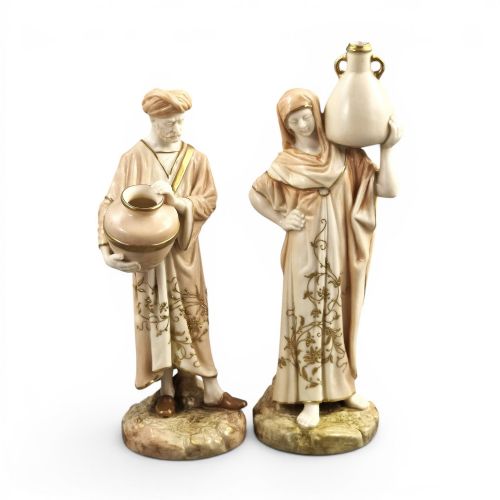
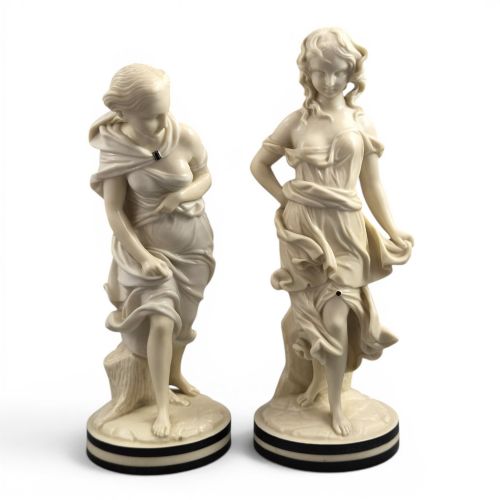
A royal worcester ceramic statue is a porcelain or parian figure depicting human subjects, from classical maidens to orientalist water carriers and literary characters. These pieces span the Victorian, Edwardian, and later periods, produced in various modelled forms ranging from cabinet figures to large decorative sculptures.
The pieces on this page are heavily represented by Victorian and Edwardian works, including creations by James Hadley. Forms include single figures, pairs, and themed series such as orientalist and classical revival subjects.
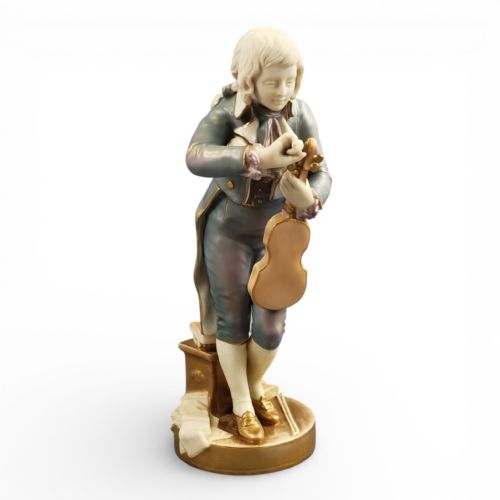
Buyers encounter subjects like water carriers, musicians, and historical figures, often rendered in blush ivory or painted porcelain. The assortment reflects decades of sculptural design from the factory, capturing both neoclassical tastes and genre scenes.
Materials and techniques
The creation of these figures relies on porcelain, biscuit porcelain, and parian ware, fired and shaped into complex sculptural forms. Parian ware provides a marble-like matte finish suited to classical figures.
Model numbers and artist involvement, such as the work of James Hadley, dictate the precision of the modelling. Moulds capture fine details in hair, costume, and bases.
Listings feature porcelain and parian ware materials across Victorian, Edwardian, and 1920s periods.
Distinctions in quality
The complexity of the subject and the scale of the piece influence its standing. Large pairs and elaborate orientalist models demonstrate greater sculptural ambition than simple single figures.
The use of specialised finishes like shot enamel or delicate gilding alters the visual depth of the piece, distinguishing standard production from more elaborate studio output.
James Hadley·Kerr and Binns
The Royal Worcester Ceramic Statue Glossary
- Parian ware
- A type of fine biscuit porcelain resembling marble, developed in the nineteenth century for figures and busts. It does not possess a glossy glaze.
- Blush ivory
- A soft cream-coloured porcelain body introduced by Royal Worcester, often decorated with gilt and pastel enamels. It became a hallmark of late nineteenth-century production.
- Shot enamel
- A special glazing technique that creates an iridescent or shifting colour effect across the surface of the porcelain. It appears on select decorative figures.
- Biscuit porcelain
- Unglazed porcelain fired once to a hard, matte finish. It allows sculptural details to remain crisp and unmasked by glaze.
- Model number
- A numerical identifier assigned by the factory to a specific sculptural shape. These numbers help date and identify pieces accurately.
Royal Worcester Ceramic Statue: Frequently Asked Questions
What periods do these figures come from?
The pieces span the Victorian and Edwardian eras, with examples extending into the early twentieth century.
Date stamps, model numbers, and stylistic markers help establish the precise period of manufacture for each individual sculpture.
Who designed these ceramic statues?
Prominent modellers like James Hadley contributed significant designs for the factory, shaping the aesthetic of the late nineteenth century.
Other works emerge from factory production lines under periods such as the Kerr and Binns era.
What materials were used to make them?
Manufacturers utilised porcelain, biscuit porcelain, and parian ware to form the primary body of the statues.
Surfaces were frequently enhanced with enamel, shot enamel, and gold leaf or gilding to accentuate decorative elements.
How do I identify different figure styles?
Styles range from Victorian Classical Revival and Orientalism to Art Deco and eighteenth-century revival.
Subject matter, such as classical maidens or eastern water carriers, alongside base types and colour palettes, defines each stylistic group.