
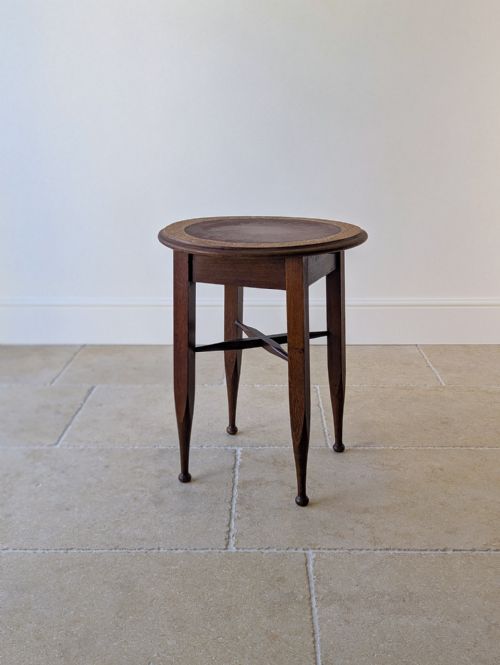
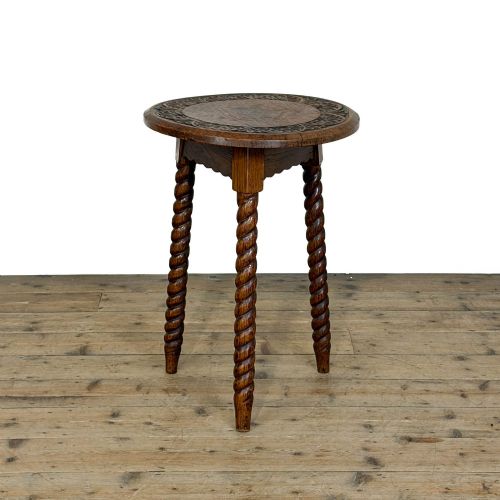
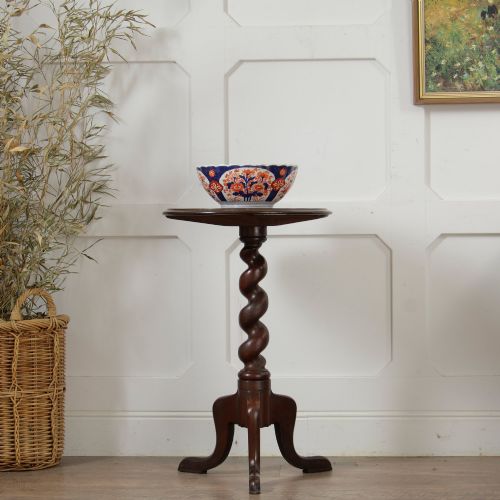
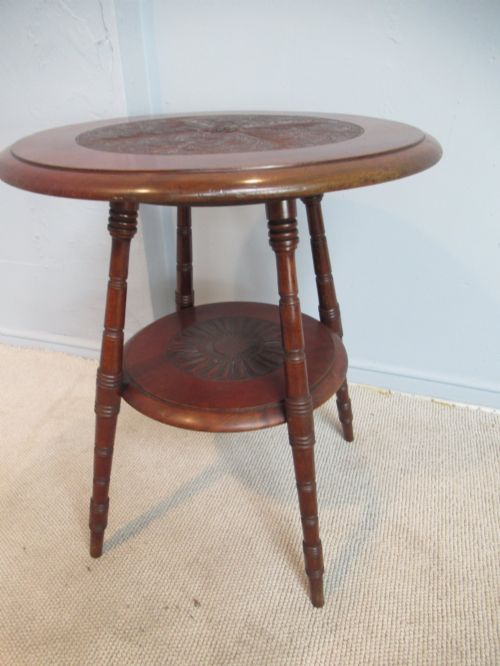
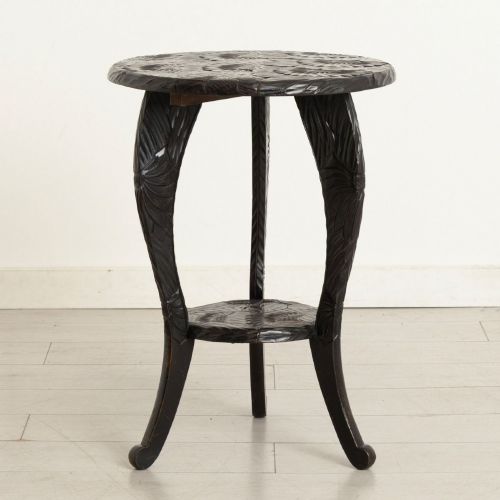
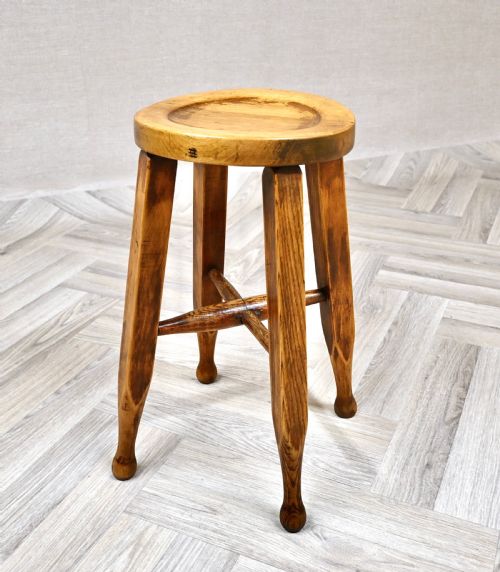
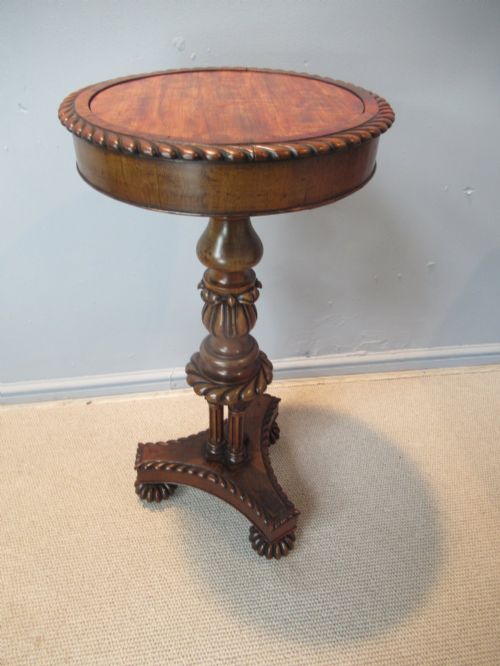


Round Carved Plant Stand
A round carved plant stand brings sculptural form to a room, holding green foliage or heavy ceramic pots with steady grace.
Round Carved Plant Stand
A round carved plant stand provides a sturdy circular platform raised on legs or a central pillar, designed specifically to elevate flora within a room. Buyers searching for a round carved plant stand encounter diverse forms that double as side tables, stools, and pedestals.
The pieces appearing here span from the Victorian and Edwardian eras into the early twentieth century, showing a mix of British, European, and Asian origins. Oak, mahogany, and hardwood dominate the selection, alongside rarer examples in teak, rosewood, and giltwood.
Makers and workshops across different continents applied deep hand carving to tops and supports, ranging from Anglo-Indian elephant motifs to Chinese vernacular designs and Jacobean Revival oak. Most examples balance a compact footprint with heavy structural timber or stone tops.
How they were made
Cabinet makers utilised dense timbers such as mahogany, oak, and exotic hardwoods, turning them on lathes for central columns or shaping solid circular slabs for tops. Hand chisels and gouges created the intricate relief carving seen on skirts, aprons, and legs.
Tripod bases and barley twist stems provided essential stability for supporting heavy ceramic vessels and stone surfaces. Inlaid elements and painted finishes added decorative contrast to the structural timber frames.
Several stands carved with elephants from the Bombay Presidency invite you to check if the tiny trunks are pointed up for good luck.
What varies in quality
The depth and crispness of the hand carving separate standard production pieces from finer artisan work, where undercut details and smooth contours show deliberate skill. Timber selection also dictates grade, with dense figured mahogany and dense quarter-sawn oak holding up better to weight and moisture than softer woods.
Joint integrity and balance define the upper tier of these stands, ensuring that heavy pots sit level without tipping on three-legged tripod bases. Original surface finishes, whether polished wax or period paint, retain more character than stripped or heavily restored timber.
Liberty of London
The Round Carved Plant Stand Glossary
- Tripod base
- A three-legged support system common on small circular tables and plant stands. This configuration prevents wobbling on uneven uneven historical floorboards.
- Barley twist
- A spiral turning technique resembling a twisted rope, carved into wooden table legs or central pedestals. It became particularly popular during the Victorian period.
- Giltwood
- Timber that has been coated with a thin layer of gold leaf or metallic gilt. This finish appears frequently on Louis XVI style and Regency decorative stands.
- Hardwood
- Timber derived from broad-leaved angiosperm trees, valued for its density and durability. Examples include mahogany, teak, and rosewood used in nineteenth-century occasional furniture.
Round Carved Plant Stand: Frequently Asked Questions
Can these stands hold heavy ceramic pots?
Most sturdy wood and marble-topped stands easily support standard house plants, provided the base has a wide enough stance to prevent tipping.
Heavier planters require solid hardwood or weighted tripod frames to ensure long-term stability in busy rooms.
How do I distinguish Victorian from Edwardian stands?
Victorian pieces tend to feature darker mahogany timbers, heavier turned elements like barley twists, and deeper ornamentation.
Edwardian examples often lean toward lighter oak construction with Arts and Crafts simplicity or cleaner geometric lines.
Where should I place a round plant stand?
These compact pieces fit well in corners, beside armchairs, or near windows where plants receive adequate sunlight.
Their circular profiles prevent sharp corners from jutting into narrow hallways or tight seating arrangements.
Are marble tops original to these stands?
Many nineteenth-century plant and vase stands incorporated inset marble slabs to resist water damage from watering foliage.
These stone inserts were fitted securely into the wooden frames during initial construction to handle damp pots safely.