


Indian Elephant Table
An indian elephant table brings the distinct craftsmanship of the nineteenth-century colonial trade directly into a modern interior.
Indian Elephant Table
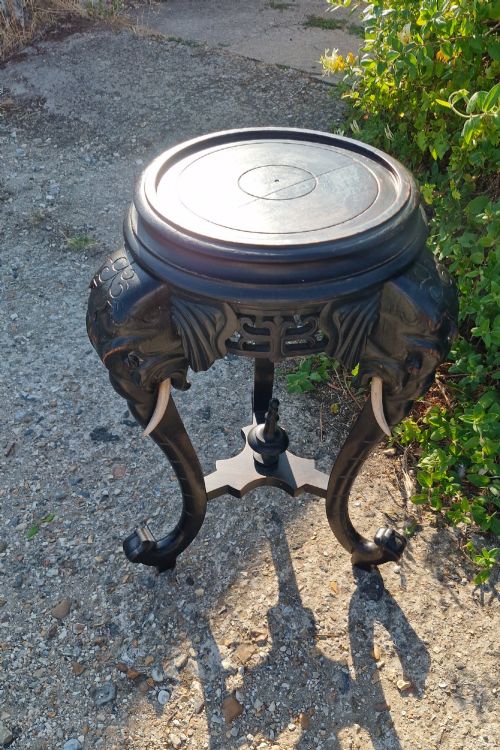
An indian elephant table is a low occasional, coffee, or side table supported by carved elephant figures forming the legs or base. These pieces emerge primarily from nineteenth-century production centres across the Indian subcontinent and Burma, reflecting colonial taste and local woodworking traditions.
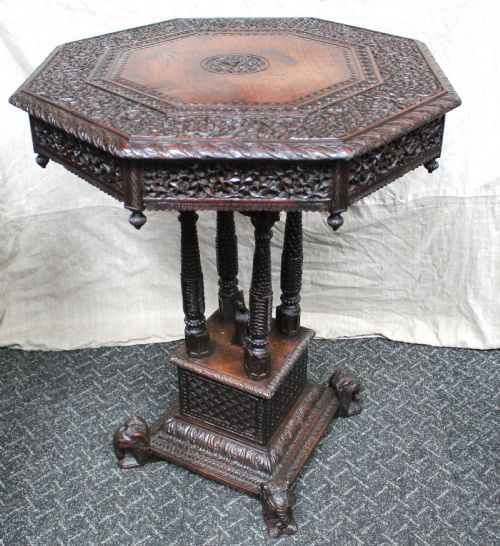
Buyers will encounter circular, octagonal, and rectangular formats designed as lamp stands, centre tables, or small coffee surfaces. The structural design typically incorporates detailed animal heads and tusks integrated directly into the table supports.
How they were made
Cabinetmakers utilised dense tropical timbers such as teak, rosewood, and hardwood to construct stable frames capable of supporting intricate surface carving. These structural woods provide the deep grain and weight characteristic of the period.
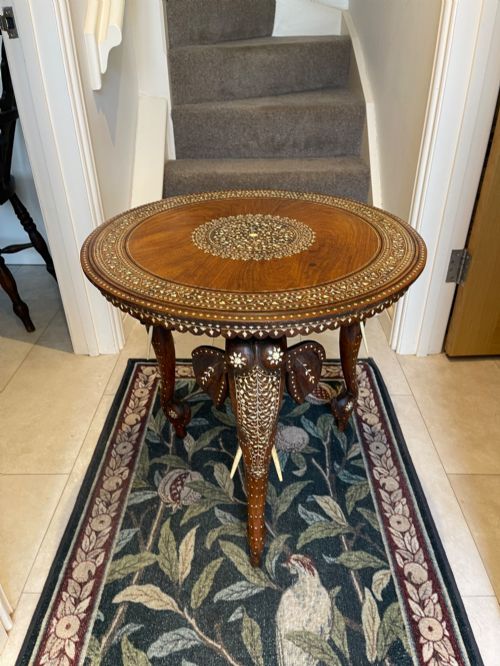
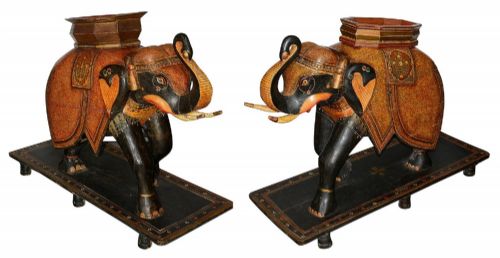
The recorded forms span side tables, occasional coffee surfaces, hall benches, and plant stands incorporating bone inlay and painted wood tusks.
What varies in quality
The standard of carving defines the upper tier of these pieces, distinguishing fluid, deeply undercut anatomical details from shallow or rigid tool marks. Superior examples exhibit realistic proportions in the elephant heads and legs rather than blocky or generic representations.
Material selection and decorative complexity further separate workshop outputs, with solid rosewood or teak bodies carrying intricate bone inlay scoring above plain painted pine or softer woods. The structural integrity of the joints where the elephant supports meet the tabletop dictates long-term stability.
Hoshiarpur workshops
The Indian Elephant Table Glossary
- Anglo-Indian
- A designation for decorative arts produced during the British period in India, combining European furniture forms with local carving traditions. These items often merge Victorian table designs with indigenous motifs.
- Bone Inlay
- A decorative technique where small pieces of animal bone are fitted into recesses carved into the wooden surface to form geometric or floral patterns. This method appears frequently on finer regional pieces from northern centres.
- Hoshiarpur
- A northern Indian town celebrated for its intricate woodwork and inlaid tables featuring elaborate floral and animal ornamentation. Pieces originating from this hub display distinctive micro-mosaic patterns.
- Occasional Table
- A small, movable piece of furniture designed for specific, intermittent use rather than permanent placement. In this category, such surfaces function as plant stands, lamp tables, or low coffee tables.
Indian Elephant Table: Frequently Asked Questions
What is an indian elephant table?
An indian elephant table is a low occasional or side surface supported by carved wooden elephant legs and heads. These tables originate largely from nineteenth-century workshops influenced by British colonial trade.
Craftsmen shaped dense tropical timbers into functional furniture that incorporated regional animal motifs into the structural supports. The forms range from small tripod stands to larger rectangular coffee tables.
How do I date these tables?
Dating relies on examining the timber species, joinery methods, and stylistic markers associated with Victorian and Edwardian production periods. Nineteenth-century examples typically feature heavy solid hardwoods and hand-cut joinery.
Later pieces from the early twentieth century may show simplified carving styles or alternative assembly techniques. Comparing the specific motif details against documented regional items helps narrow the production window.
Which woods were used?
Maker workshops predominantly utilised dense regional timbers including teak, rosewood, and various durable hardwoods. These heavy woods provided the structural strength required for intricate leg carving.
Secondary woods or painted softwoods appear on specific regional variants, occasionally combined with bone inlay or contrasting ebonised finishes. The choice of timber often corresponds to the geographical origin within the Indian subcontinent.
How do I care for the wood?
Maintenance requires keeping the timber away from direct heat sources and sudden humidity changes to prevent splitting. Regular dusting with a soft cloth preserves the carved details without damaging the finish.
Applying occasional appropriate wax helps nourish older rosewood and teak surfaces. Avoid using harsh chemical sprays that can degrade historic polishes or loosen inlaid bone elements.