
Rotating Library Stand
A rotating library stand puts books within arm's reach from an armchair, spinning smoothly on a concealed mechanism.
Rotating Library Stand
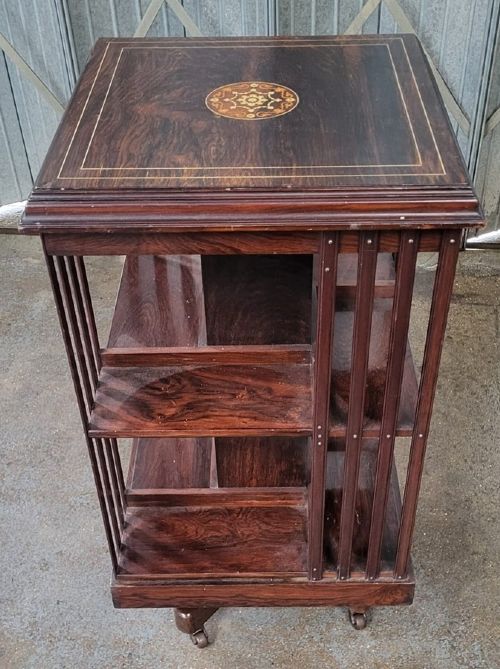
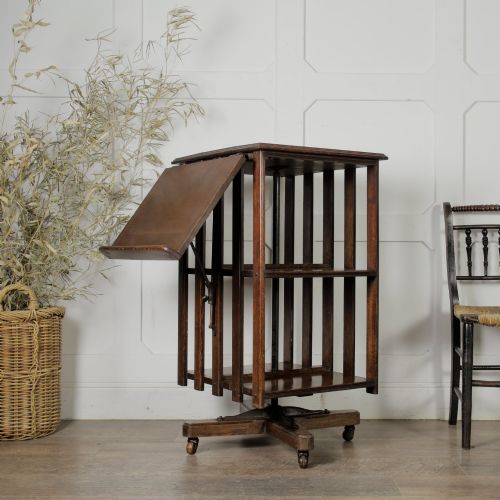
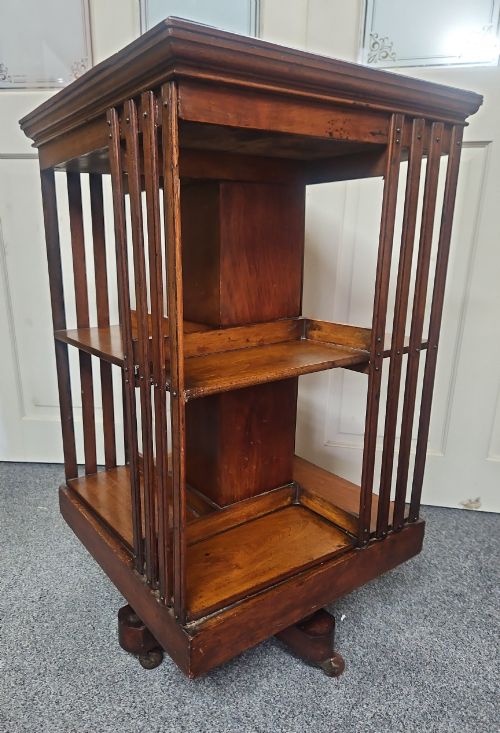
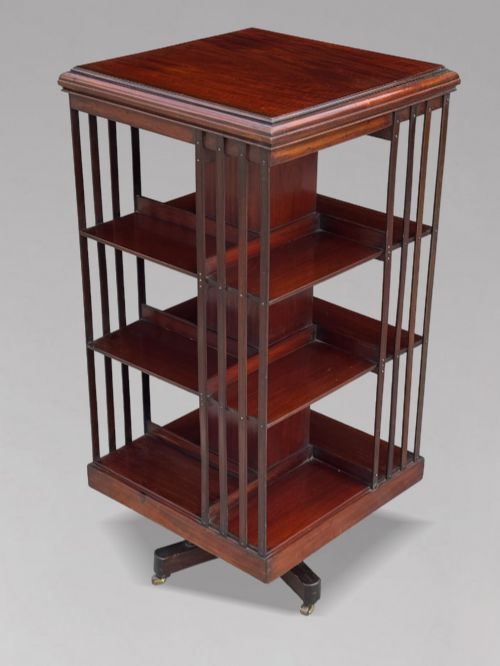
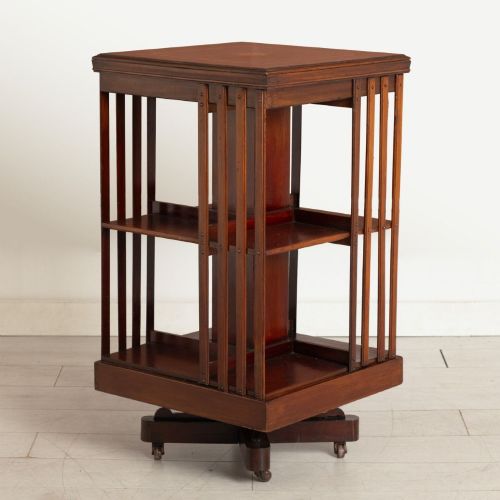
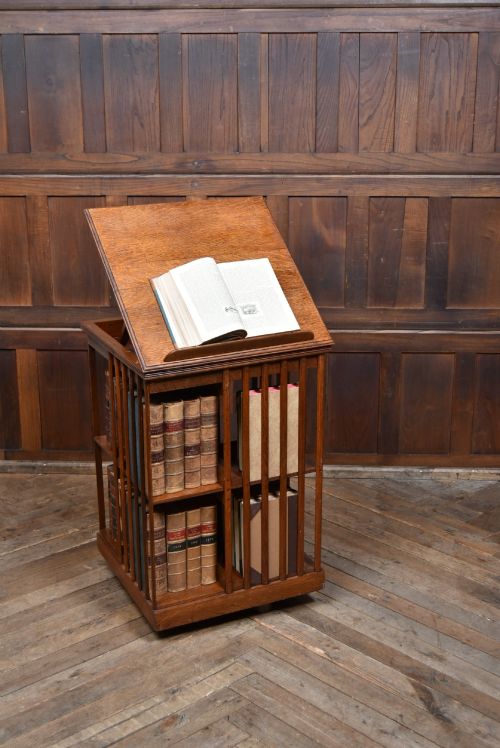
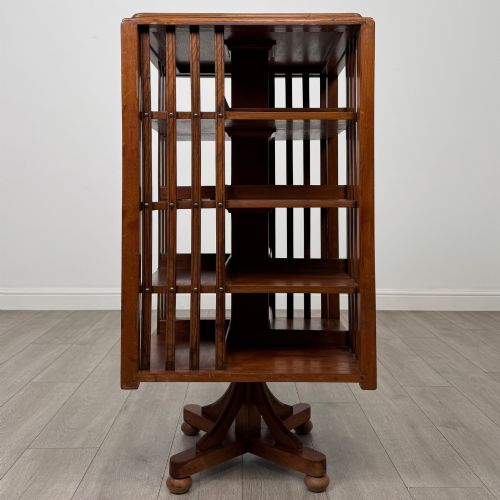
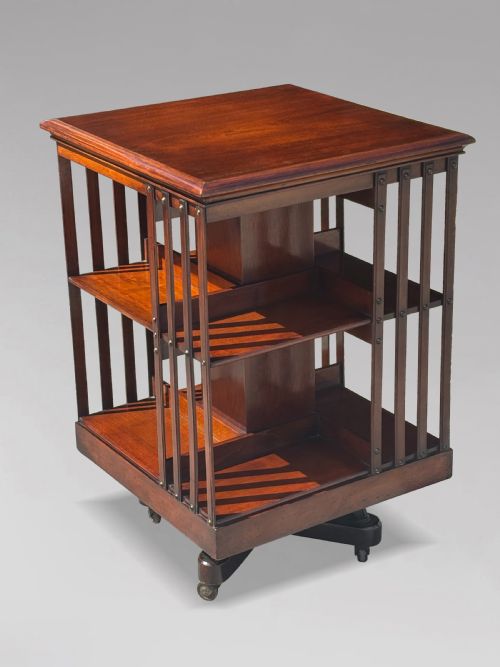
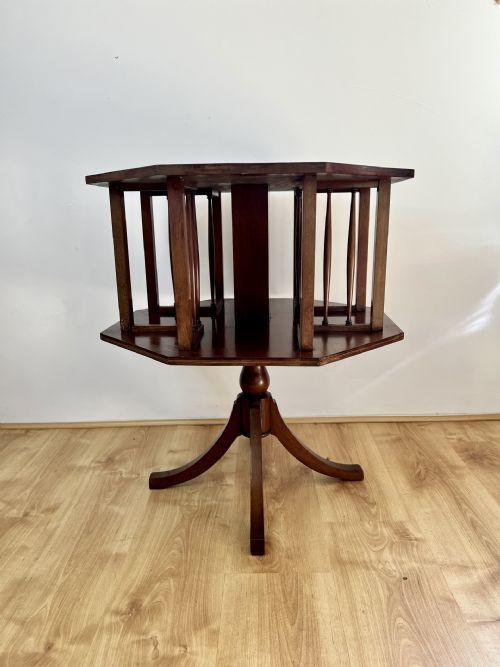
A rotating library stand solves the problem of storing heavy volumes in a compact footprint by placing tiers on a revolving base. When you search for a rotating library stand, you encounter pieces primarily from the Victorian and Edwardian eras, alongside occasional Georgian and 20th century examples.
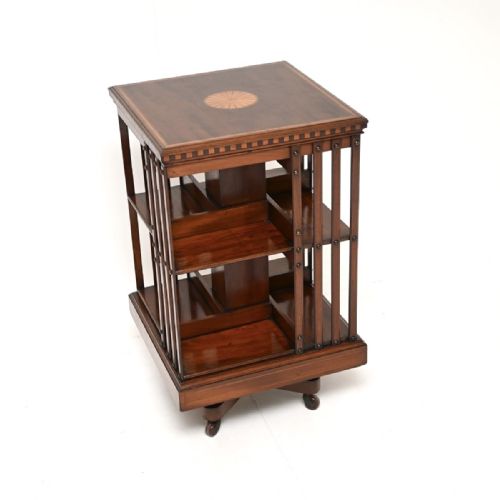
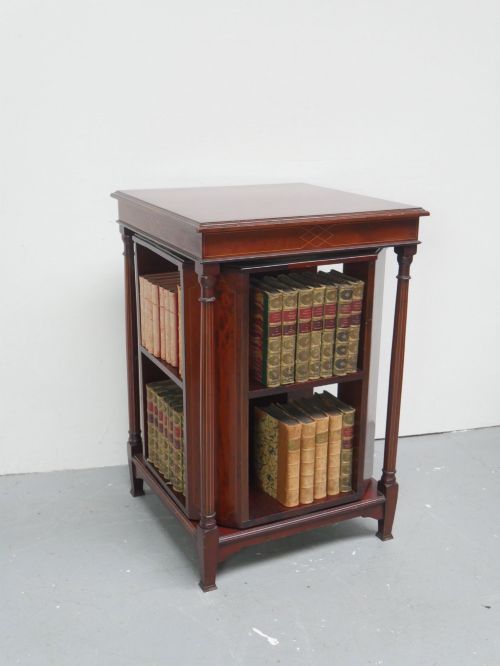
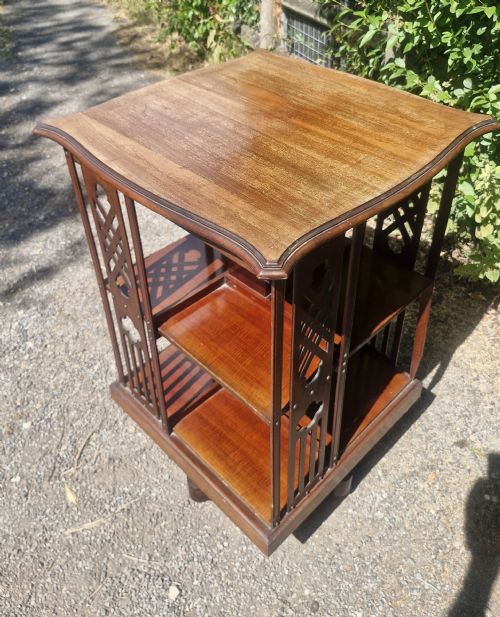
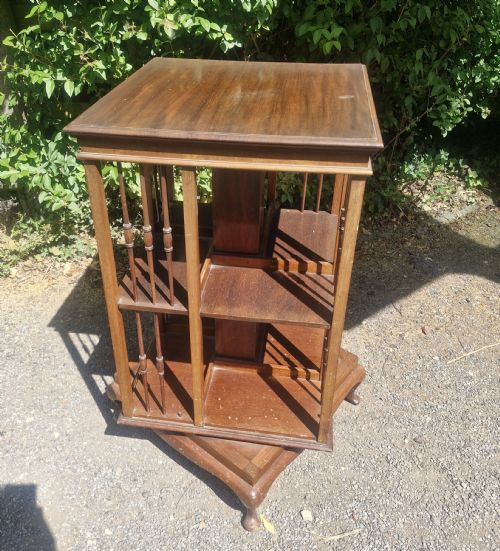
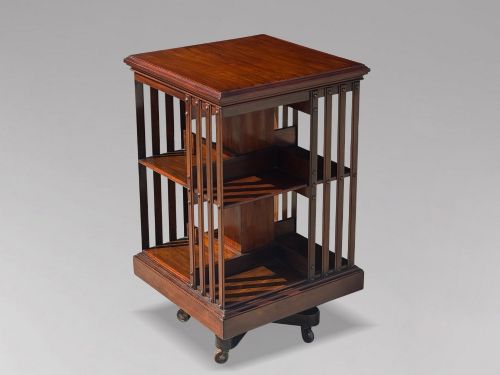
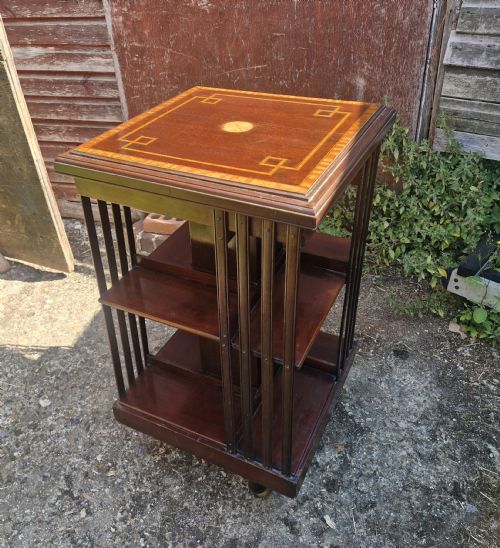
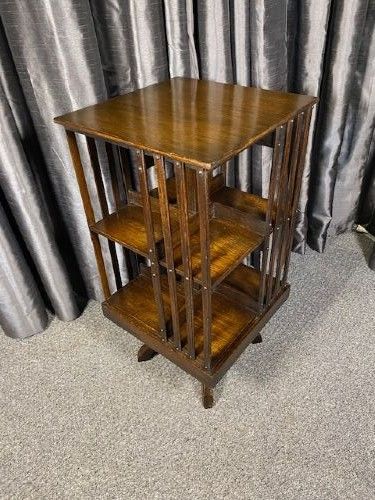
The most common version on this page is the Edwardian mahogany revolving bookcase, often inlaid with lighter timbers or constructed from solid oak. These pieces range from petite four-shelf models to large table-height stands designed for heavy reference books.
Makers such as Maple & Co produced refined versions in mahogany, while provincial workshops favoured robust oak. Forms vary from simple slatted sides to elaborate stands with Dutch floral marquetry or French provincial styling.
How they were made
Makers utilised dense timbers like mahogany, walnut, and oak to bear the heavy weight of bound volumes without warping over time. Satinwood and lighter stringing provided contrast on inlaid Edwardian models.
The crucial internal mechanism relied on iron and brass componentry, including cast iron spiders and ball bearings, to permit smooth rotation under load. Cabinetmakers joined the tiers using traditional dovetail and mortise techniques to ensure structural rigidity.
Listings feature mahogany, oak, walnut, and satinwood across Victorian, Edwardian, and Georgian periods.
What varies in quality
The smoothness of the rotation distinguishes superior examples from lesser pieces, depending on the preservation and original engineering of the internal cast iron and brass mechanism. Heavy timber selection, such as flame mahogany or quarter-sawn oak, denotes a higher grade of manufacture.
Crispness in the inlay work and the retention of original polish separate standard production items from workshop pieces bearing the stamp of makers like Maple & Co. Structural integrity under a full load of books dictates the long-term utility of the stand.
Maple & Co
The Rotating Library Stand Glossary
- Revolving bookcase
- A freestanding tiered bookcase built on a central pivot allowing it to spin. It sits beside a desk or armchair for easy access to frequently used volumes.
- Marquetry
- Decorative veneer work forming pictures or patterns using various woods. Dutch floral marquetry is particularly common on certain revolving library tables.
- Inlay
- Contrasting pieces of wood or metal fitted into depressed portions of the base timber to form a design. Edwardian pieces frequently utilise satinwood stringing.
- Quarter-sawn
- Timber cut radially from the growth rings, producing a distinct medullary ray pattern in oak. This method yields stable boards less prone to cupping.
- Flame mahogany
- Wood veneer taken from the fork of the mahogany tree, creating a fiery figure. It decorates the top tiers of finer Edwardian stands.
Rotating Library Stand: Frequently Asked Questions
How do I oil the rotation mechanism?
Accessing the internal pivot usually involves inverting the stand and removing the base plate to inspect the cast iron or brass bearings. Applying a light machine oil keeps the movement smooth.
Avoid heavy grease that attracts dust and clogs the ball bearings over years of use.
Can these stands hold heavy ledgers?
Solid oak and heavy mahogany models handle large reference books and ledgers without straining the central spindle. Petite or slender Edwardian variations suit lighter octavos and novels.
Distributing weight evenly across opposing shelves prevents uneven wear on the internal mechanism.
How do I date an Edwardian piece?
Examine the timber species, construction methods, and the style of inlay to determine the period. Edwardian stands from around nineteen hundred often feature lighter mahogany with satinwood banding.
Earlier Victorian examples tend to be heavier, constructed from darker solid mahogany or oak without delicate stringing.
Where should I place a stand?
These pieces function best beside a reading chair, desk, or sofa where books remain accessible from all sides. Ensure adequate clearance around the circumference for full rotation.
Keep the stand away from direct heat sources and sunlight to prevent the timber and veneer from splitting.