

Revolving Library Bookcase
A revolving library bookcase turns on a heavy spindle to bring an entire shelf of volumes within arm's reach beside a desk or chair.
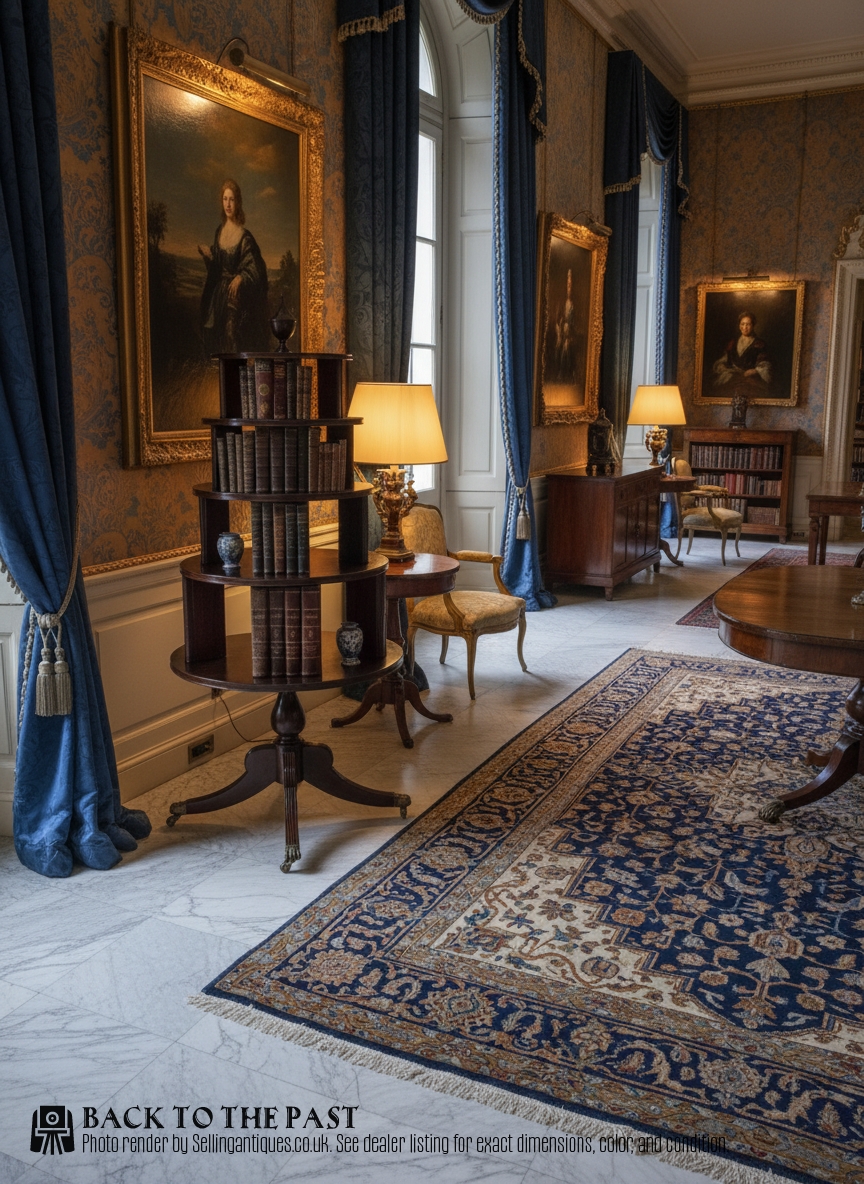
Revolving Library Bookcase
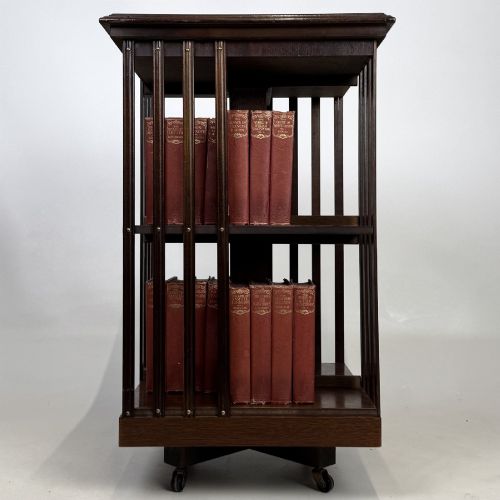
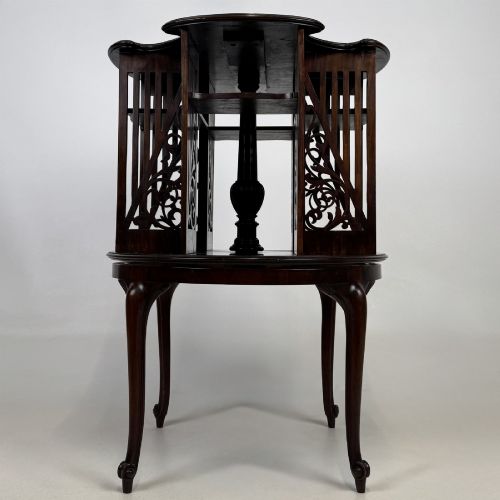
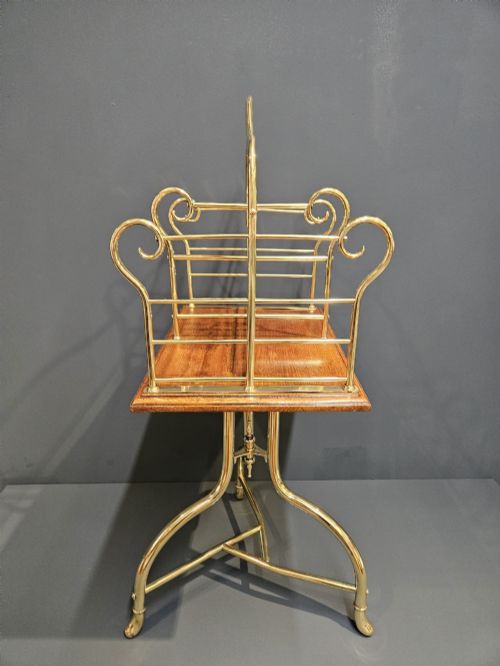
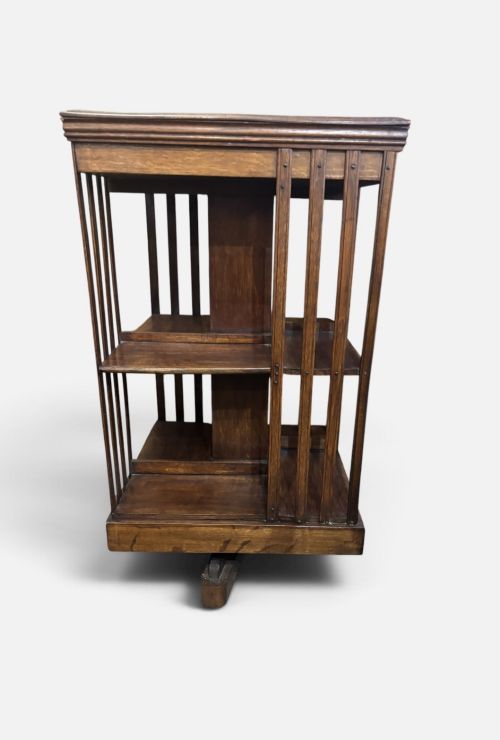
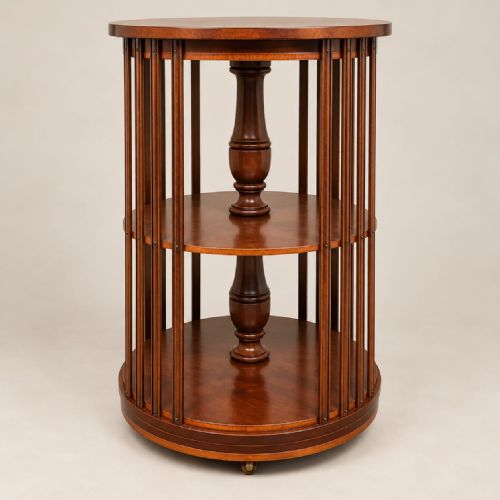
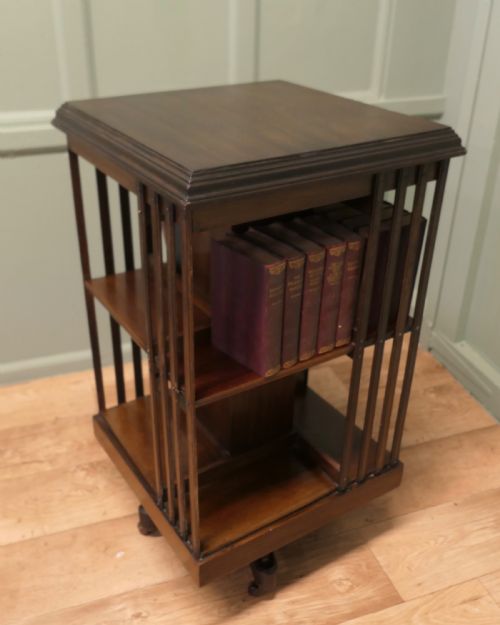
A revolving library bookcase sits low on the floor beside a desk or reading chair to hold volumes within arm's reach. You are most likely to meet Edwardian and Victorian examples on this page, constructed to turn smoothly on a hidden central mechanism.
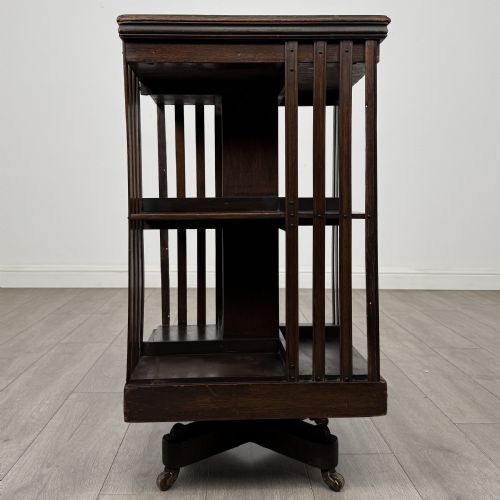
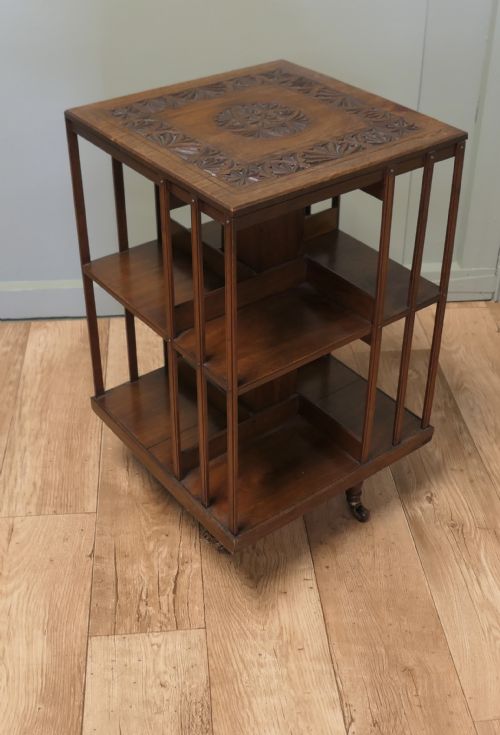
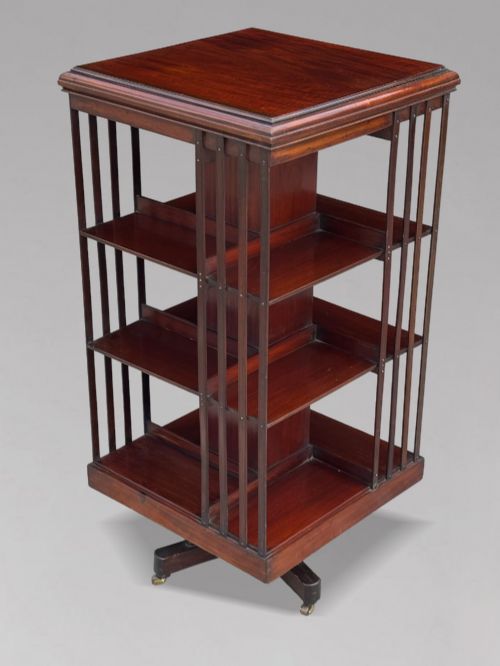
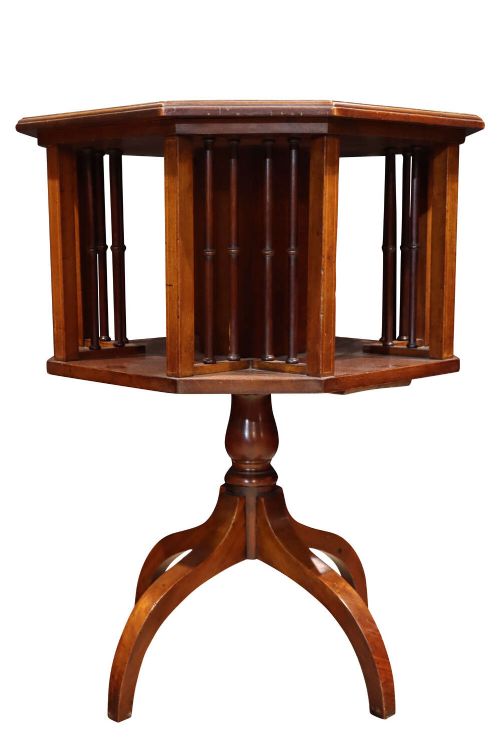
The form appears most frequently in mahogany, oak and walnut, often standing on small castors for easy movement across a room. Makers built these stands in round and square shapes, with some featuring multiple tiers of open shelving for heavy reference books.
Materials and construction
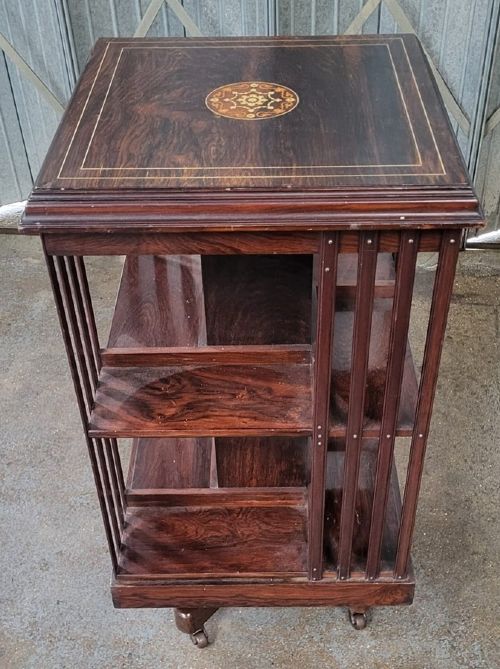
Cabinet makers built these pieces using solid timbers like oak and mahogany, frequently applying decorative veneers such as burr walnut or satinwood inlay to the top tiers. Cross-banding and delicate stringing lines mark the more refined pieces from the Edwardian and Victorian periods.
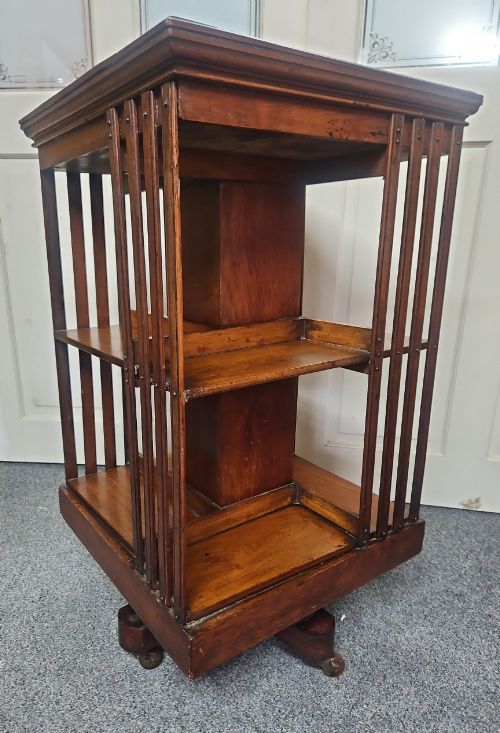
The internal pivot mechanism relied on iron and brass components to support the weight of heavy books while allowing the tiers to turn without binding. Slats or vertical dividers keep volumes upright as the case rotates.
Revolving Library Bookcase Retail Price Guide 2026
Typical asking prices for revolving library bookcase among the pieces listed under this phrase on Sellingantiques today, from the lower quarter to the upper quarter. They describe what is for sale here now, not the wider market.
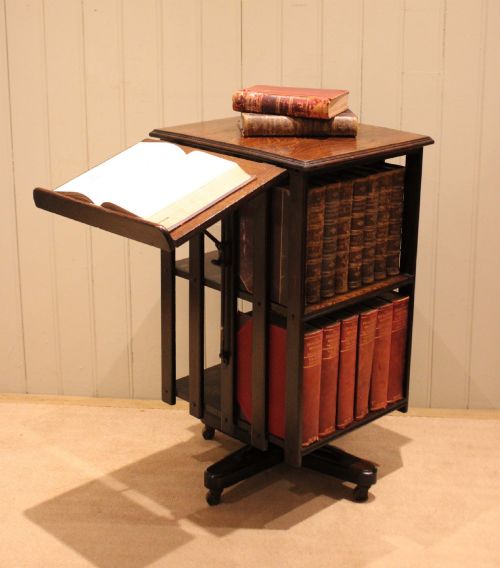
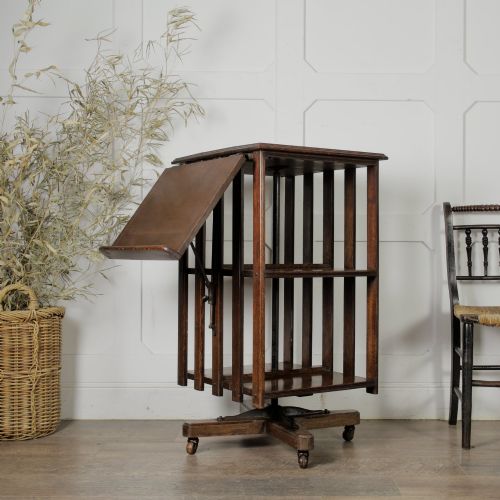
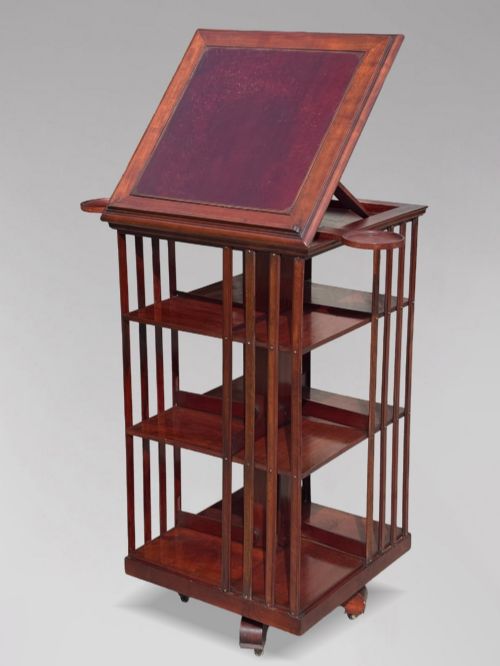
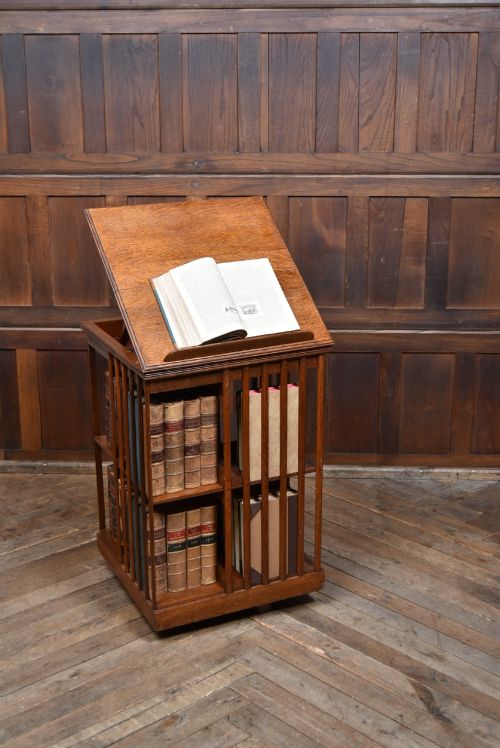
Some models include built-in reading stands that tilt upward, giving a small library the dedicated convenience of a pulpit.
Judging quality and craft
Quality rests in the smoothness of the turning action and the stability of the central axis under weight. A superior piece rotates evenly without a tilt, supported by a concealed iron or steel mechanism that holds the tiers level.
The standard of timber selection and inlay work separates everyday pieces from the finest examples. Crisp satinwood inlay, carefully matched flame mahogany veneers and solid brass castors indicate a higher tier of manufacture.
Maple and Co
The Revolving Library Bookcase Glossary
- Marquetry
- The art of forming decorative patterns on wood using thin veneers of different colours and materials. This technique appears on tabletops and bookcase surfaces.
- Galleried top
- A low decorative rail surrounding the upper surface of a cabinet or bookcase. It prevents items from sliding off the top when the case is rotated.
- Satinwood
- A durable yellowish wood native to India and Sri Lanka, prized for its glossy sheen. Cabinet makers utilised it for contrasting inlay details.
- Spindle
- The vertical rod or axis around which the revolving tiers rotate. A robust spindle ensures the bookcase remains balanced.
- Burr walnut
- Wood taken from a walnut tree growth, showing intricate swirling grain patterns. It provides a highly decorative surface on top panels.
Revolving Library Bookcase: Frequently Asked Questions
How do I date a revolving bookcase?
Dating depends on timber choice, decorative motifs and construction details seen across the Victorian and Edwardian eras. Edwardian pieces often feature satinwood inlay and Sheraton revival styling, while Victorian examples rely on heavier solid oak or mahogany.
Internal iron mechanisms and the style of the wood grain also provide clues to the decade of manufacture.
Can these bookcases hold heavy books?
These bookcases were built specifically for heavy reference volumes and ledgers, utilising sturdy internal iron and brass pivots to bear the weight. The vertical slats between the shelves keep books securely in place as the unit turns.
Heavier Victorian and Edwardian examples handle large volumes with ease, provided the central spindle remains properly aligned.
Where should I place one?
These pieces fit well beside a desk, reading chair or in the centre of a study where access from multiple angles is useful. Their compact footprint allows them to sit comfortably in corners or beside low seating.
Because they rotate, they do not require placement against a wall, making them practical room dividers for smaller collections.