



Antique Revolving Bookshelf
An antique revolving bookshelf brings clever design and accessible volumes right to your fingertips.
Antique Revolving Bookshelf
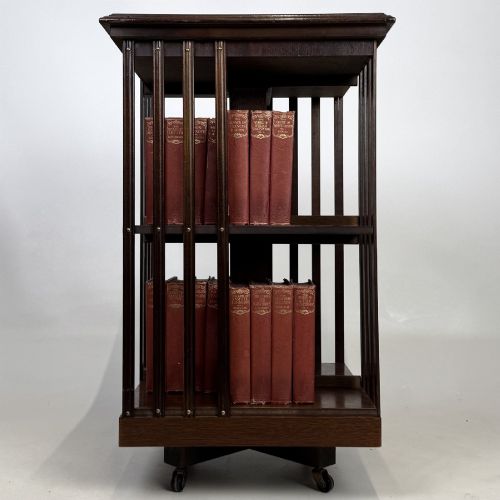
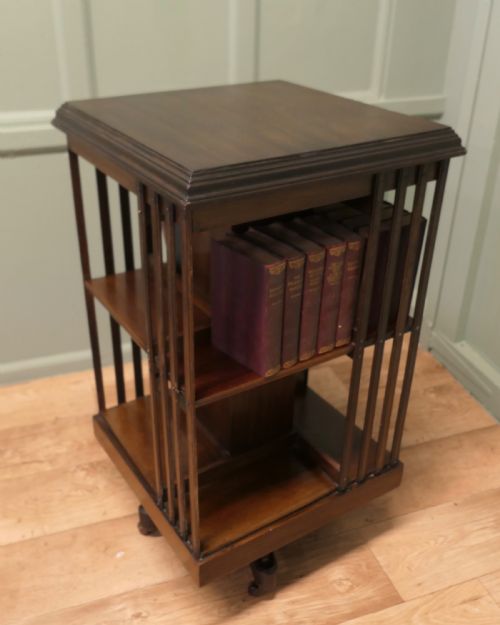
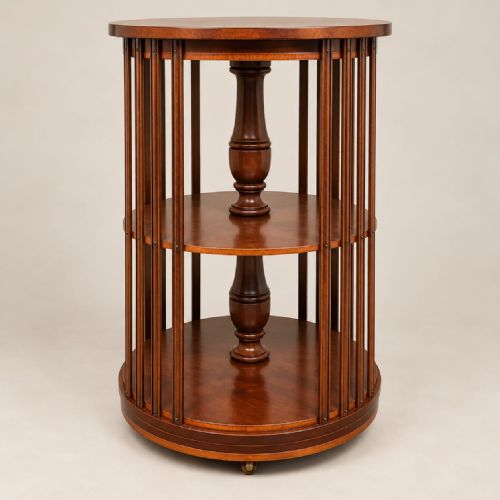
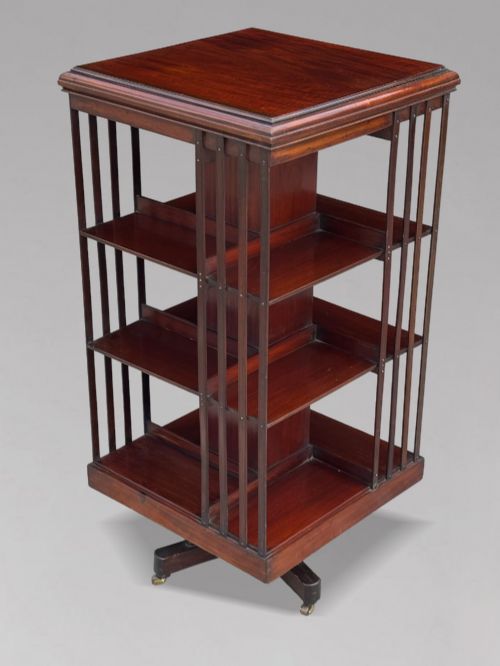
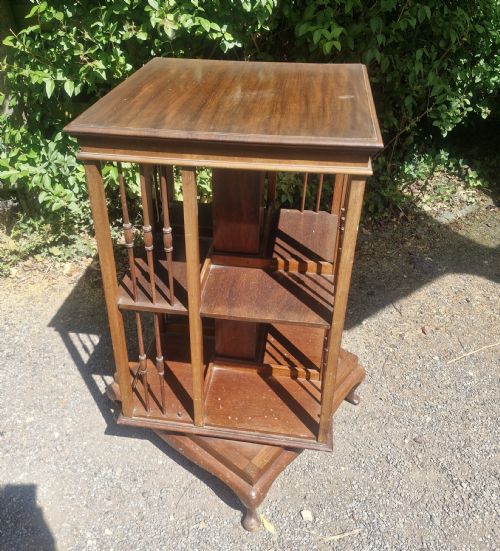
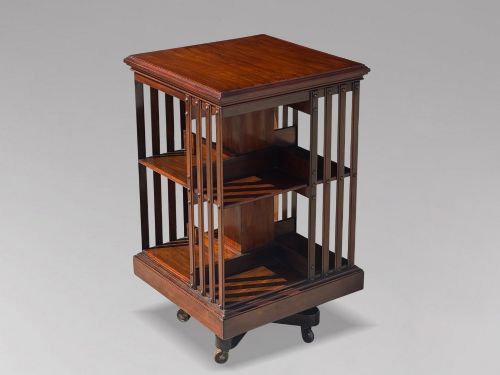
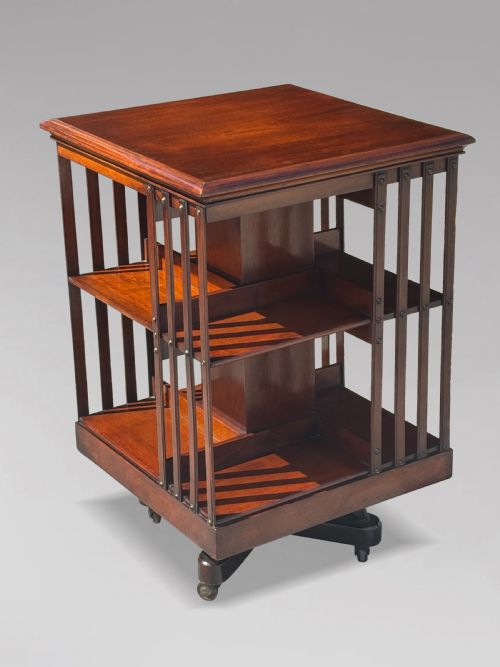
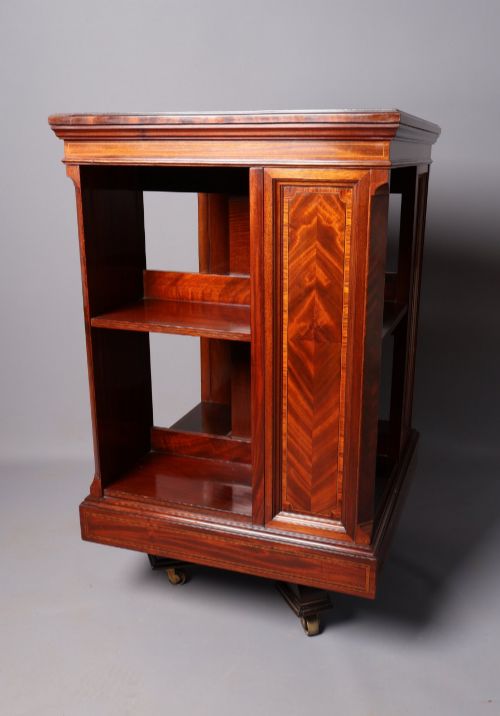
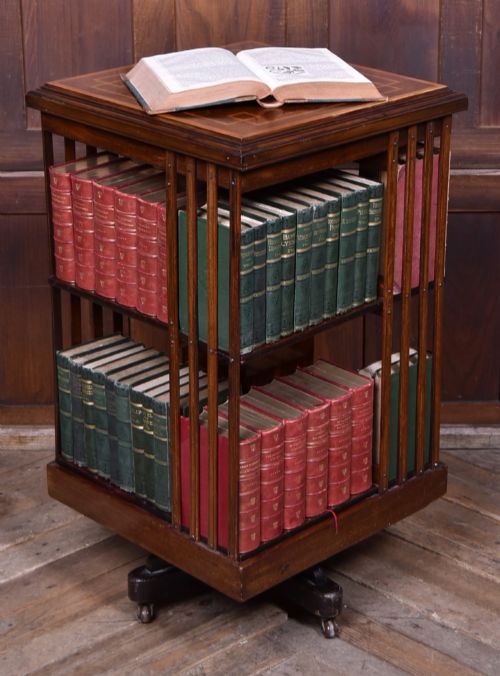
An antique revolving bookshelf is a practical piece of furniture designed to hold volumes upright while turning on a central pivot for easy selection. When you search for an antique revolving bookshelf, you encounter pieces intended for studies, libraries, and sitting rooms where economy of space matters.
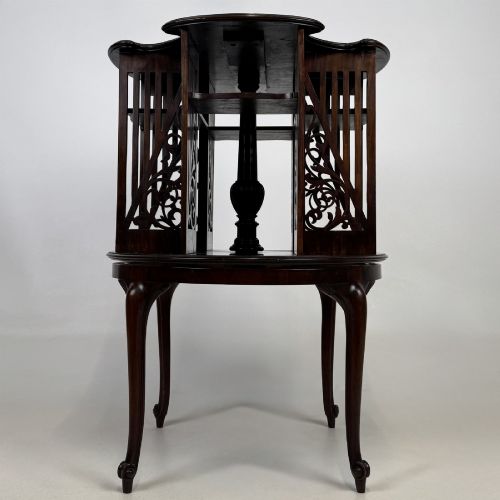
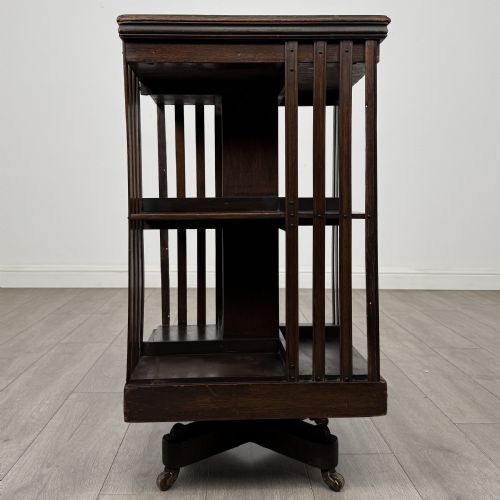
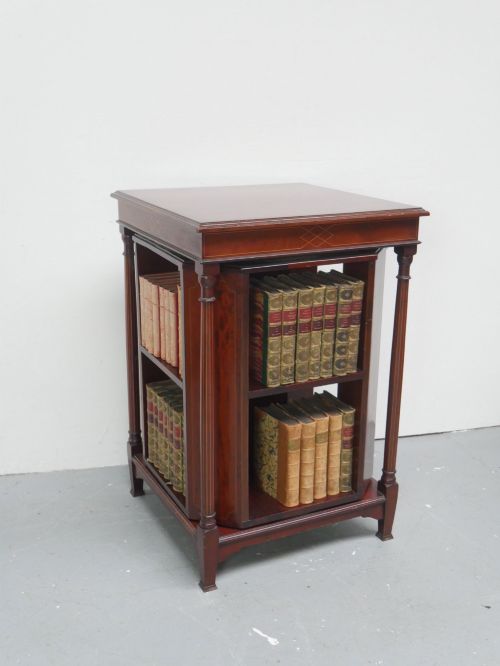
The versions most common on this page date from the late Victorian and Edwardian eras, spanning the late nineteenth and early twentieth centuries. These take the form of floor standing models as well as smaller desktop or table top bookcases.
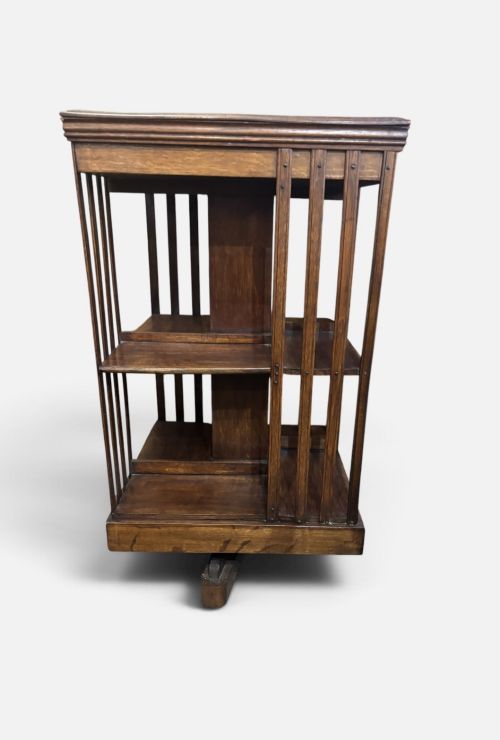
Makers utilised various timbers, most notably mahogany and oak, occasionally incorporating satinwood inlay, brass fittings, and cast iron within the turning mechanism. Alongside standard bookcases, related forms like games tables with bookshelf bases appear in the selection.
How they were made
Cabinet makers constructed these revolving bookcases using solid and veneered timbers, with mahogany and oak forming the primary structural bodies. Flame mahogany boards provide distinctive grain patterns on top surfaces, while satinwood inlay adds decorative contrast to the woodwork.
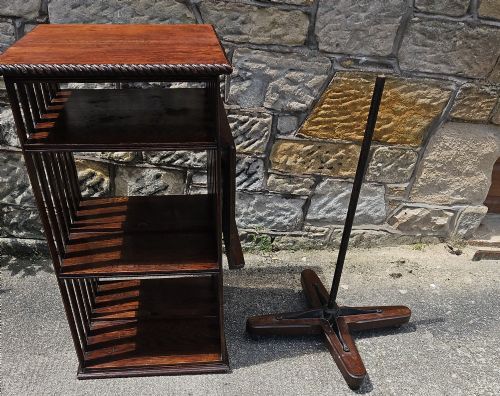
The internal turning mechanism relies on robust engineering, combining wood, brass, and cast iron components to support the weight of heavy volumes. This pivot assembly allows the loaded tiers to spin smoothly and evenly without tipping.
Antique Revolving Bookshelf Retail Price Guide 2026
Typical asking prices for revolving bookshelf among the pieces listed under this phrase on Sellingantiques today, from the lower quarter to the upper quarter. They describe what is for sale here now, not the wider market.
The selection includes both floor standing bookcases and compact desktop variants, alongside related items like games tables with bookshelf bases.
What varies in quality
Quality in these pieces depends heavily on the grade of timber selected and the precision of the joinery used in the slatted sides. Superior examples employ carefully matched flame mahogany or rich oak with tight, clean dovetails and crisp inlay work.
The engineering of the revolving action separates standard production from finer work, as a well-balanced pivot mechanism ensures the bookcase turns quietly and steadily. The integration of quality brass and cast iron parts beneath the base also indicates a higher standard of manufacture.
Heals·Maple and Co
The Antique Revolving Bookshelf Glossary
- Flame mahogany
- A timber veneer displaying a rippled, flame-like grain pattern. This decorative wood was frequently chosen for the top tiers of fine Edwardian bookcases.
- Satinwood inlay
- Contrasting yellowish wood inserted into the primary timber to form geometric or floral motifs. It defines the decorative style of many Edwardian pieces.
- Cast iron
- A strong, rigid metal utilised in the concealed internal turning mechanisms. It provides the necessary weight and durability for the rotating pivot.
- Edwardian
- A period spanning the reign of King Edward VII, noted here for refined domestic furniture. Pieces from this era often feature lighter timbers and delicate inlay.
- Desktop bookcase
- A compact version designed to sit upon a table or desk for immediate reference. These smaller models share the same rotating functionality as floor standing variants.
Antique Revolving Bookshelf: Frequently Asked Questions
How do I make it spin smoothly?
The rotational movement relies on an internal pivot mechanism housed beneath the base. Ensuring the weight of the books is distributed evenly across all four sides helps maintain a balanced spin.
Over decades, dust can settle within the hidden metal and wooden bearings. Gentle cleaning and appropriate lubrication of the pivot components restore the effortless glide intended by the maker.
Are tabletop versions sturdy enough for heavy books?
Tabletop bookcases are scaled down for desk and table placement, yet makers constructed them with solid timbers like oak and mahogany. They easily support standard collections of reference volumes or novels.
The central pivot is engineered to bear the load of a full tier of books without listing to one side. Distributing heavier volumes on the lower sections of smaller stands adds extra stability.
How do I tell Victorian from Edwardian models?
Late Victorian pieces tend to feature darker, heavier mahogany construction with simpler lines and minimal embellishment. They reflect a nineteenth-century preference for solid, imposing library furniture.
Edwardian examples often incorporate lighter mahogany or oak, frequently brightened by satinwood inlay and refined decorative stringing. The overall aesthetic feels lighter and more adaptable to domestic sitting rooms.
What woods were used to build them?
Mahogany and oak form the vast majority of the primary structures seen across these listings. Cabinet makers valued mahogany for its rich colour and smooth finish, and oak for its robust durability.
Secondary decorative touches often include flame mahogany veneers and satinwood inlay for visual contrast. Internal components incorporate brass and cast iron to strengthen the rotating pivot mechanism.