








Rosewood Trinket Chest
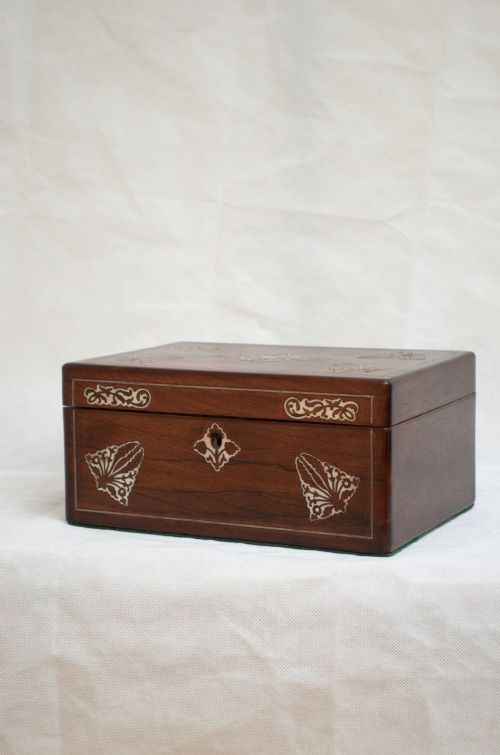
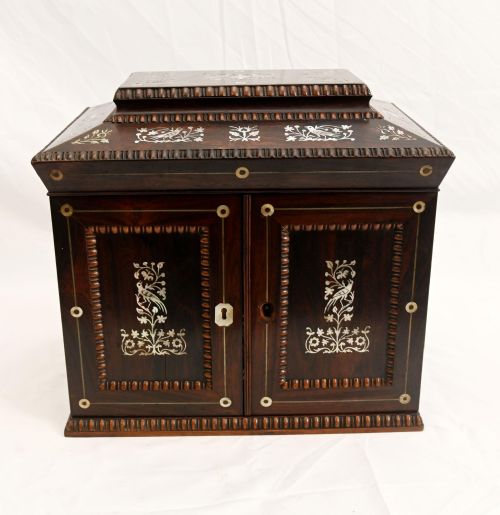
These rosewood trinket chest examples combine dense tropical timber with intricate inlay, offering a handsome place to store small valuables.
Rosewood Trinket Chest
A rosewood trinket chest is a compact wooden container designed for storing personal keepsakes, jewellery, and small valuables. When searching for a rosewood trinket chest, buyers encounter items spanning the Regency and Victorian eras, often taking the form of jewellery boxes, work boxes, and tea caddies adapted for general storage.
Most examples function as lidded containers or hinged chests, occasionally fitted with internal trays and compartments. While many serve as jewellery chests or keepsake boxes, tea caddies and glove boxes also appear under this grouping.
Materials and construction methods
Craftsmen built these containers using dense rosewood as the primary structural timber, frequently selecting stock with pronounced grain patterns. Surfaces often incorporate contrasting decorative elements such as mother-of-pearl, boxwood, bone, and brass stringing or inlay.
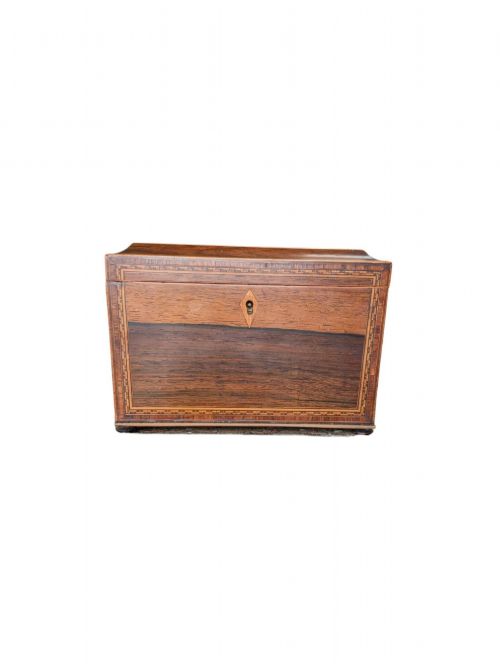
Specialised techniques like Tunbridge Ware mosaic inlay appear across the Regency and Victorian examples, creating geometric patterns from tiny coloured wood blocks. Marquetry inlay is also utilised to ornament the lids and sides with floral or pictorial motifs.
Rosewood Trinket Chest Retail Price Guide 2026
Typical asking prices for rosewood trinket chest among the pieces listed under this phrase on Sellingantiques today, from the lower quarter to the upper quarter. They describe what is for sale here now, not the wider market.
Victorian glove boxes were specifically proportioned to house delicate kid leather gloves, though they make ideal slender catch-alls today.
Assessing quality and execution
Quality in these pieces rests on the precision of the cabinetwork and the complexity of the surface ornamentation. Finer examples display meticulous alignment in brass stringing, intricate micro-mosaic work, and well-fitted internal trays rather than simple panel construction.
The choice and execution of secondary materials distinguish standard production from superior workshop output. The depth of the rosewood grain, the intactness of delicate mother-of-pearl inlay, and the retention of original interior linings dictate the standing of an individual chest.
Henry Hollamby
The Rosewood Trinket Chest Glossary
- Rosewood
- A dense, heavily grained tropical hardwood prized for its deep colour and durability in cabinetmaking. It forms the primary carcase material for these boxes.
- Tunbridge Ware
- A type of decorative woodwork originating from Kent, featuring mosaic designs built from thousands of tiny wood blocks to form pictorial or geometric scenes.
- Marquetry
- The art of applying pieces of veneer to a structure to form decorative patterns and pictures. It is commonly seen on Victorian and Regency box lids.
- Stringing
- Thin strips of contrasting wood or metal inlaid into channels cut into the surface of the timber. Brass and boxwood versions frequently outline box panels.
- Work box
- A fitted container originally designed for sewing implements, threads, and needles, featuring internal compartments and trays that suit general trinket storage today.
Rosewood Trinket Chest: Frequently Asked Questions
What were rosewood trinket chests used for originally?
These containers were made to hold personal valuables, letters, jewellery, and small sewing accessories on dressing tables or writing desks.
Over time, many tea caddies and work boxes were also adopted for general keepsake storage due to their compartmented interiors.
How do I date a rosewood trinket chest?
Dating relies on observing structural characteristics, hardware styles, and decorative techniques like Tunbridge Ware or brass stringing. Regency pieces often exhibit clean classical lines, whereas Victorian examples tend to feature heavier proportions and more elaborate mother-of-pearl or marquetry work.
Interior fittings and paper linings also provide clues to the manufacturing decade.
How do I care for antique rosewood?
Keep wooden boxes away from direct sunlight and heat sources to prevent the rosewood from drying out and the veneer from cracking. Dust gently with a dry cloth and avoid applying modern liquid polishes that can damage old finishes.
Maintaining a stable room temperature protects both the timber carcase and delicate inlays like mother-of-pearl or bone.
What is the difference between a tea caddy and a trinket box?
Tea caddies were originally constructed with internal lidded compartments designed to store loose tea leaves securely. Many antique caddies lack trays and feature foil-lined interiors from their primary use.
Trinket boxes and jewellery chests were built from the outset with shallow trays, velvet linings, and open wells for personal adornments and keepsakes.