
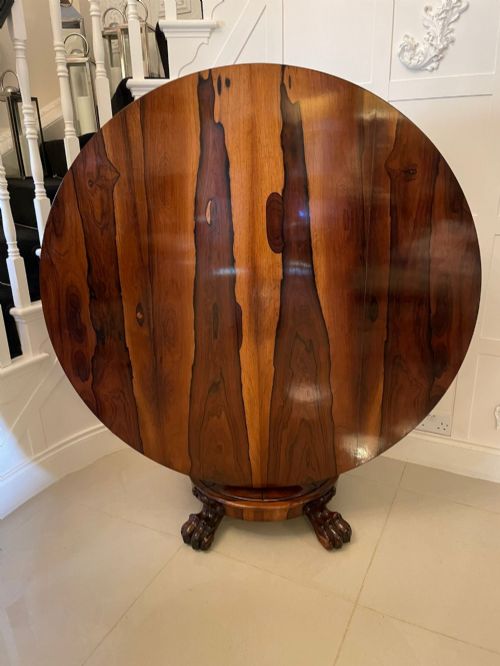

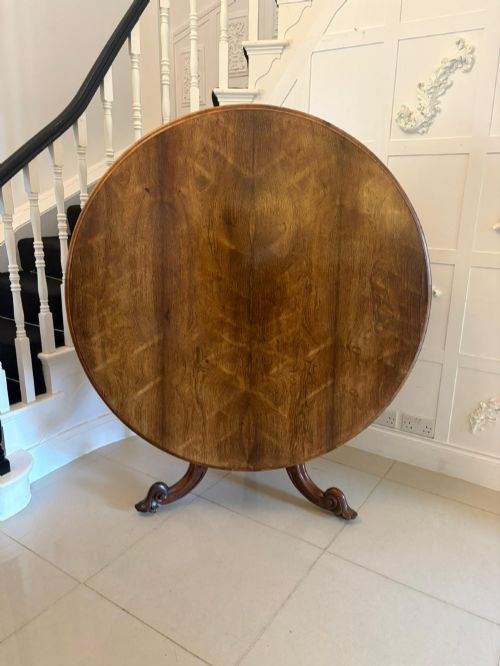
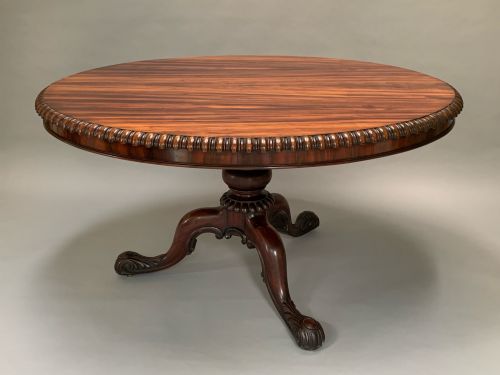
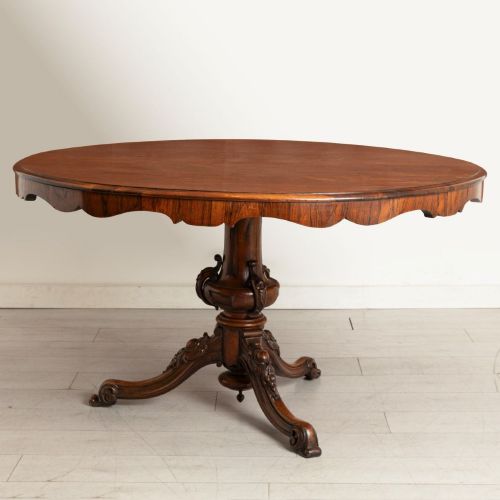
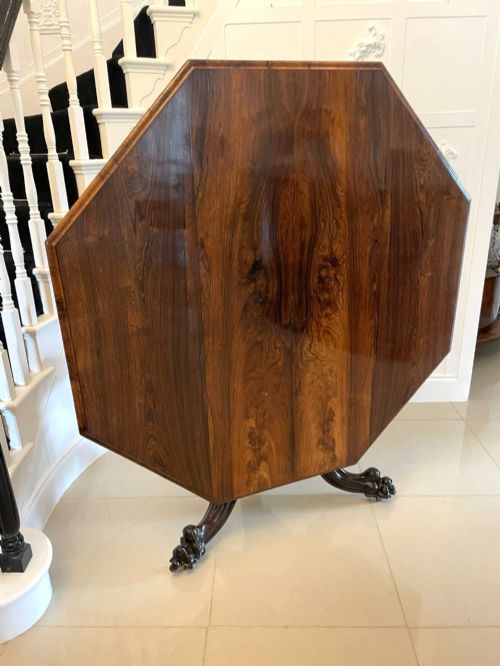
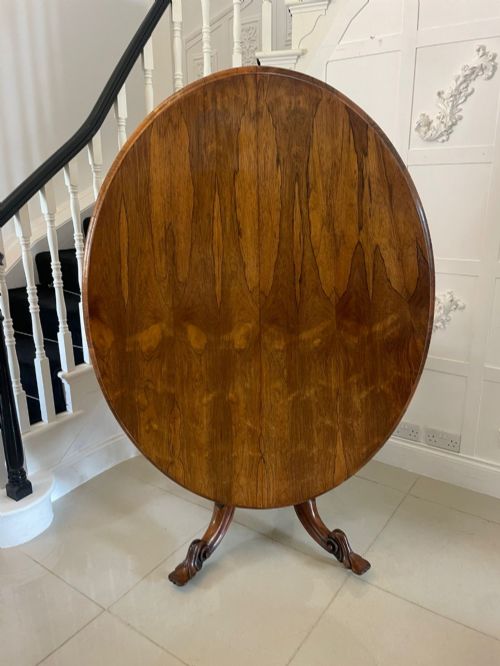
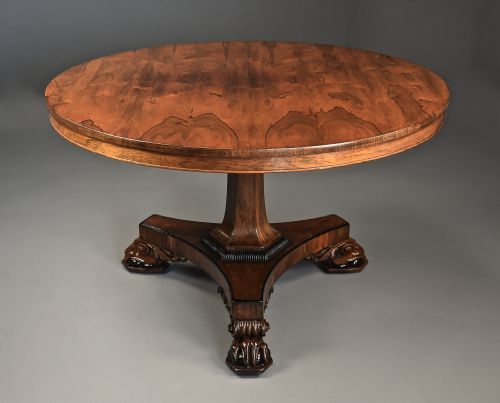
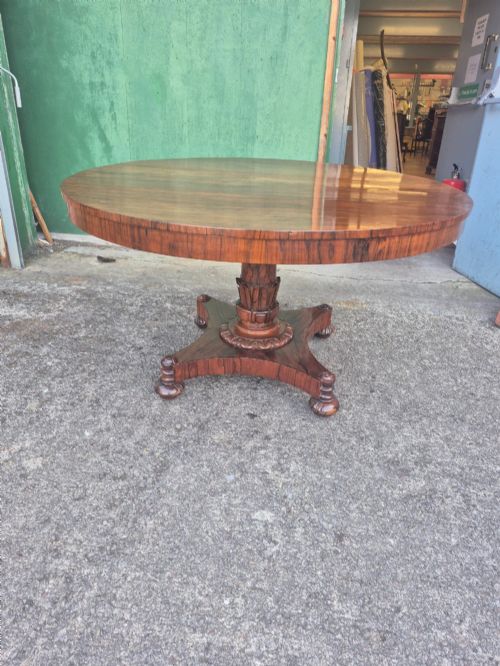
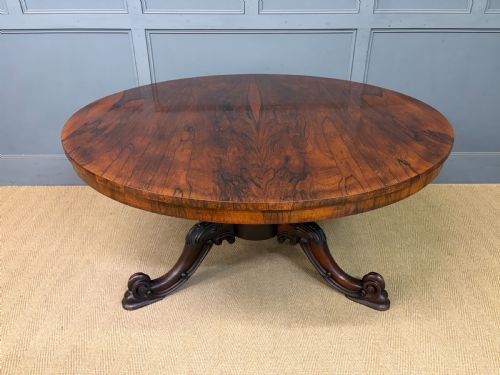
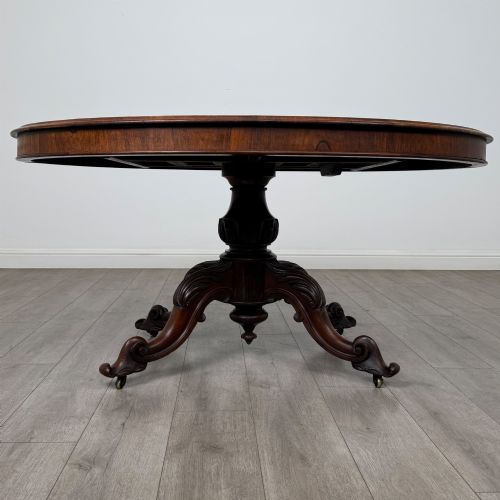
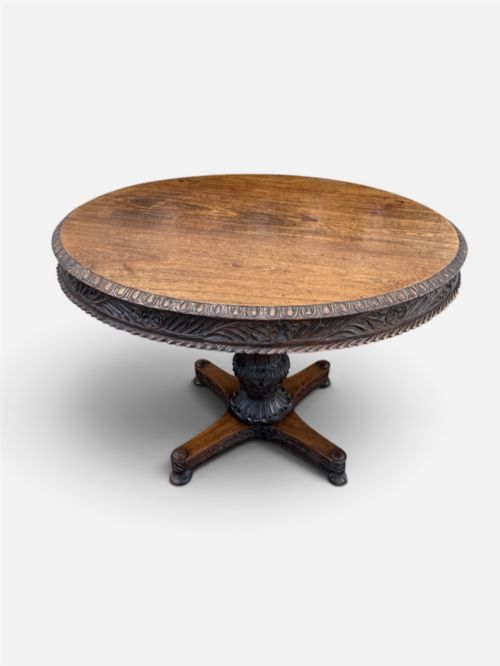
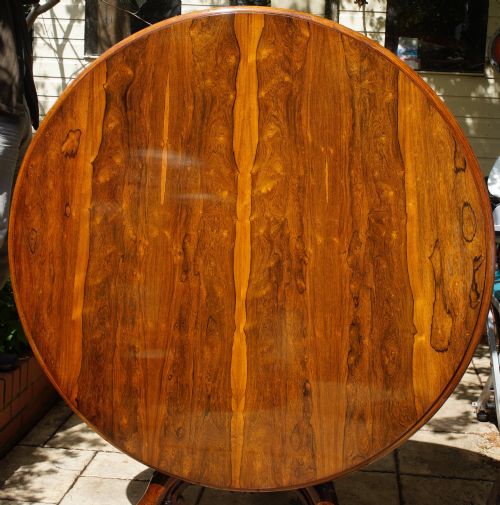
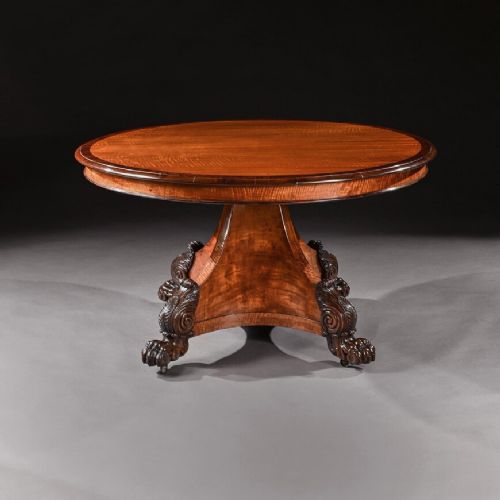
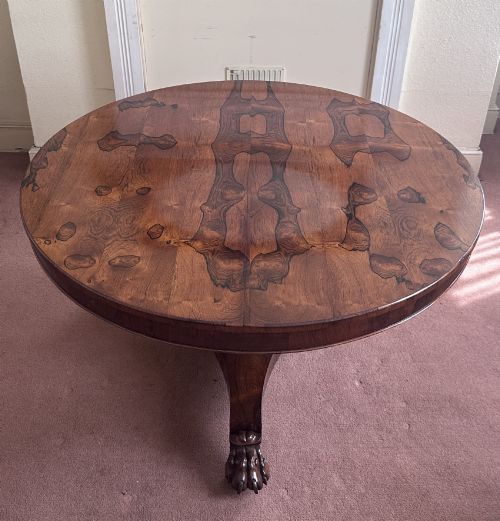
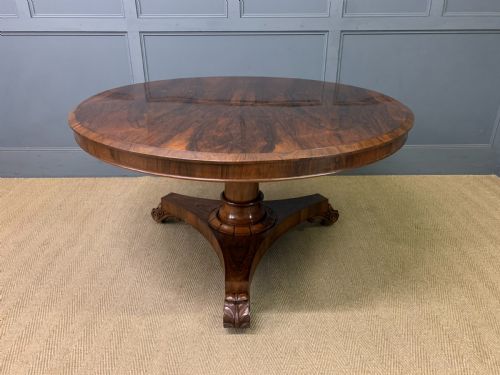
Rosewood Tilt Top Dining Table
A rosewood tilt top dining table is a versatile nineteenth-century piece that saves floor space while offering grand presence for dining.
Rosewood Tilt Top Dining Table
A rosewood tilt top dining table brings together formal nineteenth-century entertaining and practical domestic design, spanning the Regency, William IV, and Victorian periods. Most examples found here operate as circular or oval breakfast, loo, or centre tables that pivot vertically on a pillar base.
The form adapts easily from a compact wall-hugging stance when tilted to a solid central dining arrangement when lowered. Pieces range from modest country house versions to substantial grand round tables seating several guests.
Materials and construction
Cabinetmakers relied heavily on rich rosewood veneers applied over sturdy secondary timbers, often accentuating the natural grain patterns across wide circular tops. Supporting structures combine turned and heavily carved solid rosewood pedestals with brass fittings and castors.
Makers occasionally utilised alternative exotic woods such as Goncalo Alves, satinwood, or Albuera wood to contrast the deep brownish-purple tones characteristic of primary rosewood surfaces.
Listings feature nineteenth-century periods including Regency, William IV, and Victorian, constructed primarily in rosewood alongside mahogany and satinwood.
Distinctions in quality
The division between standard workshop production and superior cabinet work rests in the depth of the carving and the selection of figured timber. Leading makers like Gillows delivered crisply defined foliage on the pedestals and flawless book-matched veneers across the top.
Structural integrity of the tilting mechanism and the stability of the central pillar dictate daily usability. Heavy carved bases paired with balanced pivoting catches separate refined drawing room furniture from utilitarian pieces.
Gillows·Peters of Genoa
The Rosewood Tilt Top Dining Table Glossary
- Tilt top
- A table mechanism allowing the top to pivot vertically for storage or room clearance when not in use.
- Loo table
- A nineteenth-century round or oval table designed for card games like loo, frequently sharing the tilt top format.
- Breakfast table
- A multipurpose dining and centre table dating from the Regency and Victorian eras, often featuring a pedestal base.
- Veneer
- A thin layer of figured rosewood applied to a stable core timber to display decorative grain patterns.
- Snap top
- A spring-loaded latch system that secures the table top firmly in the horizontal position during meals.
Rosewood Tilt Top Dining Table: Frequently Asked Questions
How do I tilt the table top safely?
Release the brass catch or wooden wedge beneath the top while supporting the edge with your other hand. Guide the surface smoothly into the vertical position.
Ensure the mechanism locks securely into place before moving the piece against a wall for storage.
Will a tilt top table wobble?
A well-adjusted snap mechanism and a heavy pillar base keep the top rigid when lowered for dining. Minor movement often stems from settling joints or worn brass catches rather than poor original design.
Checking the central fixing bolt underneath restores stability to most antique examples.
How many people can sit at these tables?
Circular breakfast and loo tables typically seat between four and six diners comfortably, depending on the diameter of the top. Larger grand pedestal tables occasionally accommodate up to eight.
The central pillar allows chairs to tuck underneath without interference from corner legs.
How do I date a rosewood table?
Regency and William IV examples display crisper architectural carving, brass inlay, or parcel gilt accents reflecting early nineteenth-century neoclassical tastes. Victorian pieces from 1850 onwards often feature heavier, naturalistic floral carving and darker figured finishes.
Construction details inside the pedestal block provide further clues to the decade of manufacture.