

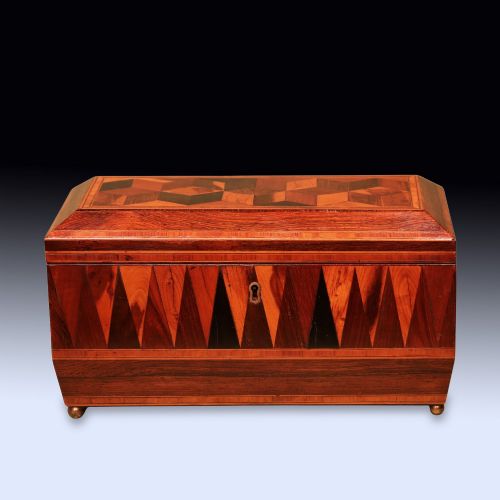

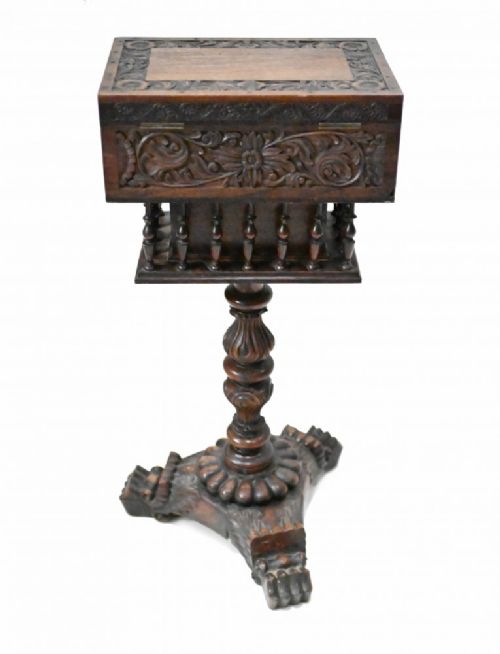


Rosewood Tea Caddy Box
A rosewood tea caddy box brings the dense grain and rich tone of tropical timber into domestic spaces, serving as a handsome tabletop container for dried leaves.
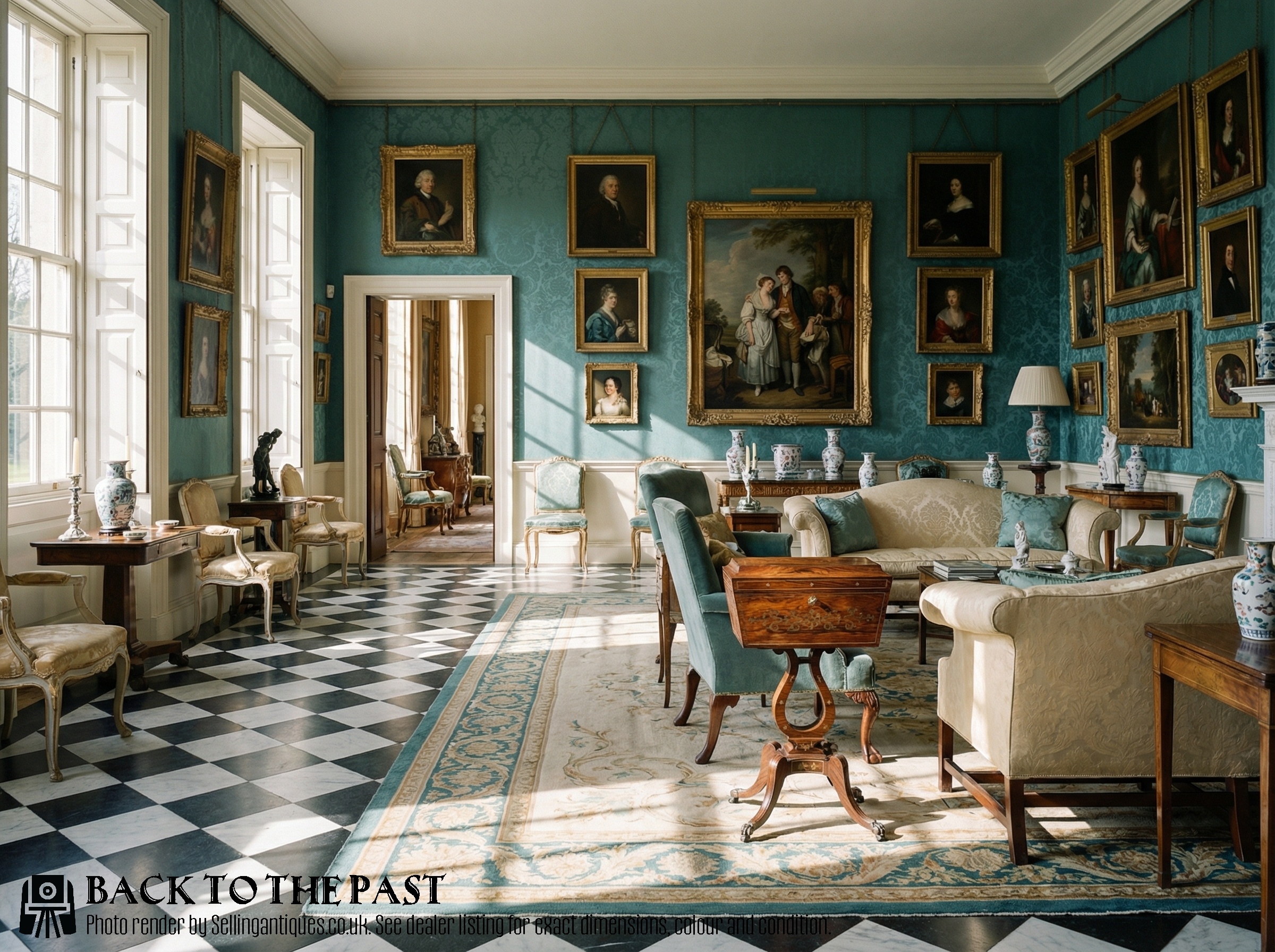
Rosewood Tea Caddy Box
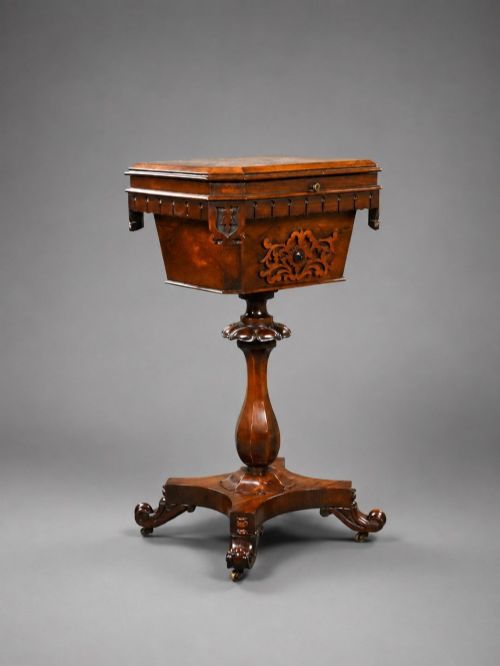
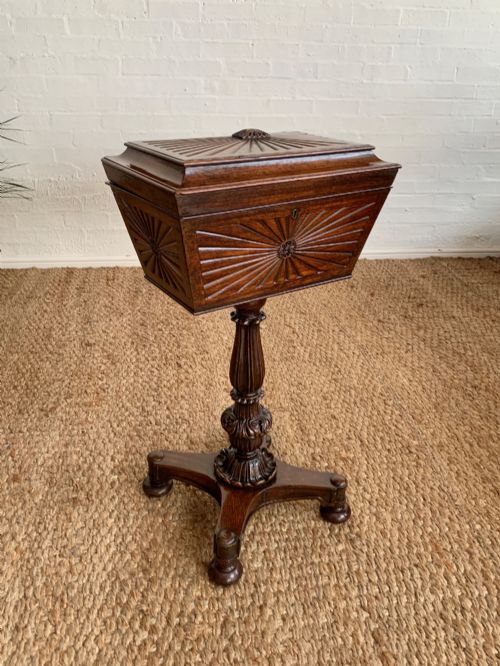
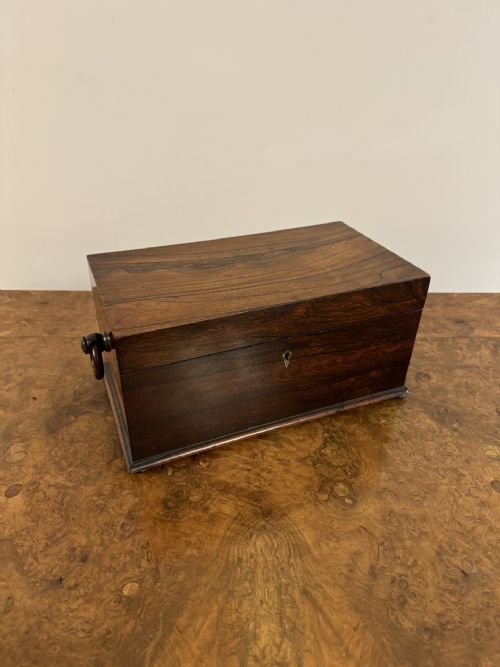
A rosewood tea caddy box is a timber lidded chest designed for storing dry leaves safely away from dampness and light, shaped predominantly across the Georgian, Regency, William IV and Victorian periods. Most examples meet the eye as sarcophagus forms resting on bun feet, or as oblong tapered wooden boxes intended for the drawing room.
The assortment on this page spans simple lidded caddies through to elaborate teapoys and work tables with fitted interior compartments, originating from English workshops alongside French and Anglo-Indian makers. Buyers encounter domestic containers featuring dual internal canisters and glass mixing bowls, alongside pieces adapted later into sewing boxes or jewellery cases.
How they were made
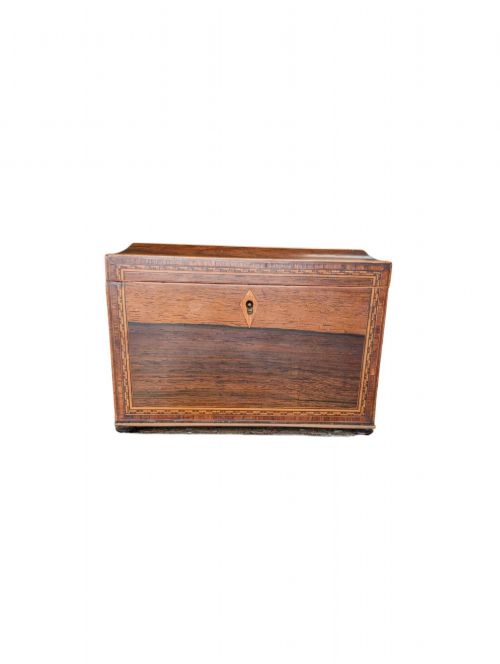
Cabinet makers built these containers using solid rosewood or applied fine veneers over secondary timber carcases, shaping them into sarcophagus, domed or rectangular profiles. Surface enrichment relied heavily on contrasting woods and metals, incorporating boxwood, satinwood, bone and mother of pearl alongside precise brass stringing and inlay.
Specialised decorative techniques included Victorian Tunbridge Ware, which assembled thousands of tiny coloured wood blocks into microscopic mosaic scenes. Interiors frequently housed fitted wooden lids above foil-lined compartments, supplemented by brass lion mask handles, working locks and turned wooden feet.
Several boxes survived centuries of tea storage by secretly transforming into sewing chests and jewellery vaults once loose leaf lost its supreme domestic status.
What varies in quality
The standard of a rosewood tea caddy box rests on the precision of its joinery and the ambition of its surface decoration. Finer examples display continuous grain alignment across the lid and sides, alongside crisp, deeply cut mouldings and substantial brass hardware.
Decorative execution separates standard production from exceptional work. Precision in geometric parquetry, intricate shell inlay and microscopic Tunbridge Ware mosaic panels elevates a piece, as do well-preserved internal mixing bowls and functioning original locks with matching keys.
Henry Hollamby
The Rosewood Tea Caddy Box Glossary
- Sarcophagus form
- A container profile featuring a stepped, domed lid and inverted sides that slope outward toward the base, echoing ancient stone coffins popularised during the Regency era.
- Teapoy
- A pedestal table or large standing chest fitted with internal compartments for storing tea, often supported on a central pillar with carved or platform feet.
- Tunbridge Ware
- A form of decorative woodwork originating in Kent, characterised by mosaic patterns assembled from tiny tinted wood prisms to form pictorial or geometric designs.
- Parquetry
- A geometric mosaic of wood pieces used for surface ornamentation, creating patterns such as cubes, chequers and diagonals across the top and sides.
- Stringing
- Thin inlaid lines of contrasting timber or metal set flush into the surface of the wood to outline panels, borders and edges.
Rosewood Tea Caddy Box: Frequently Asked Questions
What is a rosewood tea caddy box used for?
These lidded timber chests were originally manufactured to store expensive loose-leaf tea safely away from damp air and strong household odours in the dining room or drawing room.
Today, collectors utilise them as decorative tabletop storage for jewellery, sewing gear, letters or keepsakes while displaying the rich grain of the tropical hardwood.
What are internal mixing bowls used for?
The central glass or crystal bowl found inside many Regency and Georgian caddies served as a vessel for blending different varieties of loose leaves before brewing.
Servants or hosts used the bowl to combine black and green teas to suit individual tastes, flanked by lidded wooden canisters that kept the distinct leaves separated.
How should I care for antique rosewood?
Rosewood requires stable indoor humidity away from direct sunlight and artificial heat sources, which can dry out the timber and cause historic veneers to lift.
Apply a light microcrystalline wax periodically to nourish the surface polish, avoiding modern silicone sprays or excessive moisture on the timber and brass.