


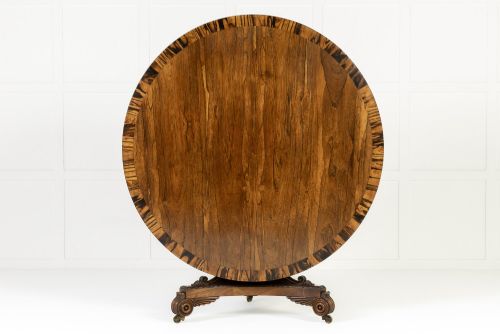


English Regency Rosewood Table
An English regency rosewood table brings warm grain and bold brass inlay to a formal interior.
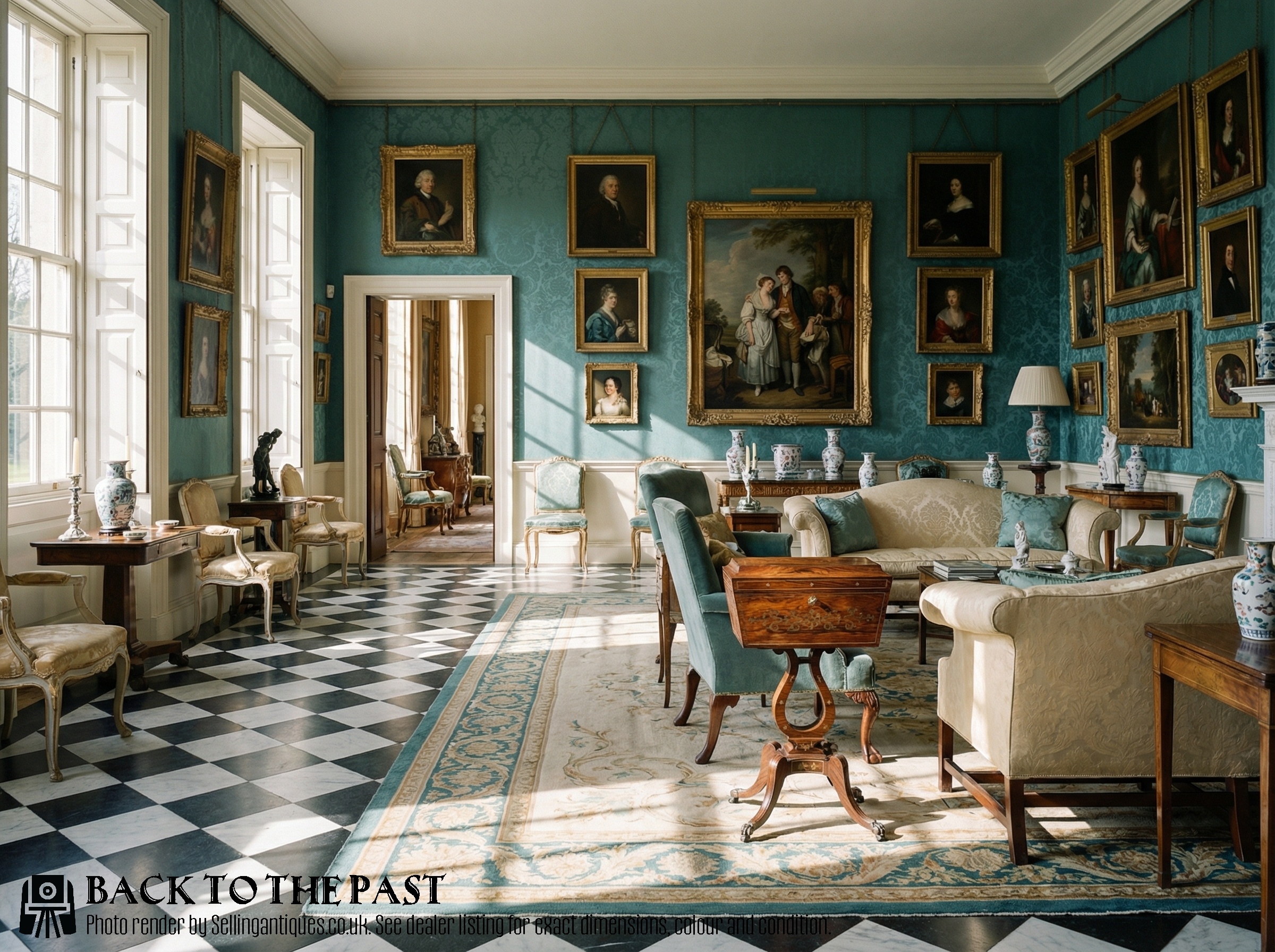
English Regency Rosewood Table
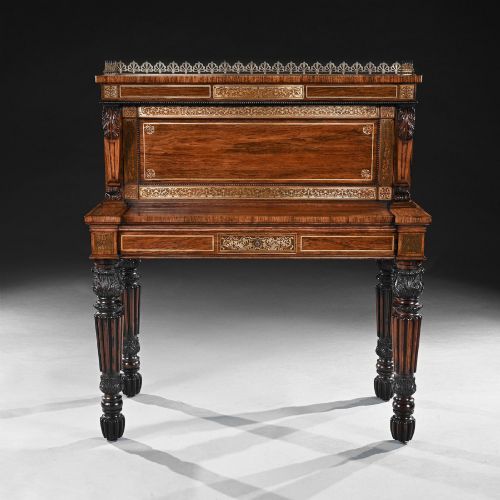
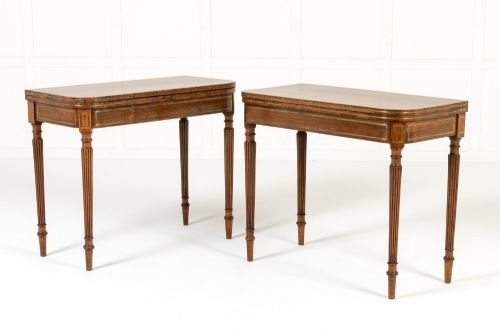
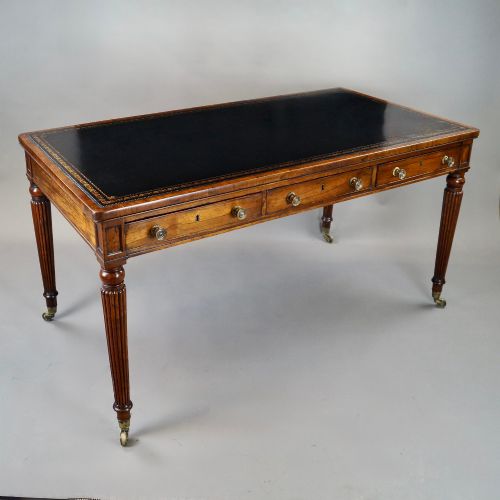
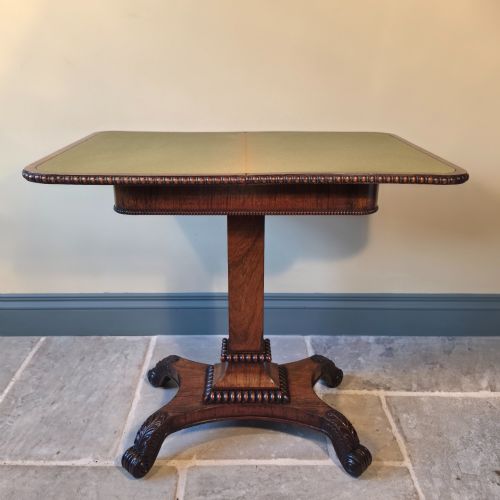
An English regency rosewood table spans functional forms created for the drawing room, library and parlour during the early nineteenth century. Collectors encounter card tables with fold-over tops, substantial library and writing desks, sofa tables with drop leaves, and central pedestal dining tables.
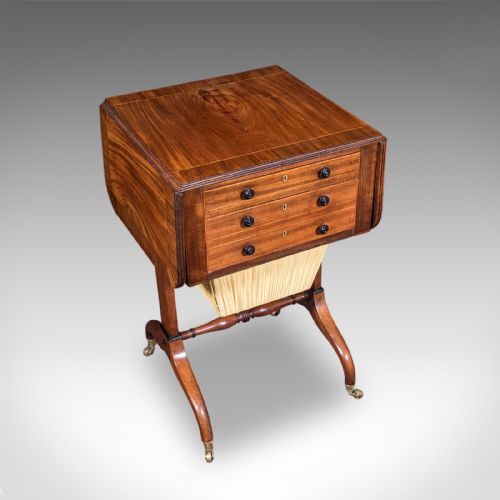
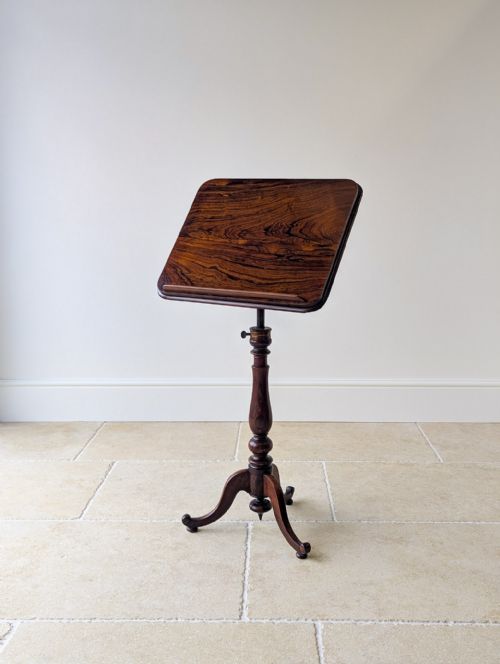
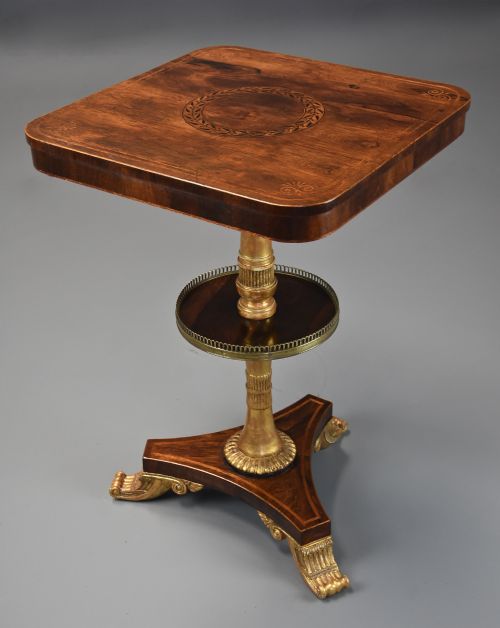
The pieces on this page reflect the aesthetic of the Regency and William IV periods, extending into late Regency and early Victorian interpretations. Makers adapted forms for specific domestic tasks, producing sewing work tables, reading stands and tiered occasional stands alongside grand centre tables.
How they were made
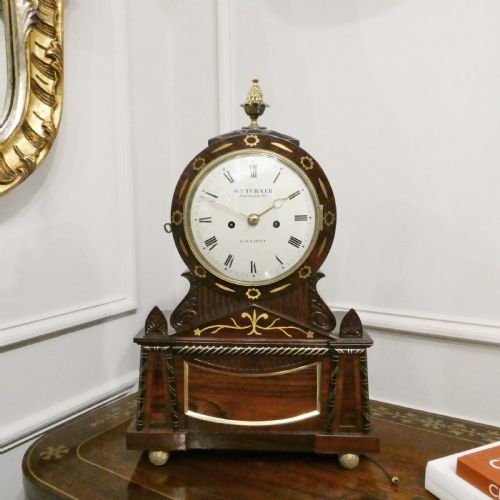
Cabinet makers utilised dense, richly figured rosewood veneers applied to solid secondary timbers, often accentuating the dark grain with contrasting brass inlay and marquetry. Brass stringing and foliate motifs follow the contours of card table tops and library desk borders.
Structural integrity relies on robust pedestals, quadruped legs with brass paw castors, and clever folding mechanisms for games and writing surfaces. Secondary materials such as mahogany, leather, baize and glass complete the internal framing and functional inserts.
Some tables double as newspaper racks or travelling vanity boxes, proving that nineteenth-century ancestors loved clever multi-tasking furniture just as much.
What varies in quality
The standard of a piece depends on the depth and selection of the rosewood grain, the precision of the brass inlay, and the crispness of carved mouldings. Superior examples display seamless veneer matching and substantial brass mounts that remain securely bedded in the timber.
Attribution to documented workshops or makers elevates certain items, as seen in pieces bearing the hallmarks of Gillows or George Bullock. Structural refinement, such as smoothly operating swivel actions on card tables and original casters, also distinguishes finer output.
Gillows Oxford Street Workshop·George Bullock·John MaClean·T & G Seddon
The English Regency Rosewood Table Glossary
- Card table
- A folding table designed for evening games, featuring a baize-lined playing surface and a swivel or hinged top that conceals a shallow compartment.
- Sofa table
- A rectangular occasional table intended to stand in front of or beside a sofa, fitted with drop leaves at either end and usually twin pedestals.
- Teapoy
- A small cabinet or box mounted on a pillar and base, originally designed to store and lock away expensive loose tea leaves.
- Library table
- A large freestanding desk finished on all sides, built for heavy reading and writing use in private studies or formal libraries.
- Brass inlay
- A decorative technique where thin strips or cutouts of brass are flush-fitted into channels carved directly into the rosewood surface.
English Regency Rosewood Table: Frequently Asked Questions
How were card tables used?
Card tables served households during evening gatherings for games such as whist or hazard. The hinged top folded out to reveal a felt or baize playing surface.
When not in use, the tables stood against the drawing room wall with the top folded upright, often displaying decorative rosewood grain and brass inlay.
What is a sofa table?
A sofa table is a versatile piece designed to sit immediately behind a sofa or freestanding in a room. Drop leaves on either end allowed the surface area to expand when needed for writing or serving.
They typically incorporate small drawers beneath the top and stand upon twin pillar supports united by a stretcher.
How do I identify Regency style?
Regency design draws heavily on classical Greek, Roman and Egyptian motifs, favouring clean architectural lines, rosewood veneers and contrasting brass ornamentation. Proportions tend to be balanced and restrained compared to later Victorian exuberance.
Pedestals often feature turned columns resting on concave platforms with brass paw castors.
Where should I place a centre table?
Centre tables are designed to stand proudly in the middle of a room rather than against a wall. Because they are finished on all sides, they provide a striking focal point beneath a central ceiling rose or chandelier.
Historically they occupied entrance halls, libraries or large drawing rooms as places to display books and decorative objects.