
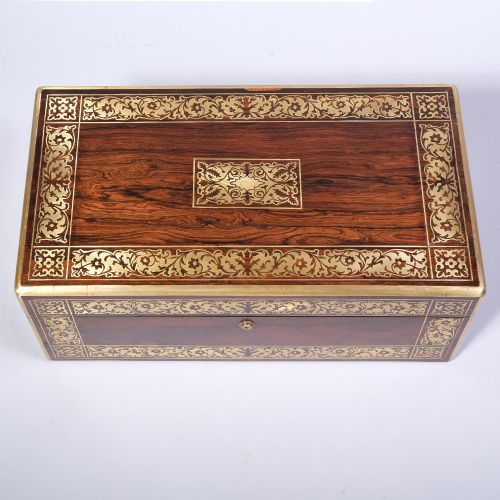


Brass Inlaid Rosewood Caddy
A brass inlaid rosewood caddy is a substantial nineteenth-century timber box designed for leaf tea, carrying distinct brass work across dark grain.
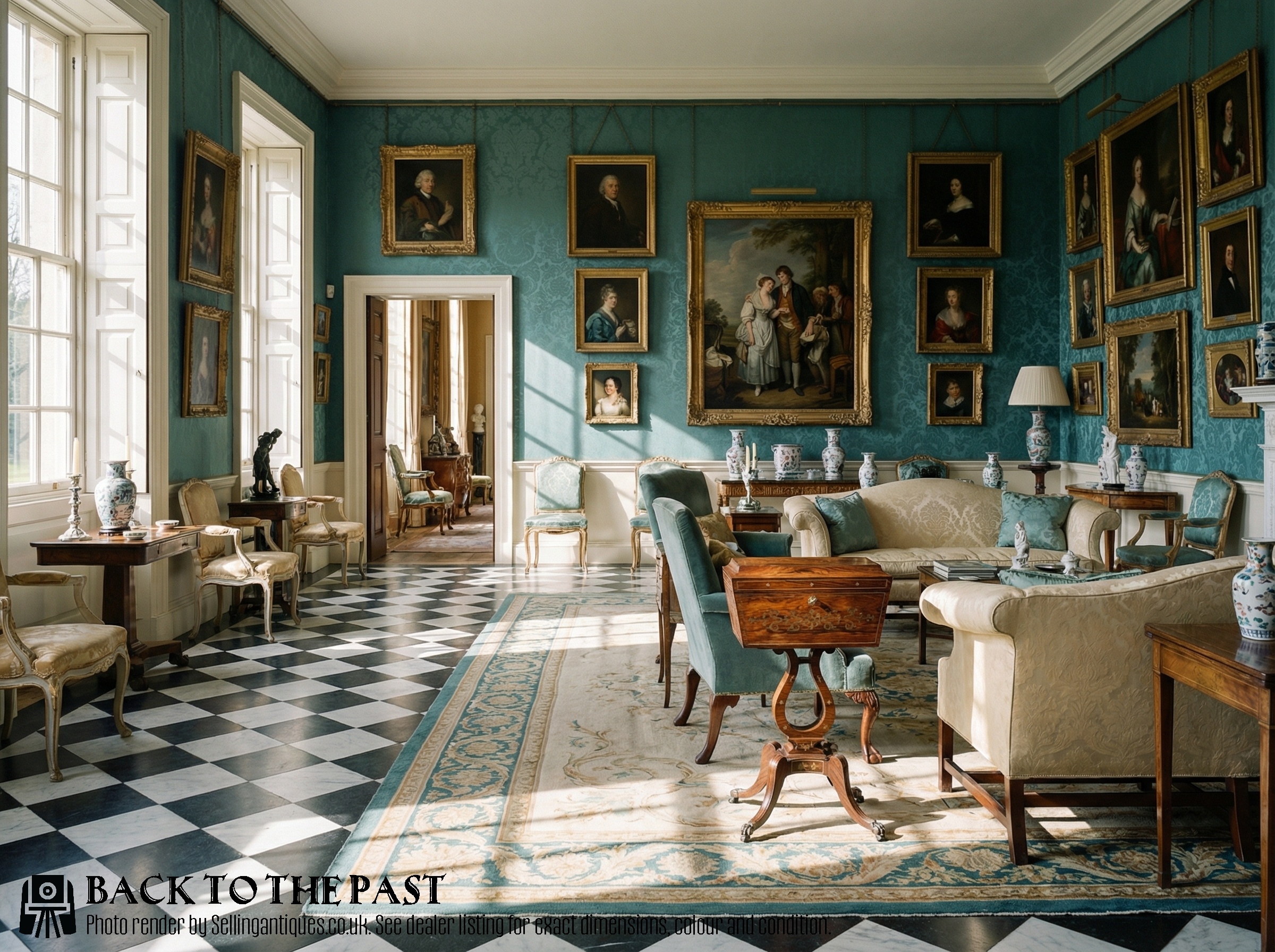
Brass Inlaid Rosewood Caddy
A brass inlaid rosewood caddy brings together dark tropical timber and bright yellow metal, mostly taking the form of tea caddies, teapoys, and occasionally writing boxes or sewing boxes. Most examples belong to the nineteenth century, specifically the Regency and Victorian periods, reflecting a time when tea was an expensive commodity stored under lock and key.
The version you will most frequently meet on this page is the Regency tea caddy, often shaped as a sarcophagus with lion mask handles or ring handles at the sides. These pieces range from simple rectangular boxes to grander pedestal tea-poys standing on tripartite or quatrefoil bases.
Materials and construction
Makers built these containers using dense rosewood veneers laid over a secondary timber carcase, ornamenting the exterior with hand-cut brass stringing, escutcheons, and figurative motifs. Alongside brass, workshops integrated boxwood, mother of pearl, and bone to create contrasting geometric and floral inlays.
Interior compartments frequently feature fitted wooden lids covering individual tea canisters, sometimes accompanied by original glass mixing bowls or compartmentalised trays for sewing implements.
Some tea caddies contain secret drawers concealed beneath the internal tea canisters, designed to keep household secrets as secure as the leaves.
Assessing quality and execution
The distinction between ordinary and superior pieces lies in the precision of the brass inlay and the richness of the rosewood grain. Finer examples display tight, flush brass stringing that follows the contours of the box without lifting or showing excessive filler in the surrounding wood.
Hardware such as lion mask ring handles, lock plates, and feet contribute heavily to the overall character. Heavy, crisply cast brass mounts indicate a higher standard of manufacture than thin, pressed metal alternatives.
The Brass Inlaid Rosewood Caddy Glossary
- Tea caddy
- A box designed for storing loose tea leaves, often fitted with internal lids and a central lock. These objects evolved from small Chinese porcelain jars into elaborate wooden containers during the Georgian and Regency eras.
- Teapoy
- A freestanding tea caddy mounted on a central pillar or legs, serving a similar purpose to table-mounted boxes but designed to stand beside a chair. They frequently incorporate internal mixing bowls and compartments.
- Sarcophagus shape
- A distinctive box profile featuring outward-sloping sides that mimic a classical stone coffin, popular during the Regency period. This form allowed for generous internal storage capacity while presenting a dramatic silhouette.
- Stringing
- Thin strips of contrasting wood or metal inlaid into narrow channels cut into the surface of a timber carcase. In these pieces, brass stringing creates geometric borders and framing lines.
- Escutcheon
- A protective plate surrounding a keyhole, usually made of brass to match the inlay work. On these boxes, they often double as decorative focal points on the front panel.
Brass Inlaid Rosewood Caddy: Frequently Asked Questions
What were tea caddies used for?
Tea caddies served as secure storage containers for valuable black and green tea leaves when dry leaf was an expensive commodity. Servants or homeowners kept the boxes locked to portion out leaves safely.
Inside, divided compartments kept different tea varieties separate before blending in an included glass bowl.
How do I date a rosewood caddy?
Dating relies on stylistic clues such as the sarcophagus shape, brass lion mask handles, and specific inlay patterns associated with the Regency and early Victorian eras. Regency examples usually show bolder brass motifs and heavier pillar supports.
Later Victorian versions often incorporate marquetry work or mother of pearl alongside the standard brass stringing.
Are original mixing bowls common?
Original glass mixing bowls appear in a portion of surviving pieces, used for rinsing tea leaves or blending varieties together. Finding a caddy with its matching bowl intact is a notable bonus for collectors.
Many boxes retain empty circular recesses where the original glass component has been lost over time.
How do I care for rosewood and brass?
Maintenance requires keeping the wood away from direct sunlight and rapid humidity changes to prevent timber movement and veneer cracking. Occasional gentle dusting with a dry cloth keeps the surface clean.
Avoid heavy liquid polishes that can seep under lifting brass inlay or discolour the surrounding rosewood grain.