


Rosewood Tallboy Chest
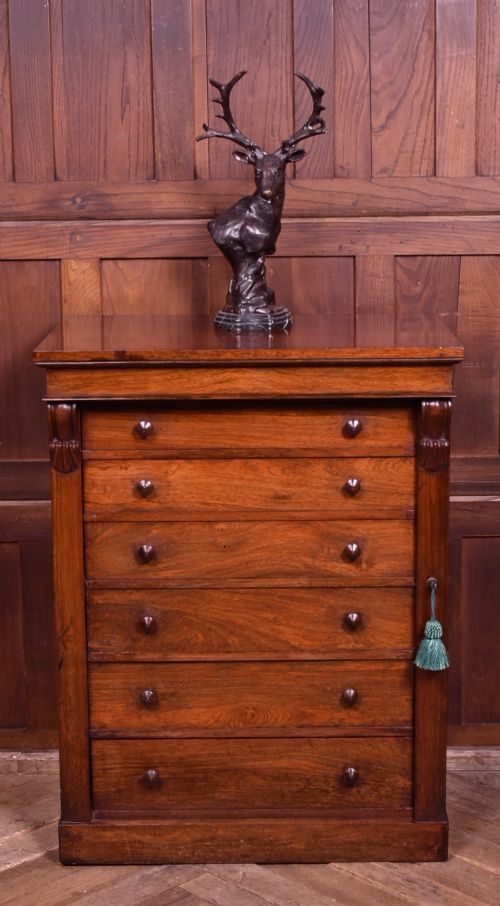
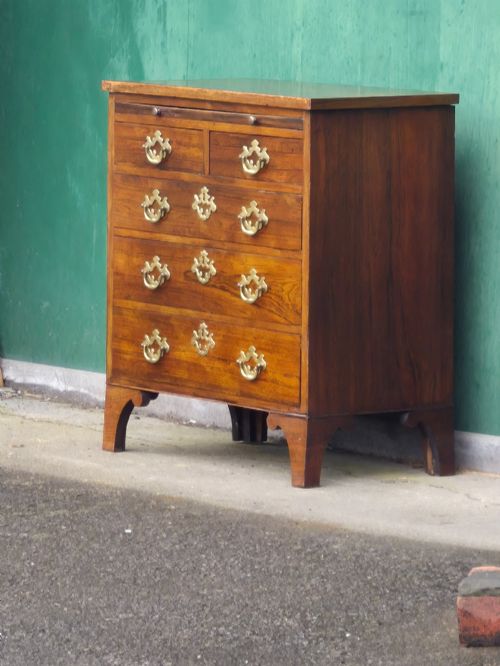
These rosewood tallboy chest pieces offer serious vertical storage and rich dark grain, bringing proper presence to a bedroom.
Rosewood Tallboy Chest
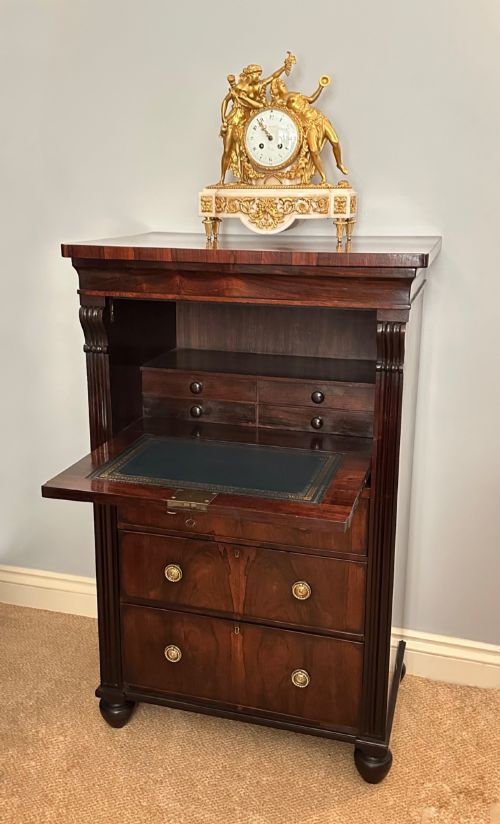
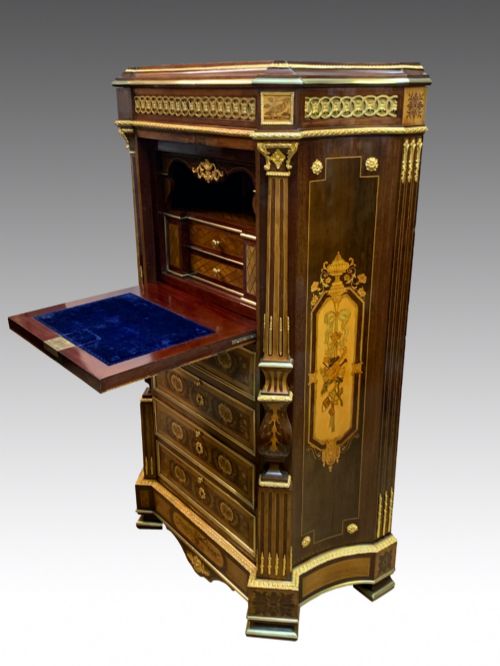
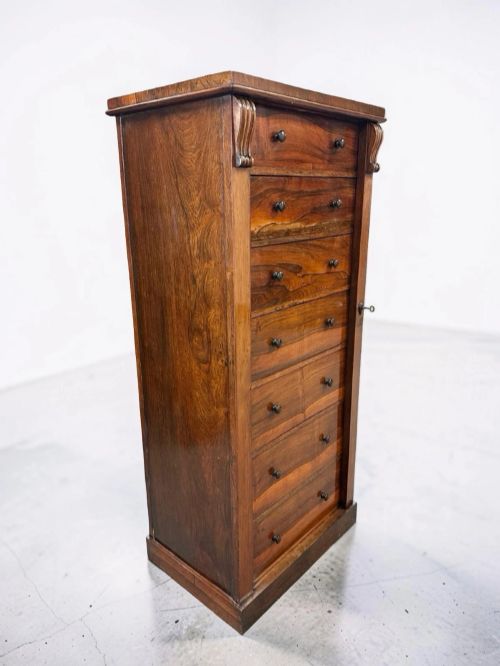
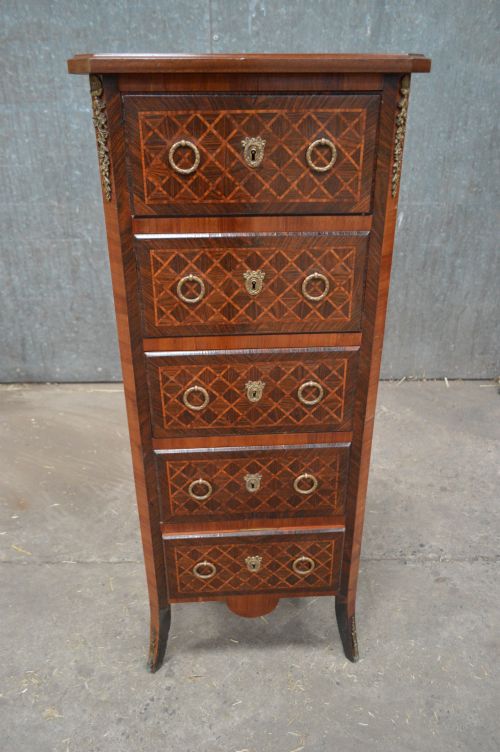
When you search for a rosewood tallboy chest, you are looking at tall, narrow drawer units designed to maximise storage without eating into floor space. The selection spans distinct forms, notably the locking Wellington chest alongside taller semainier cabinets and upright bedside pieces.
Most examples you meet here date from the nineteenth century and the Victorian era, though later twentieth century interpretations also appear. They arrive dressed in rich timbers, often accented with marquetry inlay or brass detailing.
Makers utilised the dense grain of the wood to create striking vertical proportions. Whether configured as a writing cabinet or a standard multi-drawer chest, each piece serves as a commanding focal point in a room.
What varies in quality
The standard of a rosewood tallboy chest depends heavily on the precision of the cabinet work and the choice of veneer. Superior pieces display bookmatched grain patterns that flow seamlessly across the drawer fronts and sides.
Hardware and locking mechanisms also dictate value. Original brass escutcheons, functioning locking side pilasters on Wellington chests, and intact internal mechanics separate standard workshop output from exceptional cabinet maker commissions.
Rosewood Tallboy Chest Retail Price Guide 2026
Typical asking prices for rosewood tallboy chest among the pieces listed under this phrase on Sellingantiques today, from the lower quarter to the upper quarter. They describe what is for sale here now, not the wider market.
Listings feature nineteen-century Victorian designs alongside twentieth-century Edwardian and Art Deco interpretations.
Maison Krieger
The Rosewood Tallboy Chest Glossary
- Wellington chest
- A tall, narrow chest of drawers secured by a hinged vertical locking bar on one side. This design locks all drawers simultaneously with a single key.
- Semainier
- A tall seven-drawer chest traditionally intended to hold a week of linen or clothing. The French term derives from the word for week.
- Marquetry
- Decorative patterns formed by fitting together small pieces of veneer into elaborate designs. Craftsmen use varied coloured woods to create pictorial or geometric motifs.
- Crossbanding
- A border technique where thin strips of veneer are laid perpendicular to the grain of the main surface. This frames drawer fronts and tabletops with a contrasting border.
- Ormolu
- Gilded bronze furniture mounts used for decorative enrichment. French cabinet makers frequently applied these metal ornaments to corners and feet.
Rosewood Tallboy Chest: Frequently Asked Questions
What is a Wellington chest?
A Wellington chest is a tall, narrow set of drawers distinguished by a locking wooden pilaster strip down one side. Swinging this bar open allows the drawers to be pulled out.
Originally designed for secure storage in gentlemen's studies and dressing rooms, this vertical format saves valuable floor space while offering generous capacity.
How do I care for rosewood?
Rosewood benefits from minimal interference and stable indoor humidity away from direct sunlight. Dust regularly with a dry cloth and avoid silicone-based polishes.
Applying a traditional beeswax occasionally helps nourish the grain and protects the polished surface without building up residue.
Can I use a tallboy in a modern bedroom?
These tall chests work exceptionally well in contemporary spaces because their vertical proportions occupy minimal floor space. They provide substantial storage for folded garments or linens without overwhelming the room.
Pairing a dark wood antique with simple modern decor lets the rich grain and historical character stand out as a focal point.
How do I distinguish nineteenth century pieces?
Nineteenth century examples show hand-cut dovetails on the drawer sides and use native secondary timbers behind the rosewood veneers. Inspection of the backboards and drawer linings reveals older construction methods.
Turned feet, hand-cut screws, and patinated brass hardware further separate period pieces from later revival items.