
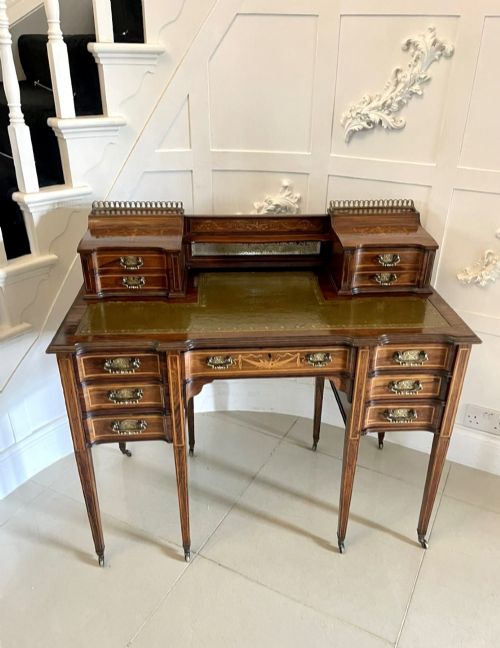
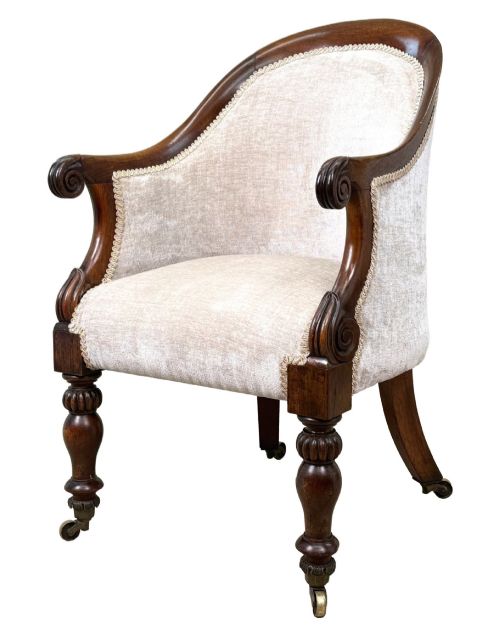
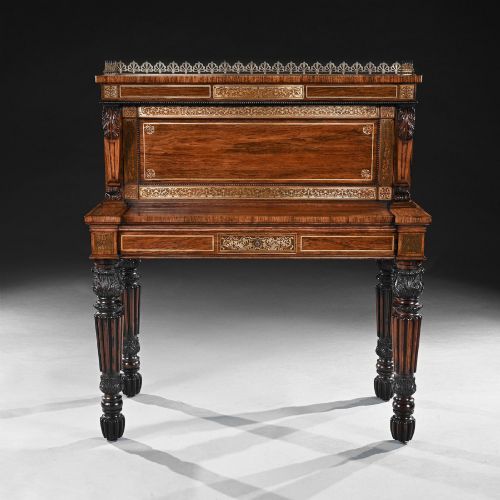

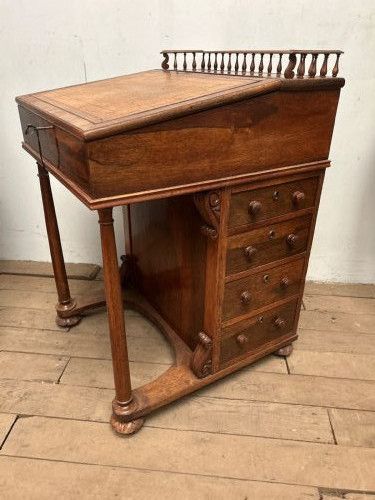
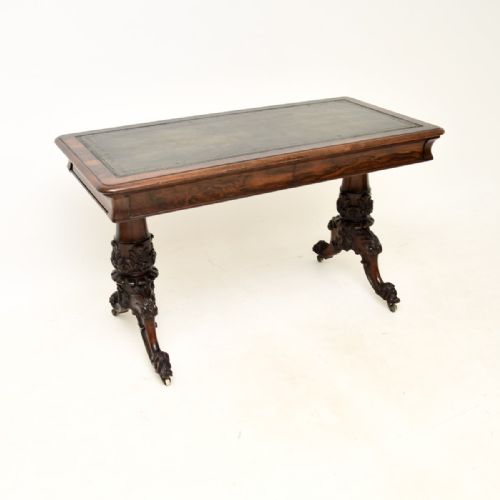
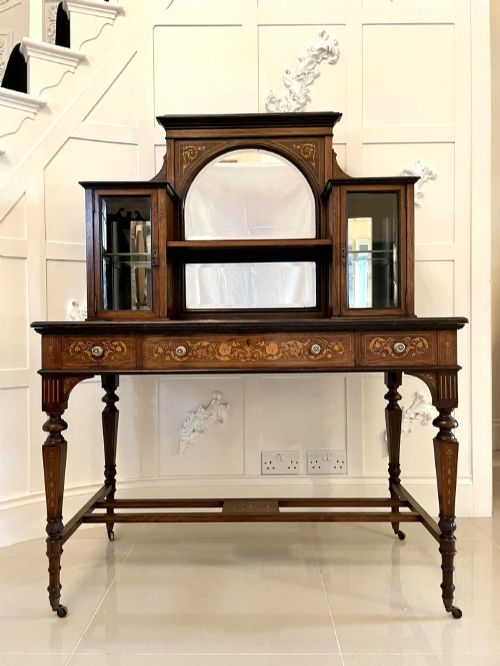
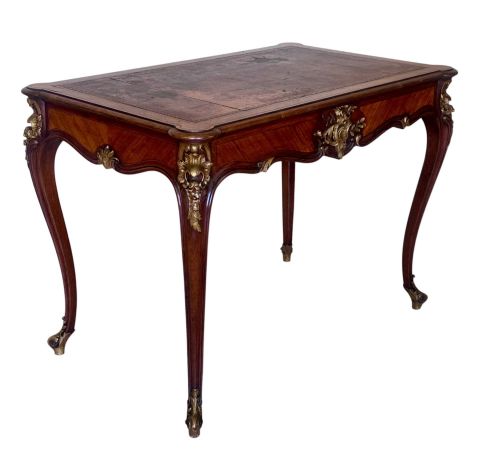
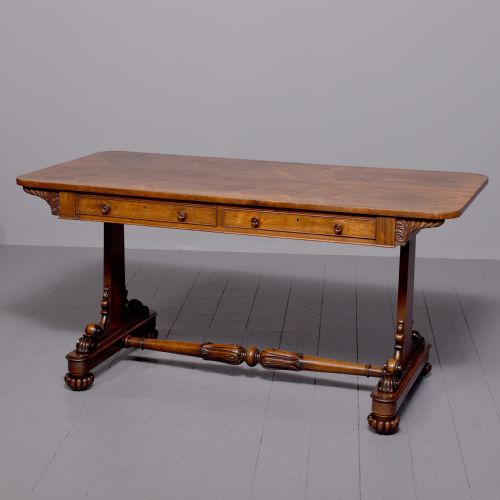

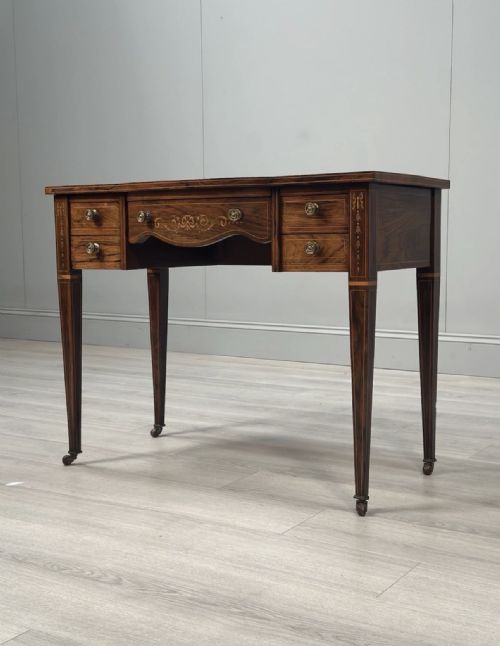
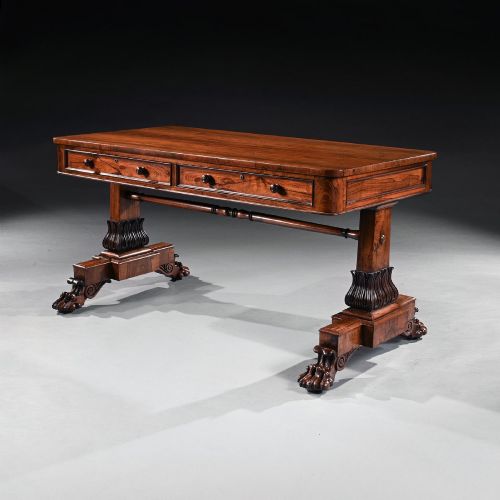
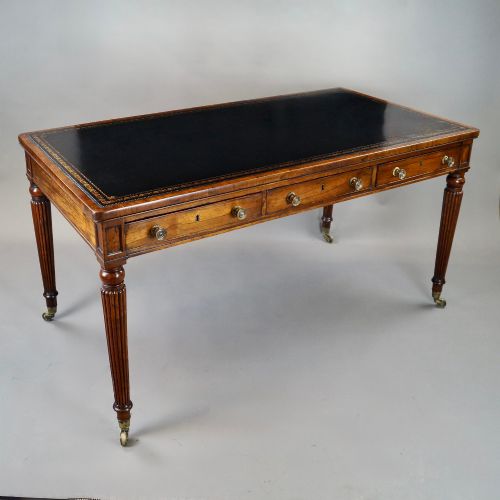
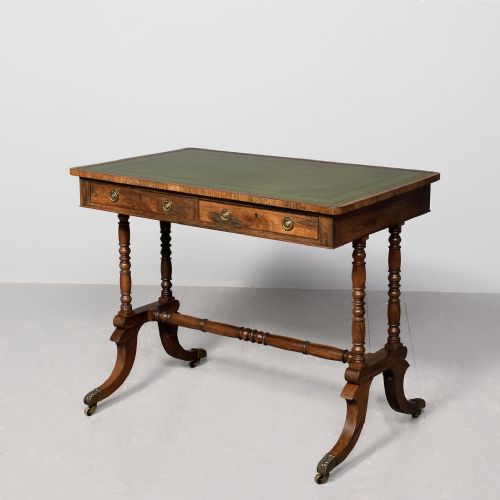
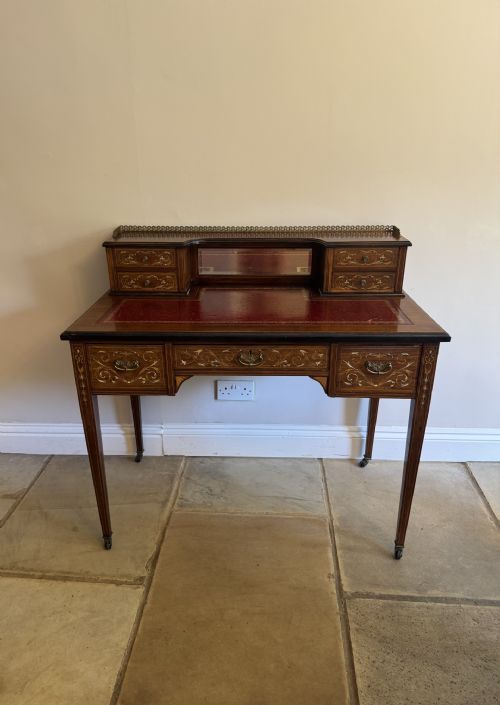

Rosewood Study Desk
A rosewood study desk brings deep grain and warm timber to a room, offering a solid surface designed for correspondence and private work.
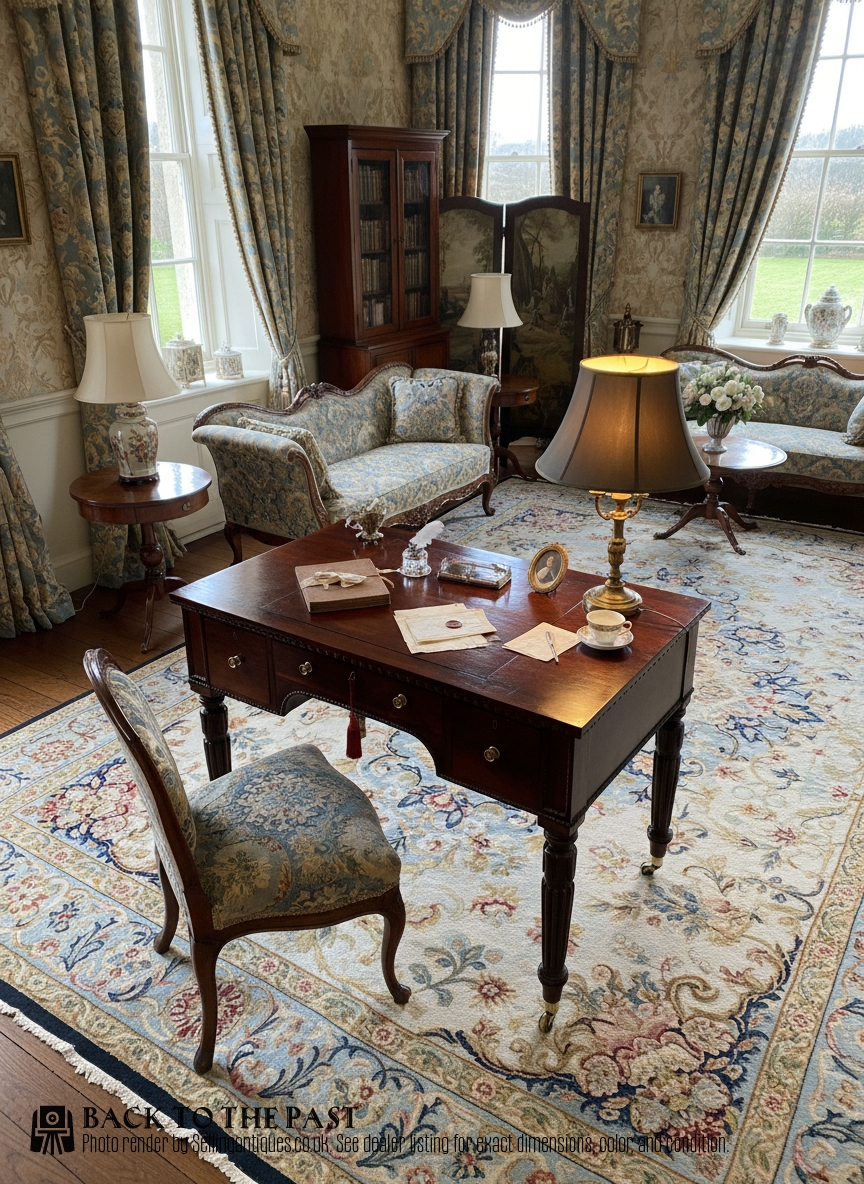
Rosewood Study Desk
A rosewood study desk encompasses freestanding library tables, compact Davenports, and writing tables from the nineteenth century. These pieces bridge the gap between grand reception rooms and private chambers, providing a designated writing place.
The versions most commonly met on this page date from the Regency and Victorian periods. They range from formal library tables with turned supports to small correspondence desks equipped with drawers and compartments.
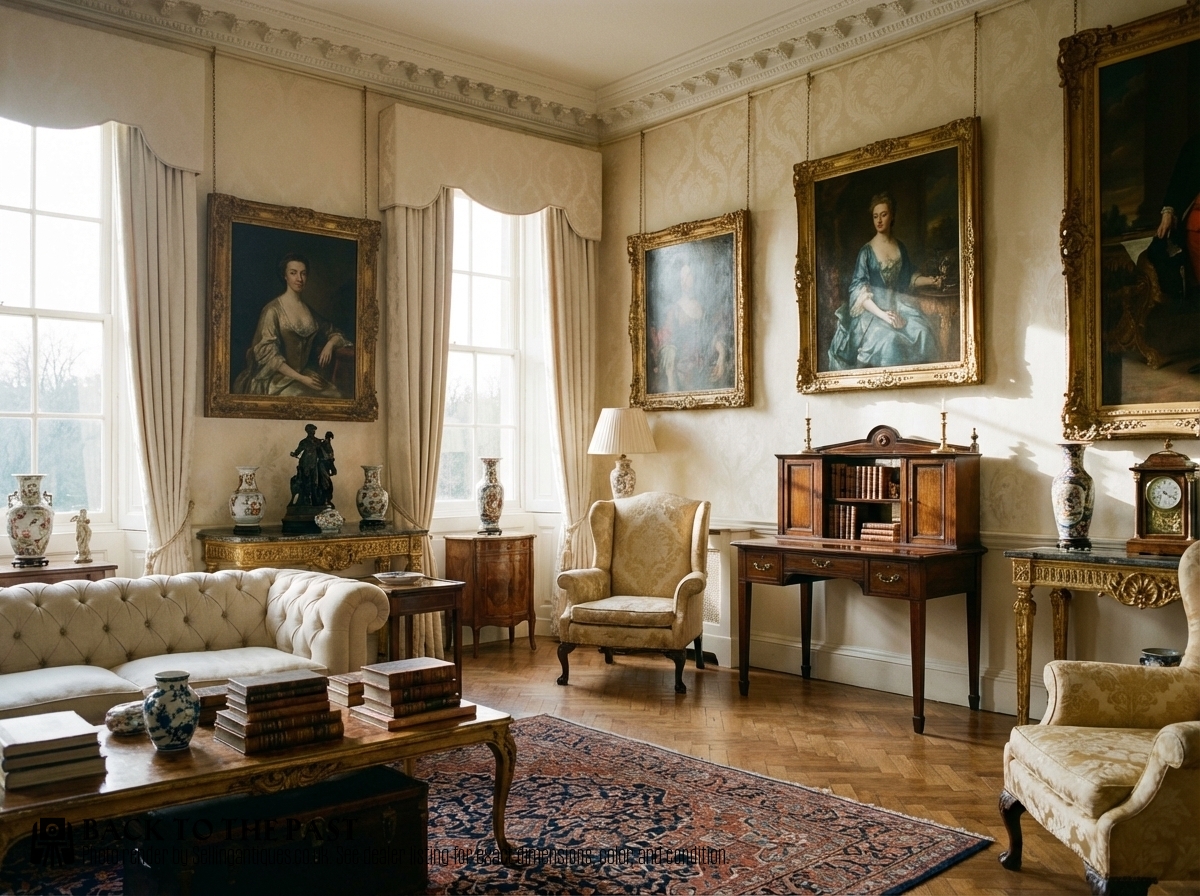
How they were made
Cabinetmakers utilised dense rosewood veneers laid over secondary timbers like mahogany, taking advantage of the rich grain patterns. Brass inlay, ormolu mounts, and satinwood stringing frequently highlight the edges and writing surfaces.
Writing surfaces are typically lined with tooled leather, providing a smooth plane for ink and paper. Joinery relies on traditional dovetailed drawer construction and turned wooden stretchers or carved pillar supports.
Rosewood Study Desk Retail Price Guide 2026
Typical asking prices for rosewood study desk among the pieces listed under this phrase on Sellingantiques today, from the lower quarter to the upper quarter. They describe what is for sale here now, not the wider market.
Listings feature rosewood alongside brass, leather, and satinwood, spanning Regency, Victorian, and William IV periods.
What varies in quality
The distinction between ordinary and exceptional pieces lies in the selection of the timber and the crispness of the carving. Superior examples display symmetrical figuring across the top and meticulous brass work that sits flush with the wood.
Proportion and structural integrity dictate the standing of a desk. Finer workshops ensured that freestanding tables were finished on all sides, allowing them to sit centrally in a room rather than against a wall.
Maple & Co·Gillows Oxford Street Workshop·CH Jeanselme & Co·Mein of Kelso·Donald Ross·Maurice Dufrêne·Edwards and Roberts
The Rosewood Study Desk Glossary
- Rosewood
- A heavy, durable timber prized for its dark purple-brown heartwood and distinct grain patterns. It polishes to a high gloss and takes fine detail in carving.
- Davenport
- A compact desk featuring a sloping, leather-lined writing lid above a pedestal of side drawers. It was originally designed for use in small spaces.
- Library table
- A large freestanding table finished on all sides, historically placed in the centre of a room for reading and writing.
- Marquetry
- The art of applying decorative pieces of veneer to form geometric or floral patterns. It requires precise cutting and fitting of contrasting woods.
- Ormolu
- Gilded bronze applied as mounts and decorative highlights on furniture. It adds metallic contrast to the dark timber surfaces.
Rosewood Study Desk: Frequently Asked Questions
Where should I place a freestanding desk?
Freestanding desks are finished on all sides and look best positioned in the middle of a study or library.
This placement showcases the polished back and sides, turning the piece into the centrepiece of the room.
How do I care for the leather top?
Leather writing surfaces require gentle cleaning with a slightly damp cloth followed by a neutral leather cream.
Avoid excessive moisture and harsh chemical polishes to preserve the gilt tooling around the edges.
How can I tell a Regency desk from a Victorian one?
Regency pieces often display classical restraint with brass inlay, sabre legs, and rosewood veneers.
Victorian examples frequently introduce heavier proportions, marquetry, and kidney-shaped tops reflecting later revival styles.