


Rosewood Stationery Desk
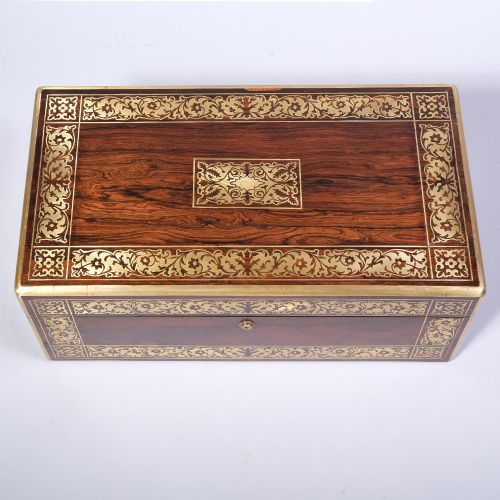
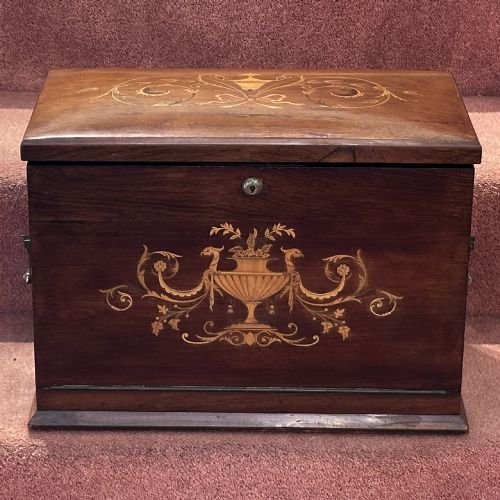
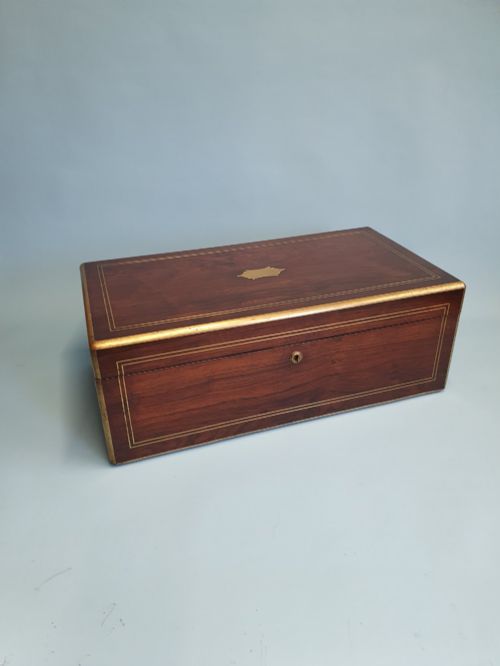
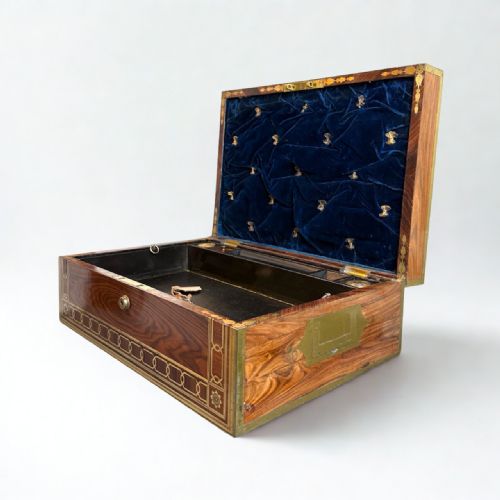
A rosewood stationery desk provides a handsome desktop repository for letters and writing implements, uniting rich timber with practical compartments.
Rosewood Stationery Desk
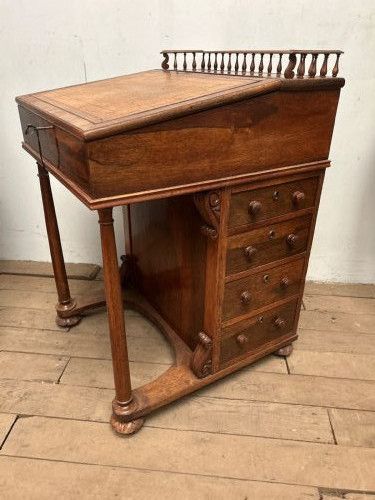
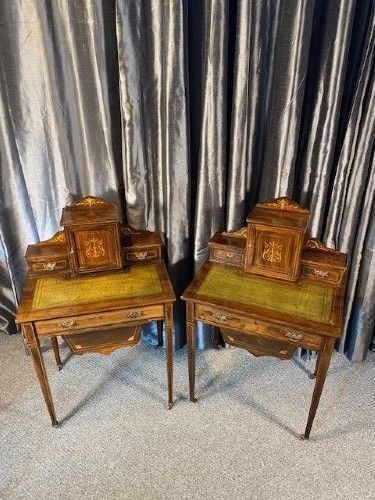
A rosewood stationery desk encompasses a variety of writing furniture, from compact stationery boxes and correspondence cabinets to large Davenport desks and library tables. The forms appearing here originate predominantly from the Regency, Georgian, and Victorian eras, alongside later pieces from around nineteen hundred.
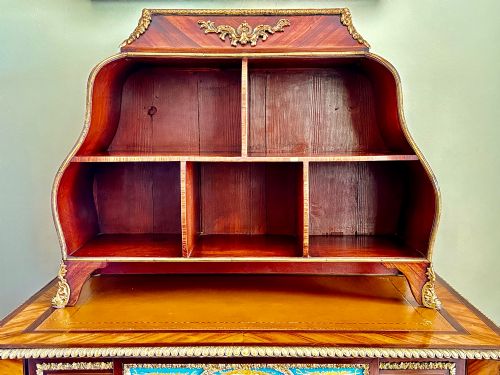
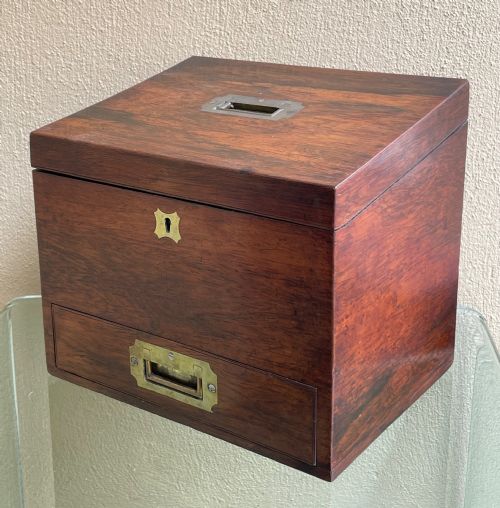
Buyers seeking a rosewood stationery desk will frequently encounter table-top writing slopes, document boxes, and Davenport desks fitted with secret drawers or internal compartments. Pieces span British, French, and Chinese origins, including campaign styles and Louis XV revival designs.
How they were made
Cabinet makers utilised dense, richly figured rosewood as the primary timber, often combining it with contrasting satinwood or boxwood inlay. Surfaces were frequently embellished with brass binding, brass inlays, or ormolu mounts.
Interiors integrated fitted leather writing surfaces, velvet linings, and small accessory compartments alongside mother-of-pearl or abalone details. Marquetry work and secret drawers required precise carpentry to conceal mechanisms within compact writing boxes.
Secret drawers demand hidden button releases, turning mundane letter writing into an entertaining daily treasure hunt.
What varies in quality
The standard of a piece rests upon the depth of the rosewood grain and the crispness of any brass inlay or ormolu mounts. Superior items display meticulous attention to internal stationery partitions and secret drawer mechanisms.
Design complexity marks the division between standard document boxes and elaborate Davenport desks or cartonnieres. Original leather inserts, intact inkwells, and well-preserved structural joinery elevate the standing of a desk.
The Rosewood Stationery Desk Glossary
- Rosewood
- A dense, heavily grained dark timber prized for cabinet making. It takes a high polish and shows distinctive dark figuring.
- Davenport
- A small pedestal desk featuring a sloping writing surface above a set of drawers. The design gained popularity during the Regency period.
- Writing Slope
- A portable box with a hinged sloping lid that opens to reveal a writing surface and storage wells for ink and paper.
- Cartonnier
- A desktop cabinet designed for holding papers, documents, and stationery. It often incorporates multiple tiers or pigeonholes.
- Ormolu
- Gilt bronze mounted onto furniture as decorative trim. This technique appears frequently on French revival pieces.
Rosewood Stationery Desk: Frequently Asked Questions
What is the difference between a writing slope and a stationery desk?
A writing slope is typically a portable box designed to rest on a table, opening at an angle to provide a slanted writing surface with internal storage for paper and ink.
A stationery desk or box stands upright to organise correspondence, letters, and writing accessories in vertical compartments rather than providing a primary surface for extended writing.
How do I identify a Regency period rosewood piece?
Regency items date from the early nineteenth century and frequently incorporate bold brass inlay, brass stringing, and heavy brass corner binding. The timber selection emphasises dark, heavily figured rosewood paired with clean architectural lines.
Cabinet makers of this era often integrated concealed compartments and secret drawers within compact writing boxes and library tables.
Where were these desks used originally?
These desks served private studies, drawing rooms, and libraries in affluent homes, acting as dedicated stations for managing personal correspondence. Portable writing slopes also travelled with owners during journeys.
Campaign variants were built for military officers and travellers, offering robust construction to withstand movement while keeping writing materials secure.
How should I care for rosewood furniture?
Protect rosewood surfaces from direct sunlight and extreme temperature fluctuations to prevent the timber from drying out or splitting. Dust regularly with a soft, dry cloth and avoid silicone-based polishes.
Leather writing inserts benefit from occasional gentle conditioning to keep the material supple without staining the surrounding wood.