



Rosewood Stationery Cabinet Desk
A rosewood stationery cabinet desk brings rich timber grain and compact writing fittings into a study or drawing room.
Rosewood Stationery Cabinet Desk
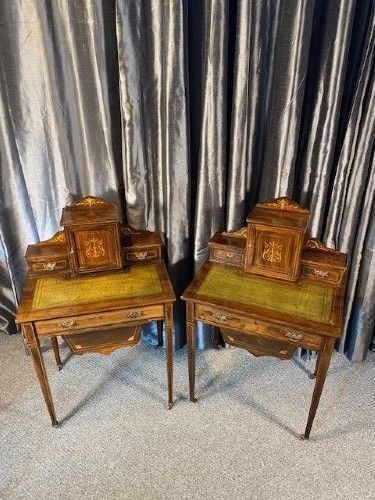
A rosewood stationery cabinet desk combines small-scale writing surfaces with integrated letter slots, small drawers and compartments for correspondence. The pieces seen across these listings span the Regency and Victorian periods, with examples appearing from the mid-nineteenth century onwards.
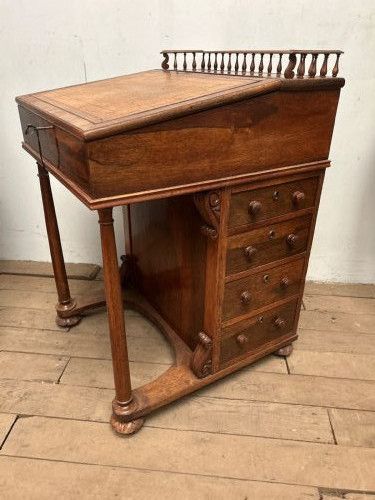
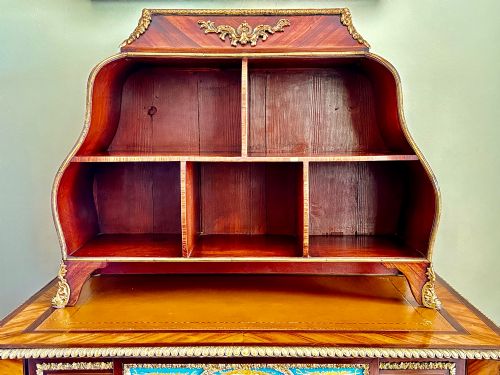
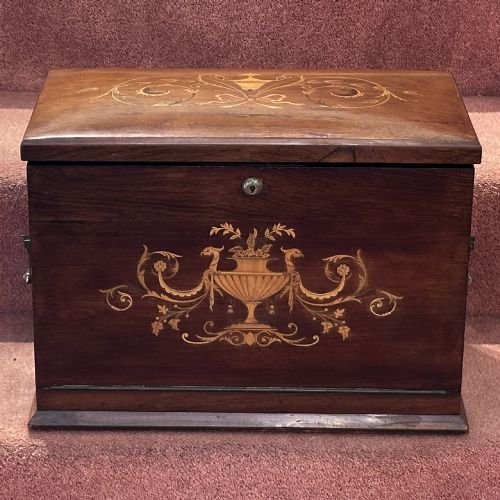
Forms on this page include davenport desks, desktop cartonnier units, writing boxes and stationery cabinets. Many incorporate pop-up mechanisms, sliding tops or four-drawer arrangements beneath sloping writing surfaces.
Design influences range from the Regency period through Louis XV Revival, Edwardian and Sheraton Revival styles. Cabinet makers such as F Waller produced labelled pieces that survive alongside unassigned nineteenth-century items.
How they were made
Makers built these pieces primarily using solid rosewood and rosewood veneers, often applying contrasting satinwood inlay, boxwood stringing and maple secondary timbers. Brass hardware, ormolu mounts and leather writing inserts completed the structural and decorative assembly.
Carpenters constructed sloping desk lids and stationery compartments with functional internal mechanisms, including pop-up actions and sliding tops. Makers combined cabinetry with fitted drawer interiors to organise paper, pens and letters.
Rosewood Stationery Cabinet Desk Retail Price Guide 2026
Typical asking prices for rosewood stationery cabinet desk among the pieces listed under this phrase on Sellingantiques today, from the lower quarter to the upper quarter. They describe what is for sale here now, not the wider market.
Materials recorded include solid rosewood, satinwood inlay, brass fittings, leather and ormolu.
What varies in quality
The refinement of timber selection and inlay work separates simpler pieces from finer examples. The contrast between dark rosewood and light satinwood or boxwood inlay demonstrates the skill of the workshop.
The precision of moving parts, such as sliding tops and pop-up mechanisms, distinguishes superior construction. Integrated brass fittings and ormolu mounts indicate the standard of execution applied to the piece.
F Waller
The Rosewood Stationery Cabinet Desk Glossary
- Davenport desk
- A compact small desk featuring a sloping writing top above a pedestal of drawers. This form became popular during the nineteenth century for use in parlours and studies.
- Cartonnier
- A desktop cabinet or framework designed to hold papers, files and correspondence. These units often feature multiple tiers or pigeonholes.
- Ormolu
- Gilded bronze mounts applied for decorative effect on nineteenth-century furniture. The technique adds metallic highlight to wood surfaces.
- Stringing
- Thin inlaid lines of contrasting wood used to outline panels and edges. Boxwood and satinwood served commonly for this decorative detail.
Rosewood Stationery Cabinet Desk: Frequently Asked Questions
What is a davenport desk?
A davenport desk is a compact writing cabinet featuring a sloped writing surface placed over a pedestal of drawers. These pieces provide a dedicated writing space while occupying minimal floor area in a room.
Most examples include internal compartments for stationery and small drawers accessed from the side or beneath the lid.
How were stationery cabinets used?
Stationery cabinets served to organise letters, writing paper, envelopes and postage materials in nineteenth-century homes and offices. They kept correspondence neat and readily accessible on a desk or table.
Many incorporated pigeonholes, small drawers and letter slots designed specifically for the varied paper sizes of the period.
How do I date a rosewood desk?
Dating relies on observing stylistic details, construction methods and materials recorded across the piece. Regency examples display characteristic classical lines, while Victorian and Edwardian pieces incorporate revival motifs and varied mechanical actions.
Makers labels, where present, offer direct evidence of the workshop and production period.
Where should I place a stationery desk?
These compact desks suit studies, living rooms or bedrooms where floor space is limited. Their finished backs and detailed woodwork allow them to sit away from walls in open spaces.
Keeping them away from direct sunlight and extreme temperature changes protects the rosewood timber and leather writing surfaces.