
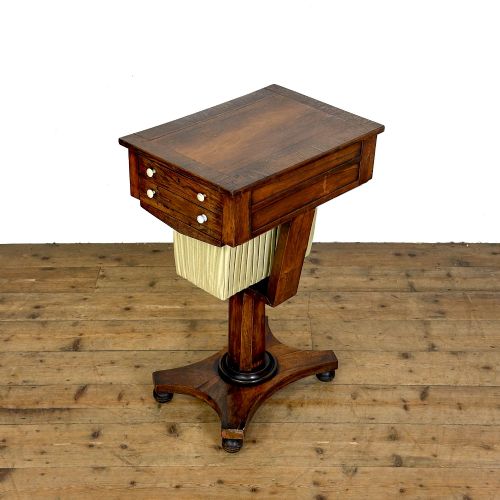
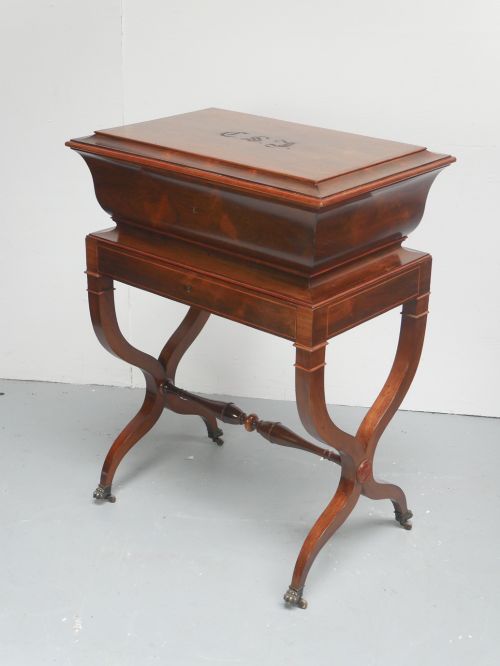

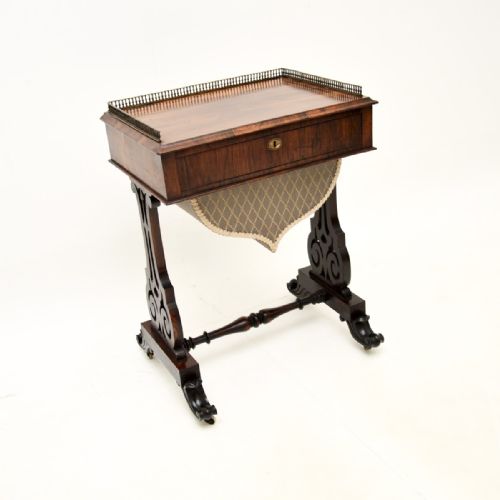


Rosewood Sewing Box Table
A rosewood sewing box table combines fine cabinetmaking with practical compartments for needlework, offering elegant storage for the parlour.
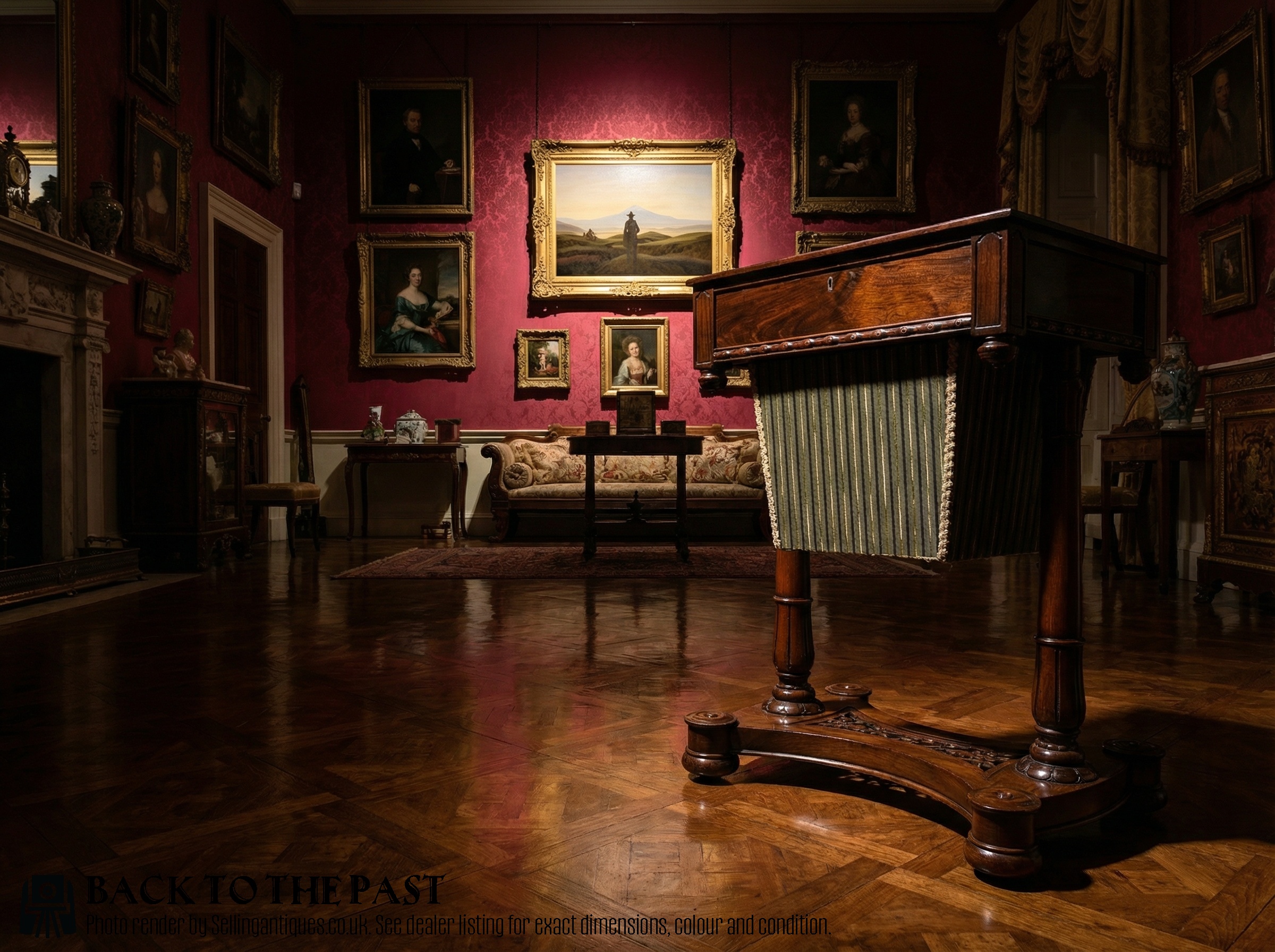
Rosewood Sewing Box Table
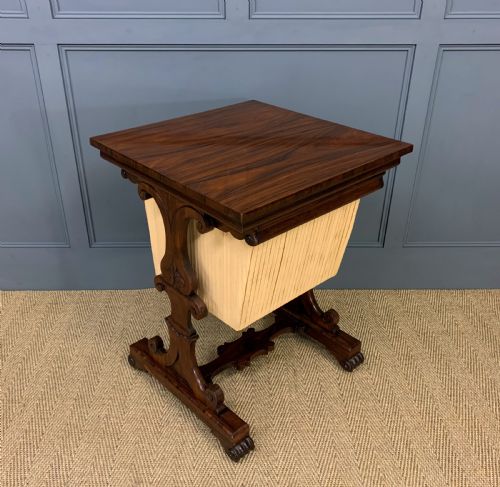
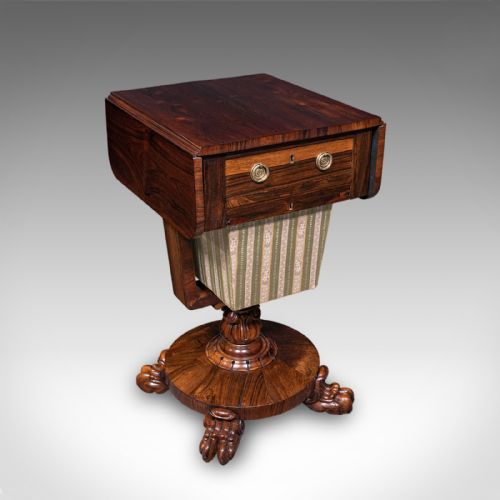
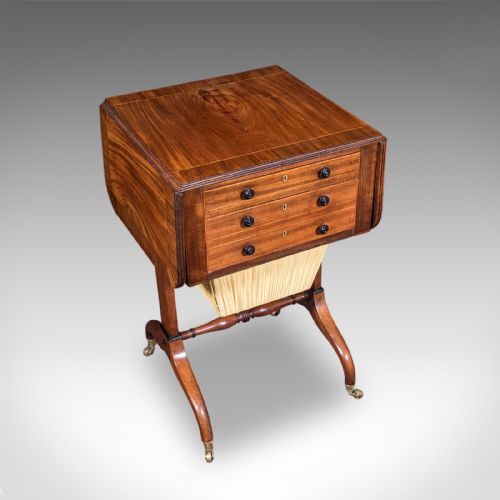
A rosewood sewing box table is a compact item of domestic furniture designed for needlework, stationery, and small personal belongings. These pieces appear frequently from the Regency, William IV, and Victorian periods, often taking the form of drop-leaf tables, pedestal work tables, and trumpet forms. They combine a fitted compartment or work box at the top with a fabric bag, drawer, or storage volume underneath.
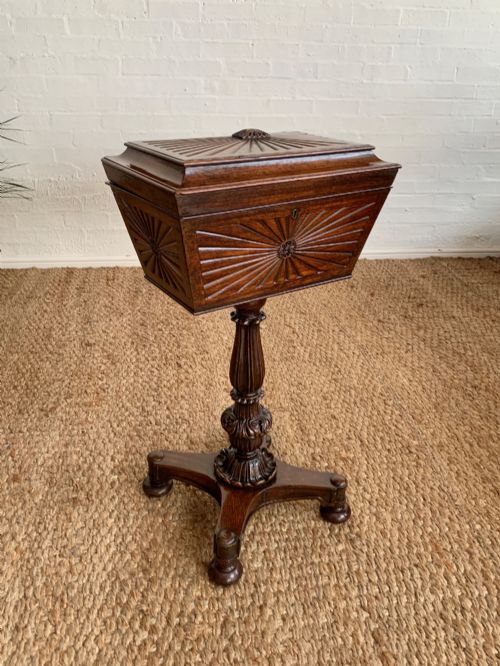
The varieties seen on this page range from early nineteenth-century Regency and George IV examples with brass inlay to mid-nineteenth-century Victorian trumpet tables and Anglo-Indian variants. Makers utilised drop leaves, caddy tops, and sunburst carving to give functional tables decorative presence in formal sitting rooms. Buyers encounter pieces configured for sewing, writing, games, and reading, reflecting the varied pursuits of nineteenth-century domestic life.
How they were made
Cabinetmakers built these tables primarily from solid rosewood or utilised rosewood veneers laid over secondary timbers like mahogany. Workshops embellished surfaces with contrasting wood inlay, satinwood detailing, and brass stringing, while interior compartments often featured velvet, silk, or fabric linings to protect delicate sewing implements.
Structural forms relied on pedestals, turned legs, or pillar supports resting on platform bases with castor feet for mobility. Trumpet tables employed a flared octagonal or circular body rising from a tripod base, while drop-leaf versions integrated hinged flaps supported by pivoting wooden brackets.
Listings feature pieces spanning the Regency, William IV, and Victorian periods, constructed primarily in rosewood with mahogany and satinwood accents.
What varies in quality
Quality rests in the precision of the timber selection and the complexity of the internal fittings. Superior examples display carefully matched rosewood grain, intricate marquetry, or detailed wood inlay rather than plain surfaces, alongside robust internal trays divided for spools, needles, and thimbles.
The execution of carving and the stability of the pedestal joints dictate the grade of a piece. Fine execution is evident where turnings remain crisp, drawers run smoothly within their housings, and hinged components align precisely without sagging.
Gillows of Lancaster·Lesage
The Rosewood Sewing Box Table Glossary
- Rosewood
- A dense, dark timber prized for its dramatic grain patterns and deep colour. Cabinetmakers selected it for high-status nineteenth-century occasional furniture.
- Work table
- A small domestic table designed to hold sewing equipment, yarn, and needlework supplies. These pieces often incorporated a suspended fabric bag or deep wooden box beneath the top.
- Trumpet table
- A Victorian form featuring a flared, octagonal body resembling an inverted trumpet, mounted on a pillar and tripod base. The sloping sides open to reveal compartmentalised storage for sewing accessories.
- Teapoy
- A small box or chest mounted on a central pillar, originally used for storing tea but frequently overlapping in form with sewing boxes and work tables. They often contain internal caddies and mixing bowls.
- Marquetry
- The art of applying decorative veneer pieces in geometric or pictorial patterns onto a solid surface. Skilled artisans used contrasting timbers to create elaborate floral or abstract motifs.
Rosewood Sewing Box Table: Frequently Asked Questions
What is a rosewood sewing box table used for?
These tables served as functional furniture for needlework, embroidery, and small writing tasks in nineteenth-century sitting rooms. The upper section typically lifted or opened to reveal fitted compartments for threads, needles, and sewing tools.
Beneath the main box, many designs incorporated a hanging fabric bag or a deep drawer to catch wool and unfinished projects. Today, they function well as compact side tables or lamp tables beside seating.
How do I tell Regency from Victorian examples?
Regency and George IV pieces, dating from the early nineteenth century, frequently display classical restraint with brass inlay, saber legs, and elegant pillar supports. They often reflect neoclassical or French Restoration design influences.
Victorian pieces from the mid-nineteenth century tend toward heavier proportions, trumpet forms, and elaborate marquetry or floral carving. The introduction of specific styles like William IV bridges these eras with bold, heavy scroll feet and rich timber grains.
Did these tables always include sewing bags?
Many work tables featured a sliding fabric bag suspended beneath the main box, often pleated in silk or velvet. Over time, fabric perished and owners frequently replaced or removed these textile bags.
Some surviving pieces retain their original fabric interiors and fittings, while others present purely wooden boxes and drawers without the suspended bag.
Where should I place a sewing table at home?
Their compact footprints make these tables ideal as side tables beside armchairs or sofas in a living room. The enclosed top compartments provide discreet storage for small household items or reading accessories.
They also sit comfortably as lamp tables or decorative accent pieces in hallways and bedrooms where floor space is limited.