



Regency Fabric Basket Table
These regency fabric basket table examples bring together clever storage and refined timber work, offering a practical centrepiece that collectors prize for everyday use.
Regency Fabric Basket Table
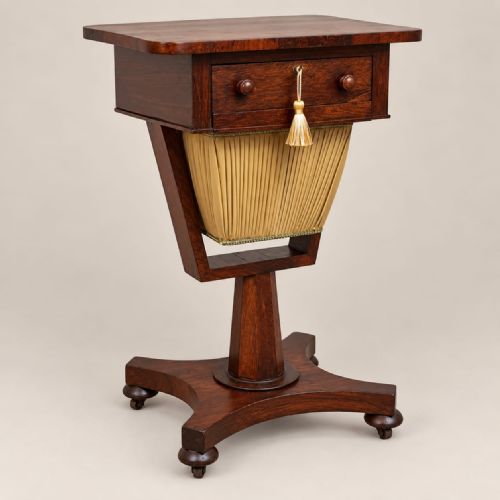
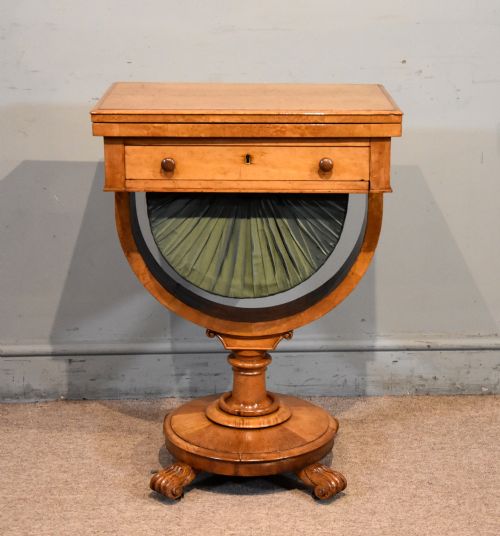
A regency fabric basket table combines a sturdy timber frame in mahogany, rosewood, maple, or pollard oak with a hanging fabric bag designed for needlework and domestic crafts. These functional pieces appear as occasional tables, work tables, side tables, and sewing tables across the nineteenth century, Georgian, and Regency periods.
The version most commonly encountered on this page uses rich tropical hardwoods with drop-flap surfaces, lyre ends, or brass mounts. They bridge the gap between a refined parlour display and a useful repository for ongoing textile projects.
How they were made
Cabinet makers utilised dense timbers such as mahogany and rosewood, often pairing figured veneers with solid secondary woods to build the stable carcasses required for daily service. Silk and other woven textiles were gathered into suspended fabric baskets beneath the main top to hold threads and cloths.
Brass fittings, castors, and turned pillars provided structural support and subtle decoration, while drop-flap mechanisms and hinged lids allowed the tables to adapt to smaller spaces within the room.
Regency Fabric Basket Table Retail Price Guide 2026
Typical asking prices for regency fabric basket table among the pieces listed under this phrase on Sellingantiques today, from the lower quarter to the upper quarter. They describe what is for sale here now, not the wider market.
The listings on this page span the 19th Century, Regency, and Georgian periods, utilising rosewood, mahogany, maple, and pollard oak.
What varies in quality
The distinction between standard examples and exceptional work rests on the choice of timber figure, such as pollard oak or highly grained rosewood, and the precision of the cabinet work in the joints and turned supports. Well-executed pieces show careful attention to the grain alignment across the drop flaps and the smooth operation of internal compartments.
Attribution to documented workshops or the inclusion of integrated games boards and intricate brass details elevate certain pieces above simpler domestic variants, reflecting the ambitions of the original commission.
Gillows
The Regency Fabric Basket Table Glossary
- Drop flap
- A hinged leaf on the side of a table that raises to extend the surface area or drops down when space is limited. This mechanism allows the table footprint to change according to the immediate needs of the room.
- Work table
- A specialised domestic table equipped with drawers or a fabric basket designed for sewing, needlework, and small crafts. These items became central to nineteenth-century domestic interiors.
- Lyre end
- A furniture support shaped in the stylized form of an ancient Greek lyre, commonly utilised in Regency and Georgian designs. This structural form provides stability while maintaining a light visual appearance.
- Pollard oak
- Timber taken from oak trees that have been pollarded, resulting in a dense, highly figured grain pattern prized for decorative veneers. Cabinet makers used this wood to create striking surface contrasts.
Regency Fabric Basket Table: Frequently Asked Questions
What is a regency fabric basket table used for?
These tables served primarily as practical work stations for sewing, embroidery, and small domestic tasks in the nineteenth-century home. The suspended fabric basket held threads and materials close to hand while the top surface remained clear.
Over time, their compact proportions and versatile storage made them popular as general occasional tables or lamp stands in sitting rooms.
How do I identify a Regency period piece?
Regency furniture typically displays classical restraint, clean lines, and dark imported timbers like mahogany and rosewood. Look for architectural proportions, brass inlay, and structural motifs such as lyre supports or turned columns.
Pieces from this era often balance heavy structural stability with an elegant, light silhouette that suits period interiors.
Are these tables suitable for modern rooms?
Their compact scale and warm timber tones allow these tables to function well beside modern sofas or chairs. The drop flaps and internal storage compartments offer practical utility in smaller contemporary spaces.
Living with these pieces requires mindful placement away from direct heat sources to protect the historic wood and fabric elements.
What is the difference between a work table and a sewing table?
In practice, nineteenth-century makers used these terms interchangeably for furniture designed to hold textile projects and small personal items. Both variants generally feature a drawer combined with a hanging fabric bag or silk basket.
Some examples include specialised compartments for writing or games boards, expanding their function beyond simple needlework.