


Rosewood Mother of Pearl Box
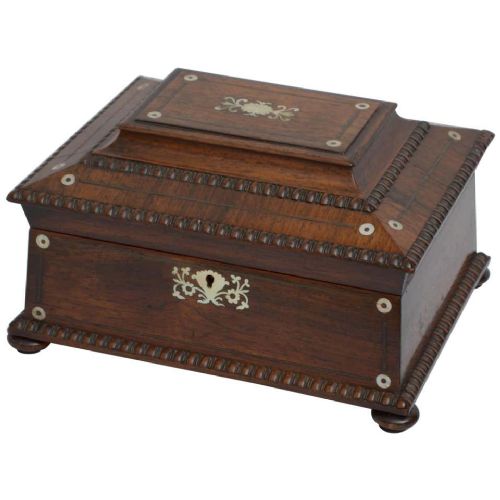
A rosewood mother of pearl box brings rich grain and luminous shell together in a functional antique designed for nineteenth-century desks and dressing tables.
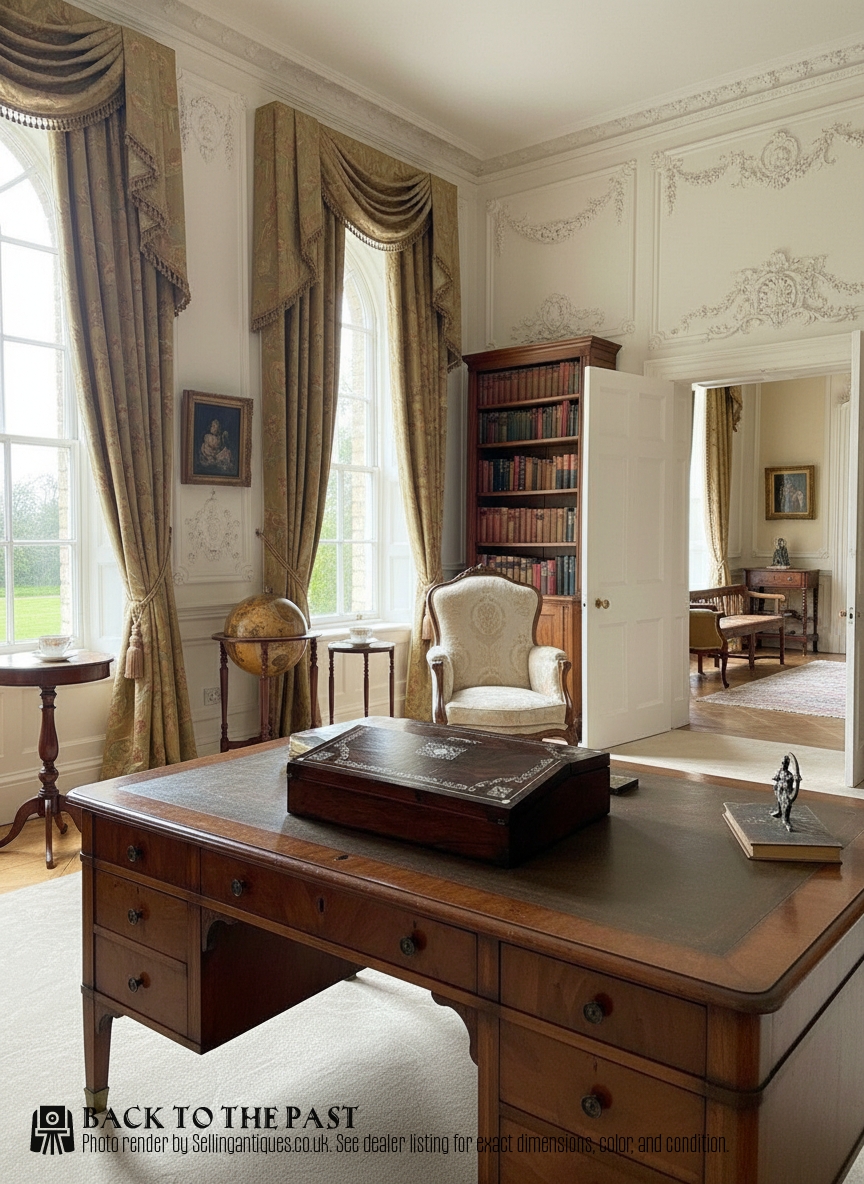
Rosewood Mother of Pearl Box
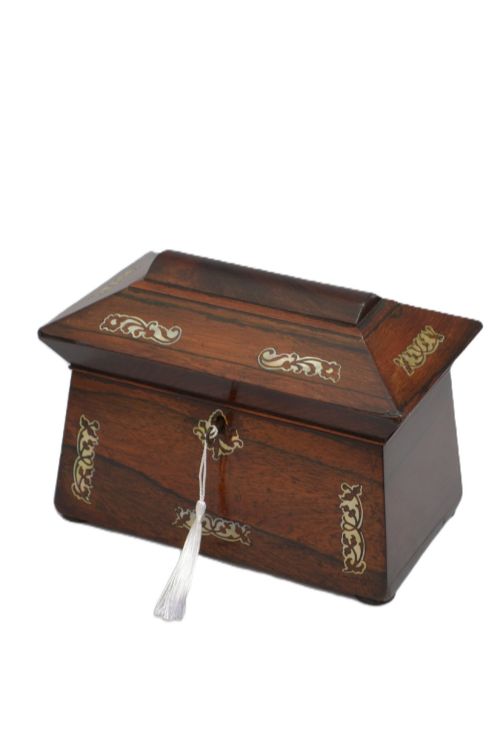
When you search for a rosewood mother of pearl box, you encounter items designed to store correspondence, jewellery, tea, or writing equipment. These containers served domestic and social rituals across the Georgian, Regency, William IV, and Victorian periods.
The objects take many shapes, including sarcophagus tea caddies, correspondence boxes, glove cases, card games containers, and fitted writing slopes. Victorian and Regency examples dominate the selection, often featuring compartments lined in silk or velvet.
Makers adapted the heavy tropical hardwood to table cabinets and travelling vanities, pairing dark timber with iridescent shell inlay. These pieces functioned as both portable desks and decorative tabletop receptacles.
Design and Execution
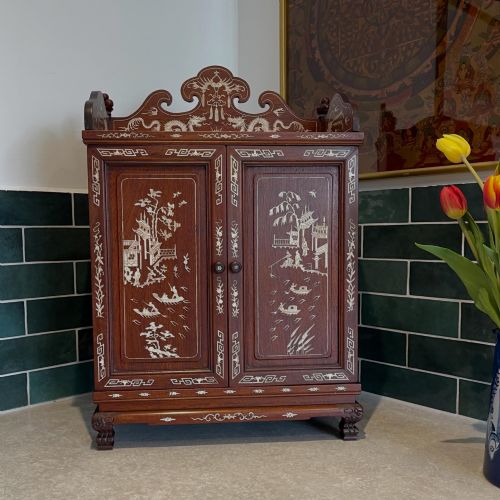
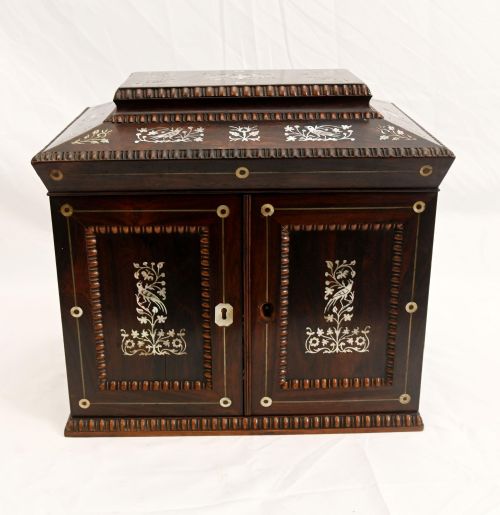
Quality depends on the precision of the shell inlay and the complexity of the internal fittings. Elaborate pictorial motifs depicting birds and floral scrolls require greater skill than simple geometric banding.
The inclusion of original silk linings, working locks with keys, and fitted compartments for ink or sewing tools elevates a piece. Carcase construction, timber selection, and sarcophagus proportions further separate standard items from superior examples.
Materials recorded across the inventory include rosewood, mother of pearl, abalone, brass, and velvet.
George Austin Dublin·Julius Sebert·J Newman
The Rosewood Mother of Pearl Box Glossary
- Writing Slope
- A portable desk with a hinged, slanted writing surface that folds down to enclose a storage compartment for paper and ink.
- Sarcophagus
- A box shape featuring a stepped or domed lid reminiscent of a stone coffin, popular for tea caddies and jewellery chests.
- Mother-of-Pearl
- The iridescent inner layer of mollusc shells, harvested for decorative inlay work on nineteenth-century furniture and boxes.
- Escutcheon
- A protective metal plate surrounding a keyhole, frequently cast in brass on the front of these wooden boxes.
- Workbox
- A container equipped with trays and compartments specifically designed to hold sewing gear, threads, and embroidery tools.
Rosewood Mother of Pearl Box: Frequently Asked Questions
What were rosewood mother of pearl boxes used for?
These containers held precious items such as jewellery, letters, sewing gear, and tea leaves in nineteenth-century homes. They provided secure, portable storage for personal valuables.
Owners kept them on dressing tables, desks, or parlour sideboards where their decorated exteriors added to the room's decor.
How do I date a rosewood box?
Dating relies on stylistic clues such as the sarcophagus shape of the Regency and William IV eras versus the flatter, heavily inlaid Victorian lid designs. Hardware styles and interior silk fittings also indicate the decade of production.
Examining construction methods inside the compartment trays helps confirm whether a piece belongs to the early nineteenth century or later Victorian period.
Are the interiors usually original?
Many pieces retain their original velvet or silk linings, papered compartments, and glass inkwells, though some suffered wear over the decades. Lift-out trays often conceal lower storage wells designed for stationery or needlework.
Complete interiors featuring matching stationery slots and covered compartments are prized by collectors for their authenticity.
How should I care for rosewood and shell?
Keep the wood away from direct sunlight and dramatic humidity changes to prevent the rosewood from drying or warping. Gentle dusting with a dry cloth maintains the timber polish without harming the shell inlay.
Avoid using modern liquid polishes that can seep under loosened mother of pearl plaques and weaken the adhesive.