


Victorian Inlaid Lap Desk
A victorian inlaid lap desk is a portable writing box designed for travel, prized for clever compartments and decorative brass or mother-of-pearl work.
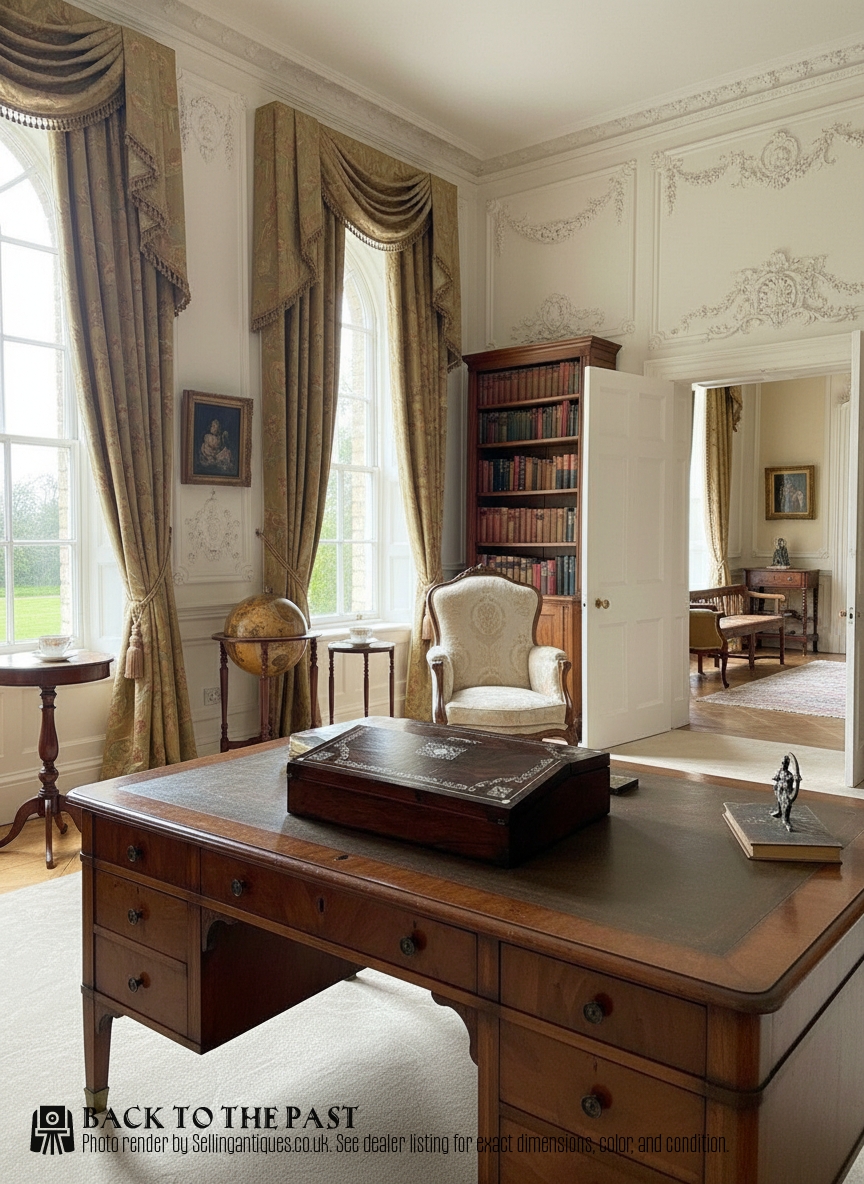
Victorian Inlaid Lap Desk
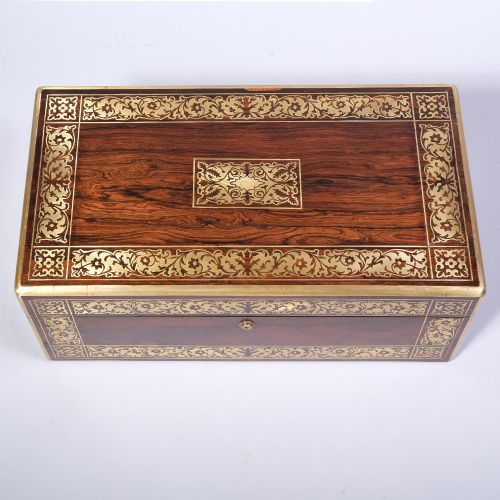
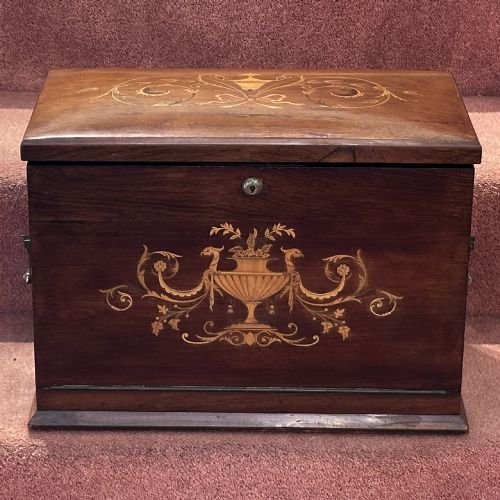
A victorian inlaid lap desk encompasses portable writing boxes, slopes, and stationery cabinets constructed to fold open into a slanted writing surface. The pieces on this page span the nineteenth century, including Georgian and Regency precursors alongside Victorian and Anglo-Indian examples.
The objects take forms such as compact travel writing slopes, larger document boxes, and fitted stationery cabinets. Many retain secret drawers, pen trays, and inkwell compartments concealed beneath the main writing flap.
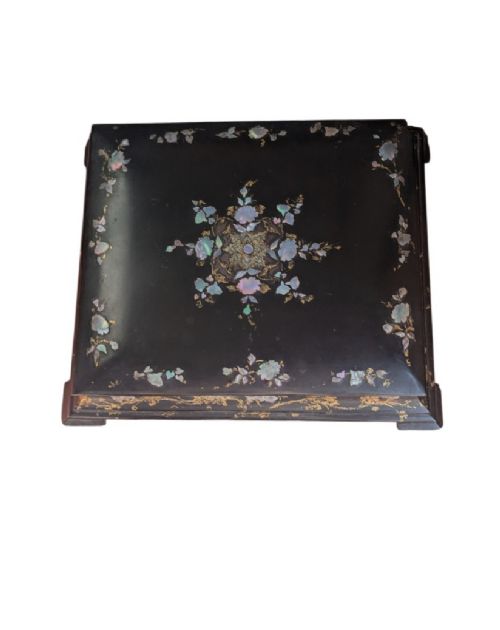
Makers and workshops utilised exotic hardwoods like rosewood, burr walnut, and coromandel, embellished with brass binding, stringing, and mother-of-pearl inlay. These portable desks served travellers, officers, and writers who required a functional writing surface away from a permanent library desk.
How they were made
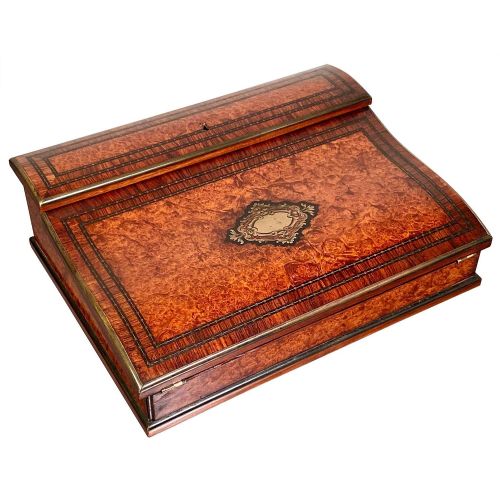
Cabinet makers built these boxes using dense timbers such as rosewood, walnut, and mahogany, often selecting burr veneers for decorative grain patterns on the sloping lids. Brass corners, straps, and inlaid escutcheons reinforced the joints for regular travel.
Intricate surface decoration involved hand-cut brass stringing, mother-of-pearl floral motifs, and satinwood or ebony banding fitted precisely into channeled recesses within the timber. Interiors combined baize or velvet writing surfaces with maple or mahogany secondary woods for internal partitions.
The selection includes pieces constructed from rosewood, burr walnut, mahogany, and coromandel, featuring brass, mother-of-pearl, and ivory inlay.
What varies in quality
The calibre of a victorian inlaid lap desk depends upon the precision of the brass and timber fit, the complexity of the internal secret drawers, and the integration of quality locking mechanisms like Bramah locks. Superior examples display seamless parquetry, tightly mitred corners, and well-figured burr walnut or rosewood veneers.
Subtleties in the hardware and secondary woods separate standard production pieces from workshop items bearing maker attribution, such as those from Dublin cabinet makers.
George Austin
The Victorian Inlaid Lap Desk Glossary
- Lap desk
- A portable writing box with a hinged sloping surface that opens to reveal compartments for paper, pens, and ink.
- Secret drawers
- Hidden compartments released by spring mechanisms or concealed behind removable partitions within the desk interior.
- Escutcheon
- A protective brass plate surrounding a keyhole, often shaped as a shield or diamond and incorporated into the box lid.
- Parquetry
- Geometric wood inlay forming patterned surfaces across the sloping lid or top of the box.
- Bramah lock
- A high-security tubular lock patented in the eighteenth century, frequently fitted to superior nineteenth-century writing boxes.
Victorian Inlaid Lap Desk: Frequently Asked Questions
How do you use a lap desk?
Place the box on a stable surface and release the side hooks or latches to fold down the sloping writing halves. The interior provides storage space for paper, nibs, and correspondence.
Internal compartments often lift out to access deeper wells or hidden drawers beneath the writing platform.
How do you date a Victorian writing slope?
Dating relies on timber choices, brass inlay styles, and lock types. Early nineteenth-century pieces often display Regency rosewood with heavy brass banding, while mid-century examples favour burr walnut and mother-of-pearl.
Patent locks and maker stamps provide additional chronological markers.
Where were these writing desks made?
Cabinet makers produced these pieces across Britain, Ireland, and continental Europe, alongside colonial workshops in Anglo-Indian centres. Dublin workshops and English provincial makers contributed distinct regional variations in timber and inlay.
Export pieces utilised local timbers such as coromandel and ebony to suit British colonial demand.